
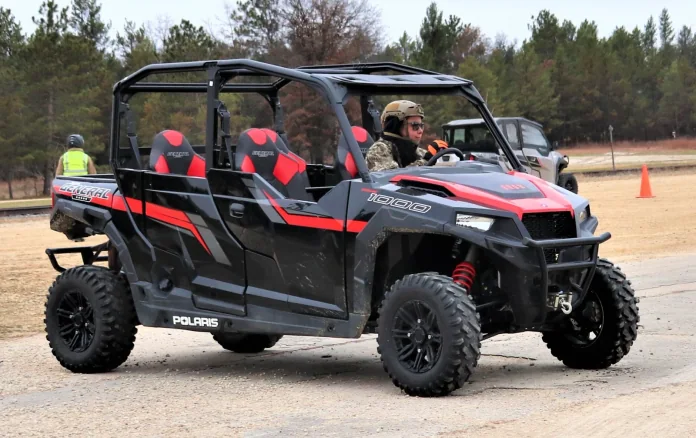
Featured reference photograph: Polaris General Off-road vehicle safety training at Fort McCoy (37). It illustrates the vehicle family or accessory context, not the exact current trim or an independently tested installation. Scott T. Sturkol/Fort McCoy Public Affairs Office / Wikimedia Commons / Public domain. Resized and converted to WebP; photograph retains its stated license.
Choose UTV skid plates and rock sliders by the exposed area, exact chassis application and mounting instructions. A thicker-looking panel or a product called “heavy duty” is not evidence of a better installation. First identify the protection already supplied with the vehicle.
For example, the 2026 Defender DPS sheet already lists a full heavy-duty HMW plastic skid plate. The SP 570 Premium equipment table also lists a full-coverage skid plate. Those facts do not make every factory arrangement identical, but they can prevent an unnecessary duplicate purchase.
Separate the underside from the side of the vehicle
| Component | Question it should answer | Do not assume |
|---|---|---|
| Underbody skid plate | Which underside areas does this exact kit cover? | It covers every arm, differential or vulnerable opening |
| A-arm guards | Do they fit the suspension and allow the specified movement? | A universal plate fits every arm geometry |
| Rock sliders / side guards | How are side impacts routed through the approved mounts? | They are an approved lifting or tie-down point |
| Service panels and drains | Can required inspections and maintenance still be performed? | More coverage is always better regardless of access |
Material thickness, shape, fasteners and mounts work as a system. We have not impact-tested aluminum against plastic or measured their wear on a controlled route. This guide therefore does not rank them by an invented strength score.
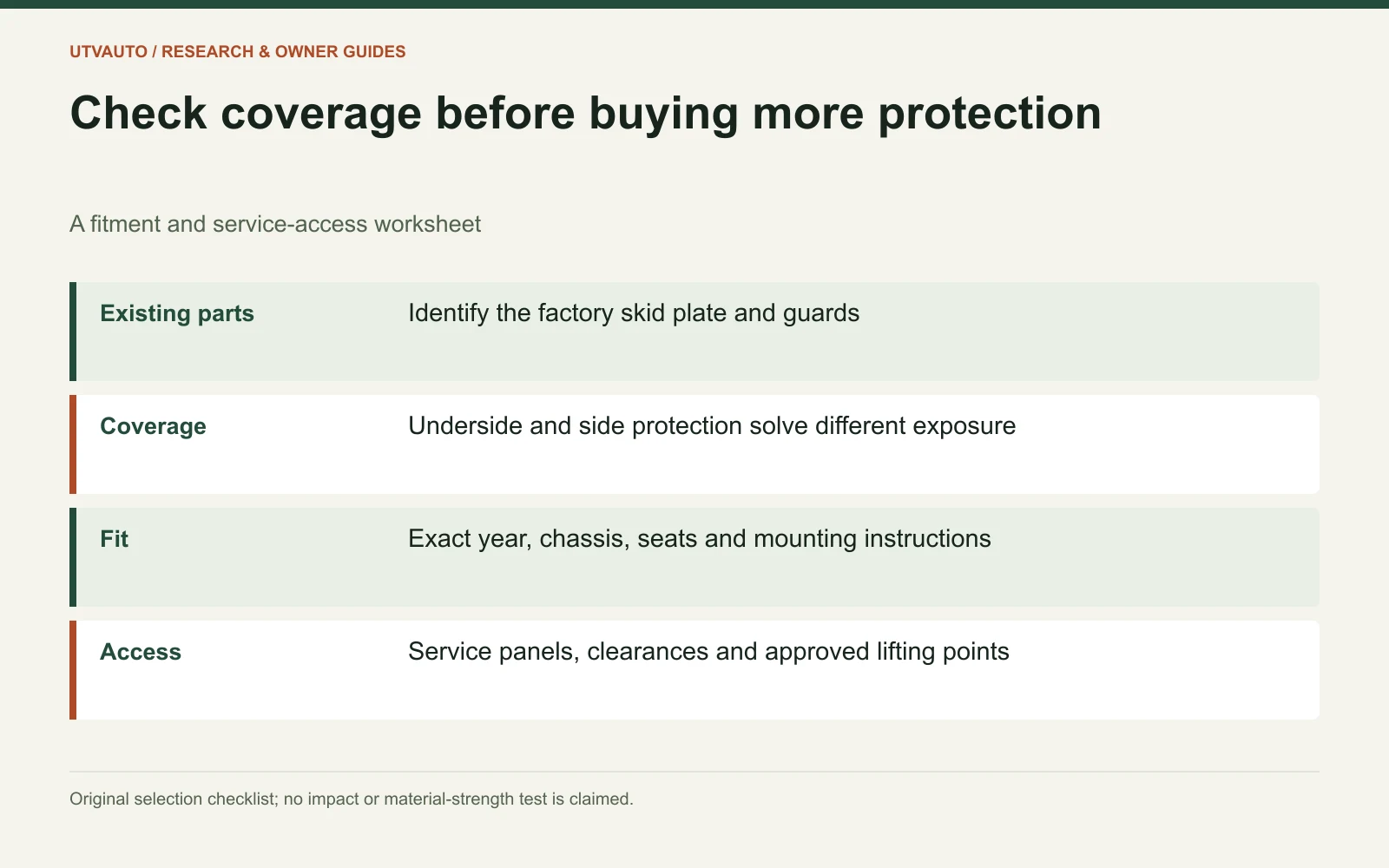
Match the complete chassis and current parts
Record model year, full platform, seating length and any suspension or chassis modifications. A standard and CREW vehicle may require different coverage. A part from another engine size or a nearby model year is not a documented fit merely because some holes align.
Check whether the kit replaces or overlays a factory component, what hardware is supplied and whether another accessory shares the mounting points. Avoid drilling or changing the ROPS/chassis without the applicable manufacturer-approved procedure.
Inspect movement and maintenance access
Have the installer confirm the required clearances and access specified in the kit instructions. Moving parts must remain unobstructed through their permitted operation. A panel that blocks a required drain, inspection or service point can create a different maintenance problem.
Plan how debris will be inspected and removed using the vehicle’s guidance. Do not assume a covered underside no longer needs post-use inspection. See the pre-ride checklist and cleaning guide for the wider inspection and cleaning context.
Do not lift or secure the vehicle by an unapproved guard
A component advertised for impact protection is not automatically rated for lifting or trailer restraint. Use the exact vehicle’s approved lifting and tie-down points. If access is obstructed after installation, resolve that conflict before the next service or transport task.
Stop using a damaged or loose assembly until its condition and attachment are assessed. Do not simply tighten a distorted part against a damaged mount without understanding the repair requirements.
Compare the installed scope
Get the exact kit number, covered areas, replacement/overlay arrangement, empty weight, supplied hardware and labor in writing. Include any necessary removal of existing parts. The lowest advertised panel price may describe less coverage or exclude required hardware.
Include approved accessory weight in the load plan without treating extra protection as an increased payload rating. The accessory research center connects these checks to roofs, storage, tires and transport.
Editorial collection: September 2026. This is a topic collection label, not a backdated first-publication date.


