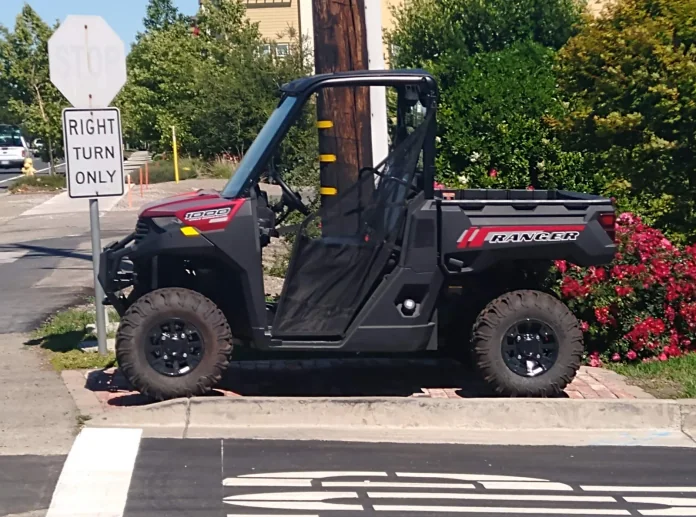
Featured reference photograph: 2021 Polaris Ranger 1000. It illustrates the vehicle family or accessory context, not the exact current trim or an independently tested installation. DestinationFearFan / Wikimedia Commons / CC BY-SA 4.0. Resized and converted to WebP; photograph retains its stated license.
The standard 2026 RANGER 1000 and Defender DPS HD7 share headline work ratings, but their engines, drive controls and standard equipment differ. The useful comparison is the complete vehicle you would buy. A base-price difference is not a fair comparison when one quote includes equipment missing from the other.
Here, RANGER means the standard three-seat 1000, not XP 1000 or Premium. Defender means the three-seat DPS HD7, not HD9, MAX or 2027 HD10. Sources are the RANGER 1000 manual, Polaris catalog and BRP DPS specification sheet.
Put the exact models in the same table
| Published specification | 2026 RANGER 1000 Standard | 2026 Defender DPS HD7 |
|---|---|---|
| Engine displacement | 999 cc | 650 cc |
| Engine layout | SOHC twin-cylinder, liquid-cooled | Liquid-cooled single-cylinder |
| Transmission | PVT CVT; H/L/N/R/P | pDrive CVT; L/H/N/R/P |
| Drive system | On-demand AWD / 2WD / Turf | Turf / 2WD / 4WD; auto-locking front differential |
| Seating capacity | 3 | 3 |
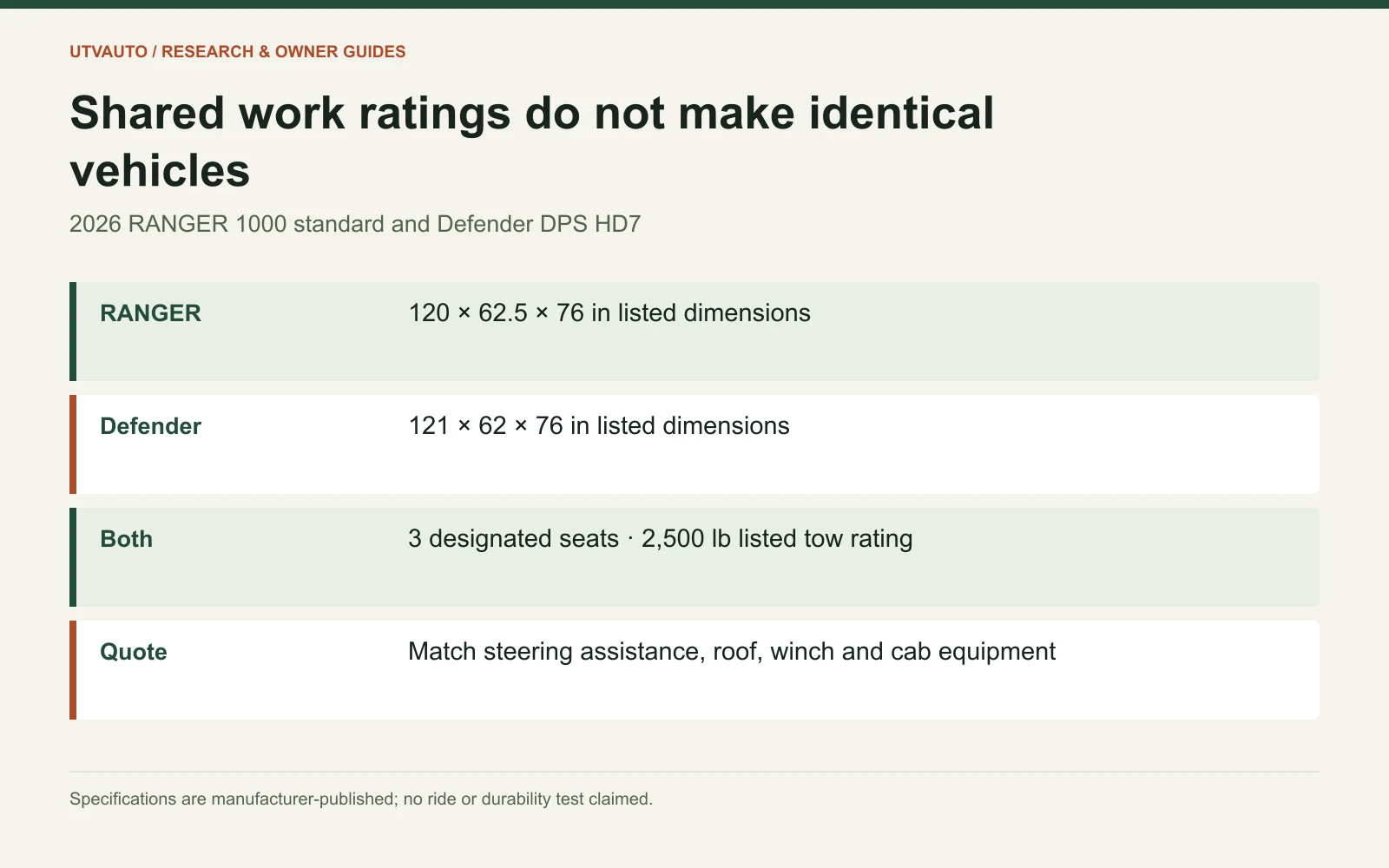
| Overall length | 120 in | 121 in |
| Overall width | 62.5 in | 62 in |
| Overall height | 76 in | 76 in |
| Cargo bed load rating | 1000 lbCalifornia models: 600 lb. | 1000 lbCalifornia only: 600 lb. |
| Total payload rating | 1500 lbIncludes people, cargo and accessories. California: 1,100 lb. | 1500 lb |
| Towing rating | 2500 lb | 2500 lb |
| Dry weight | 1487 lbManufacturer estimate; fluids and some nonessential factory accessories may be excluded. | 1497 lbEstimated dry weight, as published. |
The dry-weight figures above remain manufacturer estimates on their stated bases. They are not measured ready-to-load trailer weights. Add the actual fluids, accessories and carried equipment, then weigh the loaded transport setup when needed.
Check steering assistance rather than assuming it
DPS is Can-Am’s power-steering designation on this Defender trim. Polaris separately names an EPS version in its catalog; the standard RANGER 1000 is a different entry. Ask the dealer to confirm the exact steering equipment on each VIN. If steering assistance is a purchase requirement, compare the appropriate RANGER EPS or Premium instead of treating this standard-model quote as equivalent.
Also compare roof, winch and windshield line items. Neither a factory receiver nor an accessory-ready electrical system means every accessory is included. Obtain the part numbers and fitting labor so the difference between vehicle price and finished setup is visible.
Work capacity needs a task-based load plan
Both published tables include a 2,500-pound tow rating and a 1,000-pound box rating, with California box restrictions to check. Those numbers do not cancel each other’s conditions or provide a universal load combination. Occupants and equipment consume total payload; hitch and towing instructions add further constraints.
A useful dealer discussion starts with one normal job: two occupants, installed cab parts, a specific tool load and a known trailer. Ask the dealer to show how the relevant labels and manual limits cover that combination. Avoid a demonstration that proves only that an unloaded vehicle can move an empty trailer.
The size differences are small but measurable
The Defender’s listed body is one inch longer and half an inch narrower than this RANGER. Neither difference establishes a handling advantage. It can matter at a fixed storage opening, but accessories and the actual entry path can exceed the catalog envelope.
The equal listed 76-inch height applies to these named configurations. A roof, light bracket or different trim can change the tallest point. Measure the equipped machine for garage clearance rather than relying on this bare comparison.
Use the shortlist to request comparable demonstrations
Investigate the RANGER when its complete equipment and controls suit your job and the corrected quote is attractive. Investigate the Defender DPS HD7 when its particular engine and included steering package suit you. We have not measured noise, operating cost, braking under tow or long-term reliability, so those outcomes remain questions to verify through records and suitable evaluation.
Use the preselected specification comparison for linked field sources. Continue with HD7 vs HD9 if the engine choice is unresolved, or the broader Defender vs RANGER family guide if the shortlist still spans several trims.
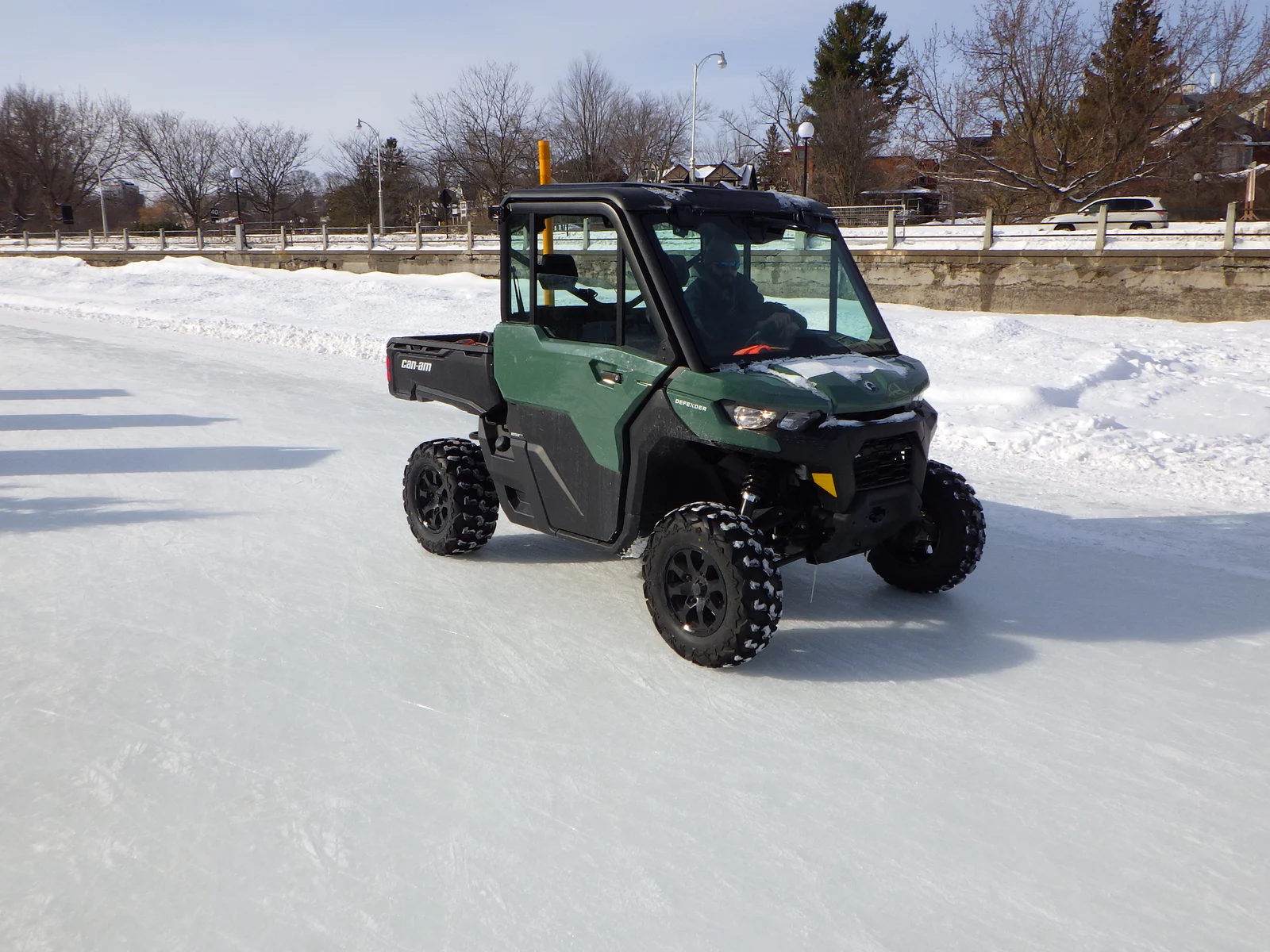
Editorial collection: July 2026. This is a topic collection label, not a backdated first-publication date.