
What a maintenance log should tell the next reader
A useful UTV maintenance log explains what happened to one identified vehicle, when it happened, and what evidence supports the entry. It should distinguish completed work from inspections, observations and future reminders. A row saying “serviced” is much less useful than a dated record identifying the task, hour reading, parts and responsible person. You do not need workshop software to achieve that clarity. You need consistent fields and a habit of closing open questions.
This guide builds a practical record structure for owners, shared-property operators and buyers evaluating service history. It does not prescribe maintenance intervals or prove that a vehicle is mechanically sound. The correct schedule comes from the exact owner manual, including any different requirements for severe use. The log records compliance with that schedule; it should never quietly replace it with a generic calendar.
Identify the machine before entering the first job
Start the file with the brand, model year, full model, trim, seating configuration and market. Keep a private record of the vehicle identification number and the manual publication number. Record installed equipment that can affect access, loading or maintenance. A roof, enclosure, different wheel package or electrical accessory may help explain later observations. Avoid posting a full private document bundle publicly when a prospective buyer only needs selected service evidence.
Create a separate file for each vehicle, even if two machines look identical. A shared account or property notebook can otherwise accumulate ambiguous entries such as “changed the Ranger filter.” Label invoices and photographs with a vehicle reference that matches the log. If a document cannot be confidently assigned to the machine, preserve it as an unassigned document rather than treating it as proof of work on the vehicle you are selling.
Use one row for one identifiable task
A practical service row includes the date, displayed engine hours, displayed distance, task, work performed, parts or fluid identification, person or business involved and supporting document. Add the applicable manual section when the task follows a scheduled procedure. Record the original unit beside the number; an odometer in kilometers is not a mileage reading simply because the spreadsheet column is named miles.
Write the outcome plainly. “Inspected; no replacement performed” and “replaced” describe different events. If a shop completed several operations on one invoice, give each important operation its own row while linking the same invoice. This makes it easier to find the last relevant work without assuming that every item in a generic service package was included. Keep removed-part photographs only when they help identify the job; a picture alone does not establish that the replacement was correct.
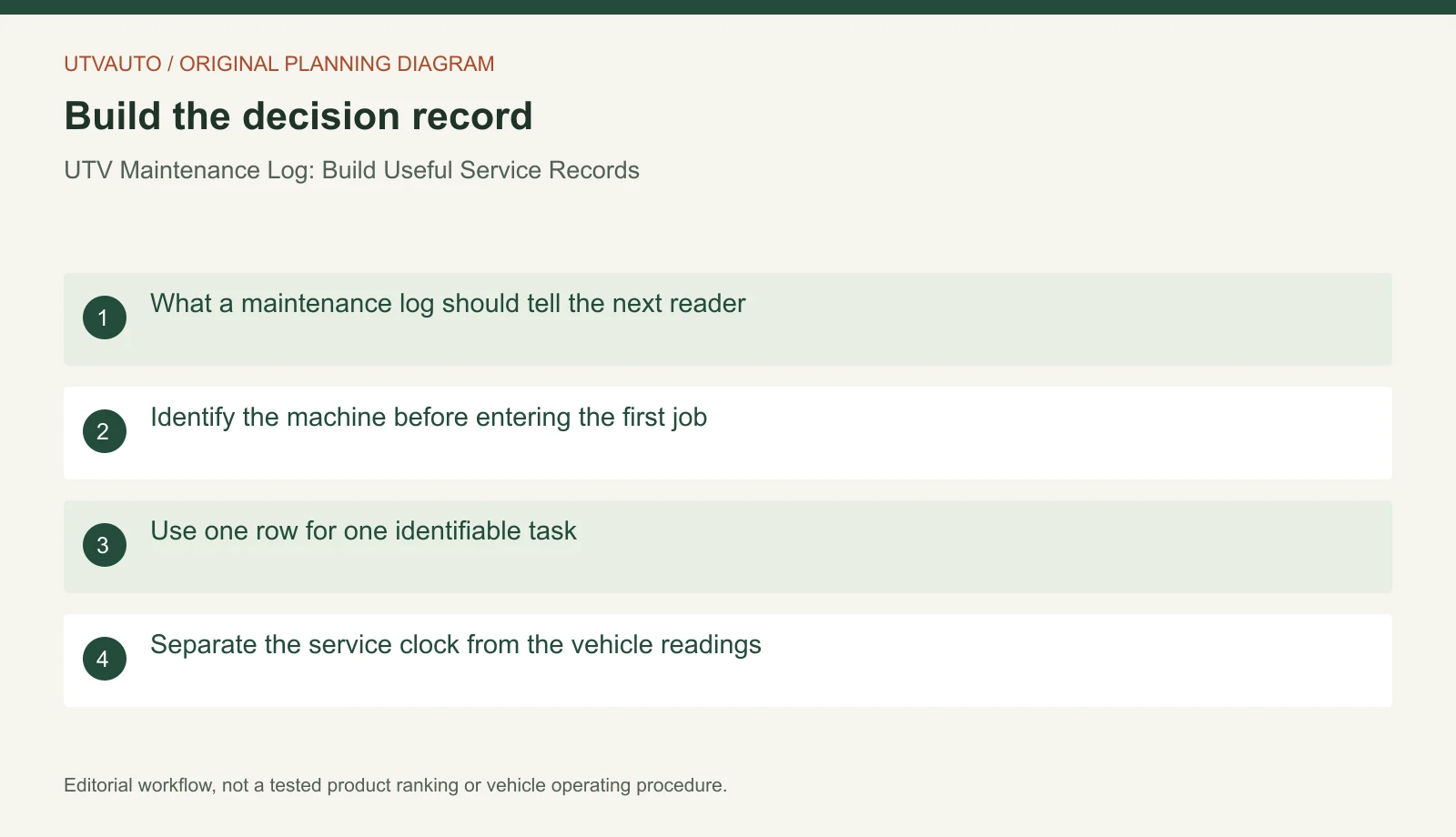
Separate the service clock from the vehicle readings
Owner manuals can combine elapsed time, operating hours and distance when defining service requirements. The 2026 RANGER manual is an example of a document with its own maintenance schedule and service information. Use the appropriate table for the actual vehicle rather than borrowing an interval from a related model. Store the schedule reference beside your reminders so another person can understand how the next due event was chosen.
A dashboard service reminder is not the same thing as an entry proving that work was completed. Record any reminder reset as a separate action if it matters to the history. Likewise, a new instrument cluster or a corrected reading needs an explanatory note, not a rewritten past. Preserve the earlier reading and identify the date of the change. An honest discontinuity is more informative than a falsely smooth sequence of numbers.
Record conditions that change how the history is read
Add short, factual use notes when they explain a service decision: unusually dusty work, repeated water exposure, a prolonged storage period or frequent low-speed property use. Use the owner manual to determine what those conditions mean for maintenance. Do not invent a multiplier or describe a vehicle as lightly used solely because its distance reading is low. The operating context helps a technician ask better questions; it is not an automatic wear calculation.
For a shared machine, identify who observed the issue and when. A note such as “temperature warning appeared during the last work shift; operation stopped; diagnosis pending” is different from a later shop conclusion. Keep observations and diagnoses in separate fields. That prevents an owner’s first guess from becoming an apparently confirmed failure after several people copy the record.
Keep unresolved work visible
Use a simple status field: observed, awaiting assessment, work booked, completed or declined. A declined repair should retain the reason and the source of the recommendation where available. Do not hide an unresolved concern by placing it underneath a completed oil-service entry. Different tasks can remain open at the same time, and a completed routine service does not resolve an unrelated control, brake or overheating concern.
Imagine an owner who notices a starting problem, charges the battery and later receives a diagnosis. Those are three events, not one proven battery failure. The record should show the symptom, the temporary action and the actual diagnostic outcome. Avoid assigning a cause before the evidence exists. If the problem affects safe operation, use the applicable instructions and qualified help rather than continuing to operate merely to create more log entries.
Make the record useful during a sale or handover
Prepare a summary that points to the underlying evidence. Include the vehicle identity, the period covered, recent completed work and unresolved items. Explain gaps honestly. A missing invoice does not prove that no work occurred, but neither does an owner’s recollection equal a documented shop record. Separate owner-reported work from work supported by dated documentation so a buyer can weigh the evidence appropriately.
Do not describe the file as a certification of condition or a guarantee of future reliability. The buyer still needs the relevant inspections, campaign checks and ownership documents. When sharing invoices, remove unrelated personal or financial information while retaining the details needed to identify the work. A clear index is usually more useful than sending a large unorganized folder and expecting someone else to reconstruct the timeline.
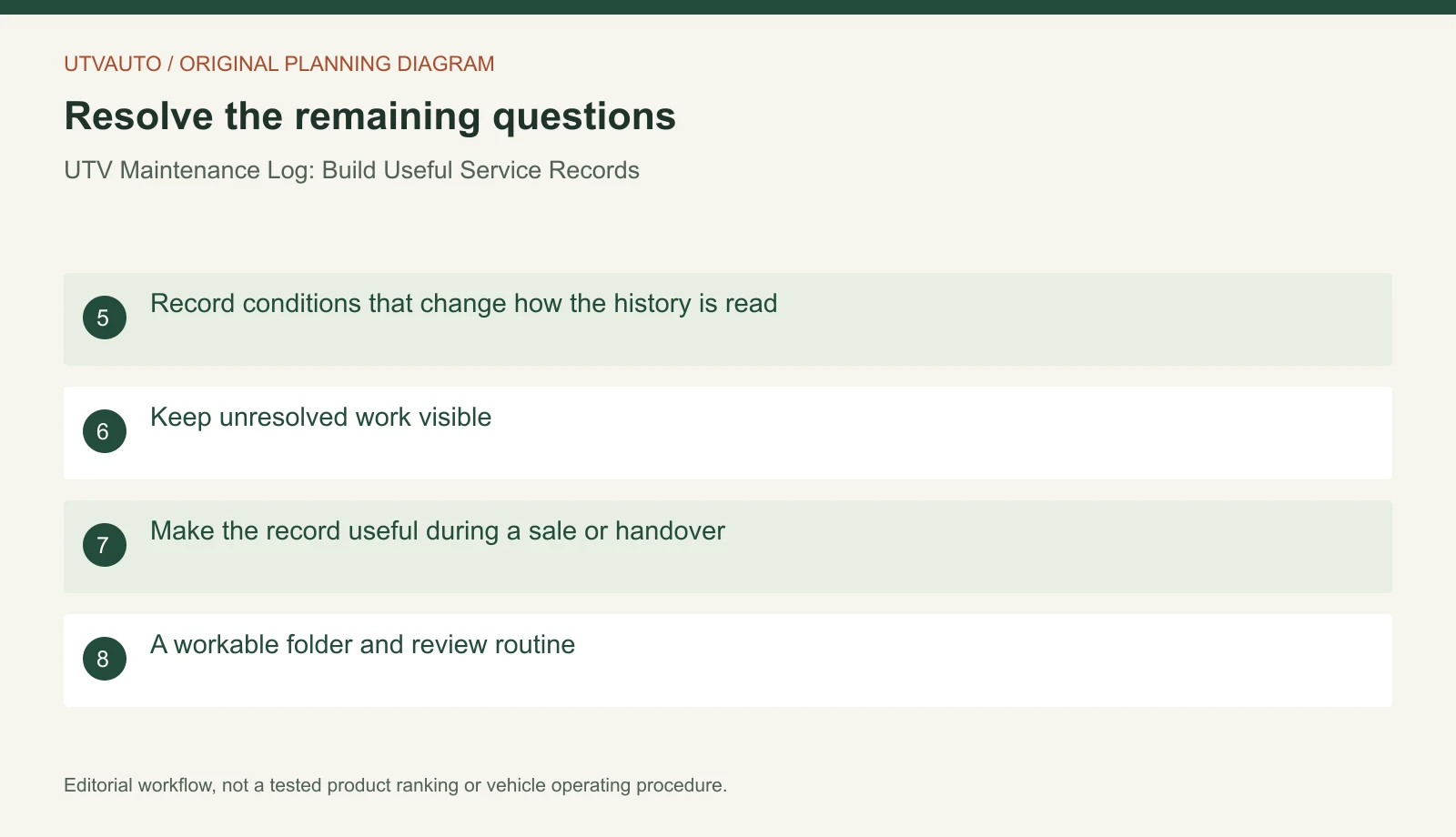
A workable folder and review routine
Use a top-level vehicle folder with subfolders for manuals, invoices, photographs and open issues. Give files a consistent date-first name followed by the task and document type. Keep a backup separate from the device normally used in the garage. If you use a spreadsheet, preserve an export that another reader can open without your particular application or subscription.
Review the log after each service visit and before a planned trip or sale. Check that new invoices were assigned to the right vehicle, that the units make sense, and that reminders were not accidentally marked as completed work. The purpose is not to make a large file. It is to preserve a short chain from vehicle identity to event to evidence, while leaving uncertainty visible wherever the history cannot support a stronger conclusion.
A sample record that preserves uncertainty
Consider a hypothetical owner who receives a receipt containing the words “annual service” and a total charge, but no task list. The owner remembers discussing a filter replacement and wants to enter it as completed. The more useful entry records the receipt exactly, identifies the service visit, and leaves the filter task awaiting confirmation. The next action is to request an itemized work description from the shop. Nothing needs to be guessed to make the timeline useful.
When clarification arrives, preserve it beside the original receipt and add the confirmed tasks without deleting the earlier uncertainty. If the shop cannot verify an item, keep that limitation. This creates a traceable history rather than a polished narrative that is stronger than its evidence. The same method works for owner-performed work: record what was actually done, identify the parts and retain the relevant supporting material.
Before copying the system, decide who will maintain it and how another authorized user will add a record. Choose one place for the current log and one backup method. Establish how corrections will be marked and who closes an unresolved issue. These are small administrative decisions, but they prevent duplicate files and conflicting histories from undermining otherwise careful maintenance. A reader should be able to distinguish an original event, a later clarification and a future reminder without having to ask the person who built the file.
Related UTVAUTO resources
- How to interpret engine hours and distance
- Used UTV purchase checks
- A model-specific first-service example
Sources and scope
This is a research-based planning guide, not a UTVAUTO product test, installation or professional inspection. Manufacturer and safety references were checked November 9, 2026. Use the exact vehicle and component instructions for operational requirements.
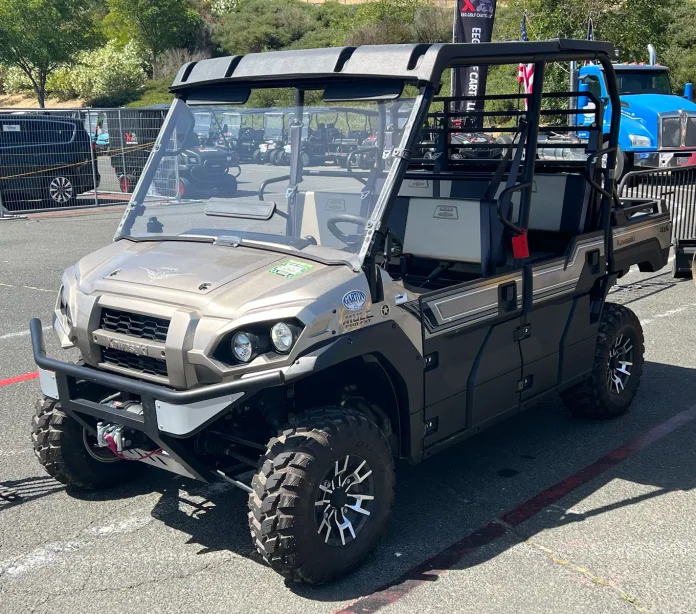
Featured archival reference photograph: Kawasaki Mule PRO-FXT 1000 LE Sonoma 2024. It illustrates vehicle context, not a UTVAUTO test, the exact equipment discussed or an endorsement. TaurusEmerald / Wikimedia Commons / CC BY-SA 4.0. Resized and converted to WebP; photograph retains its stated license.