
Choose the mounting system before the mirror shape
The useful starting point for UTV mirrors is the actual cab installation, not a universal claim about which mirror shape gives the best view. Identify the vehicle year, trim, doors, windshield and mounting location first. Then compare compatible mirror assemblies for adjustment, usable sight lines and how they behave with the rest of the cab. A mirror advertised for a brand can still require a specific door or exclude a particular windshield.
This is a fitment and purchasing framework, not a measured comparison of optical performance. UTVAUTO has not evaluated blind-spot coverage or tested a mirror through impacts. The goal is to help you reject an unsuitable mounting arrangement before spending money, and to make a complete candidate easier to evaluate from the driver’s normal seated position.
Write down the complete cab configuration
Record the full vehicle identity, including seating version and market, then identify existing doors, windshield, roof and relevant grab handles by part number. Include aftermarket components. A photograph of the cab can help a supplier understand the arrangement, but the picture should supplement identification rather than replace it. Similar-looking clamps or panels can belong to different applications.
Ask which instructions govern the proposed installation and whether the mirror kit includes every required bracket or adapter. A listing showing mirrors on a completed vehicle may not depict everything supplied in the box. Resolve whether the mounting point belongs to the door, the approved cab structure or another accessory. Do not infer permission to drill or modify a protective structure because a universal bracket could physically be attached there.
A RANGER example shows why application notes matter
The 2026 RANGER accessory catalog separates a door-mounted mirror application, part 2889241, from a ROPS-mounted application, part 2889243. The ROPS listing includes exclusions involving a named tip-out windshield, doors and a forward grab handle. Those notes are more useful than a broad “fits Ranger” statement. Read the exact catalog application and current instructions for the vehicle being equipped.
Treat this as an example of how to read fitment information, not approval for every RANGER year or every aftermarket cab. A supplier should be able to explain which mounting option works with your actual parts and why the excluded arrangement differs. If the seller responds only with engine size or general vehicle family, the information is still incomplete.
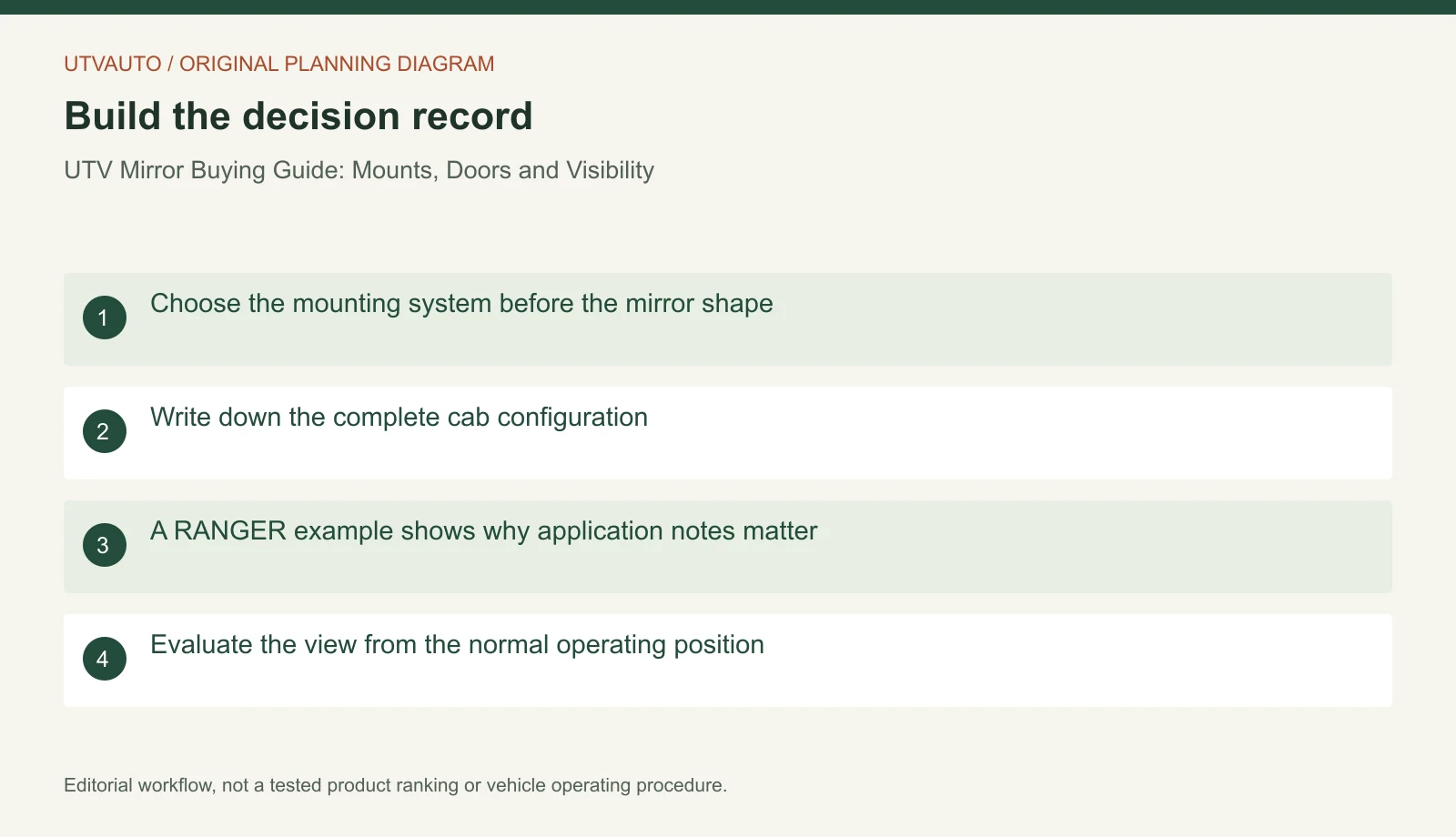
Evaluate the view from the normal operating position
A compatible mirror still needs a useful adjustment range for the intended driver and seated position. Evaluate the arrangement with normal riding equipment and the vehicle properly parked. Identify whether a door pillar, windshield frame, passenger or cargo area obstructs the view you need. A product photograph taken from outside the machine cannot demonstrate what the driver actually sees.
Keep optical expectations separate from attachment strength. A larger surface may provide a different apparent view while also occupying more space near a door or windshield. Convex and flat designs can present objects differently; use the product information and a practical demonstration rather than assuming a particular housing size eliminates blind areas. Mirrors support observation but do not replace the vehicle’s required checks before reversing or maneuvering.
Check every moving interface
List what moves near the proposed mirror: an opening door, a tip-out windshield, a permitted folding assembly or an adjustable cab component. Check the approved travel and latch positions under the relevant instructions. The mirror may clear a closed door but conflict with its opening path, or sit where a windshield needs space to move. These are installation questions to resolve before use, not reasons to shorten or alter components arbitrarily.
If a mirror folds, ask what that feature is intended to do and how its position is secured. Do not treat a folding mechanism as proof of impact resistance or permission to force the assembly through an obstruction. Obtain replacement-part information for the housing, mirror surface and approved hardware. A low purchase price can become less attractive when damage requires replacing a larger assembly.
Transport and storage are separate fitment checks
Measure the widest point of the vehicle with the mirrors in their permitted transport or storage position. A factory width figure may describe a different equipment arrangement. Include the actual projections when checking a garage, gate or enclosed trailer. A foldable mirror helps only if the manufacturer permits that position and the remainder of the vehicle still clears the complete path.
Keep the transport directions with the cab parts record. Do not infer that a mirror can remain attached at road transport speeds from the fact that it is secure during normal off-road use. Check the exact accessory instructions and vehicle transport procedure. If an assembly needs removal, account for how it will be stored and reinstalled without losing hardware or bypassing the approved adjustment process.
Compare complete kits rather than attractive headline prices
Create a quote with the left and right assemblies, mounting hardware, necessary adapters and installation where needed. Establish whether a listed price covers one mirror or a pair. Check whether replacement glass or a replacement housing is available separately. Shipping, returns and the consequences of ordering the wrong application can matter more than a small difference in the advertised price.
Request evidence for claims that influence your choice. A product can be suitable for your mounting arrangement without having proven superior vibration control or durability. If a seller makes those claims, ask what vehicle, test conditions and comparison support them. Otherwise treat them as marketing statements rather than measured results. Do not invent a performance score to make two uncertain products look directly comparable.
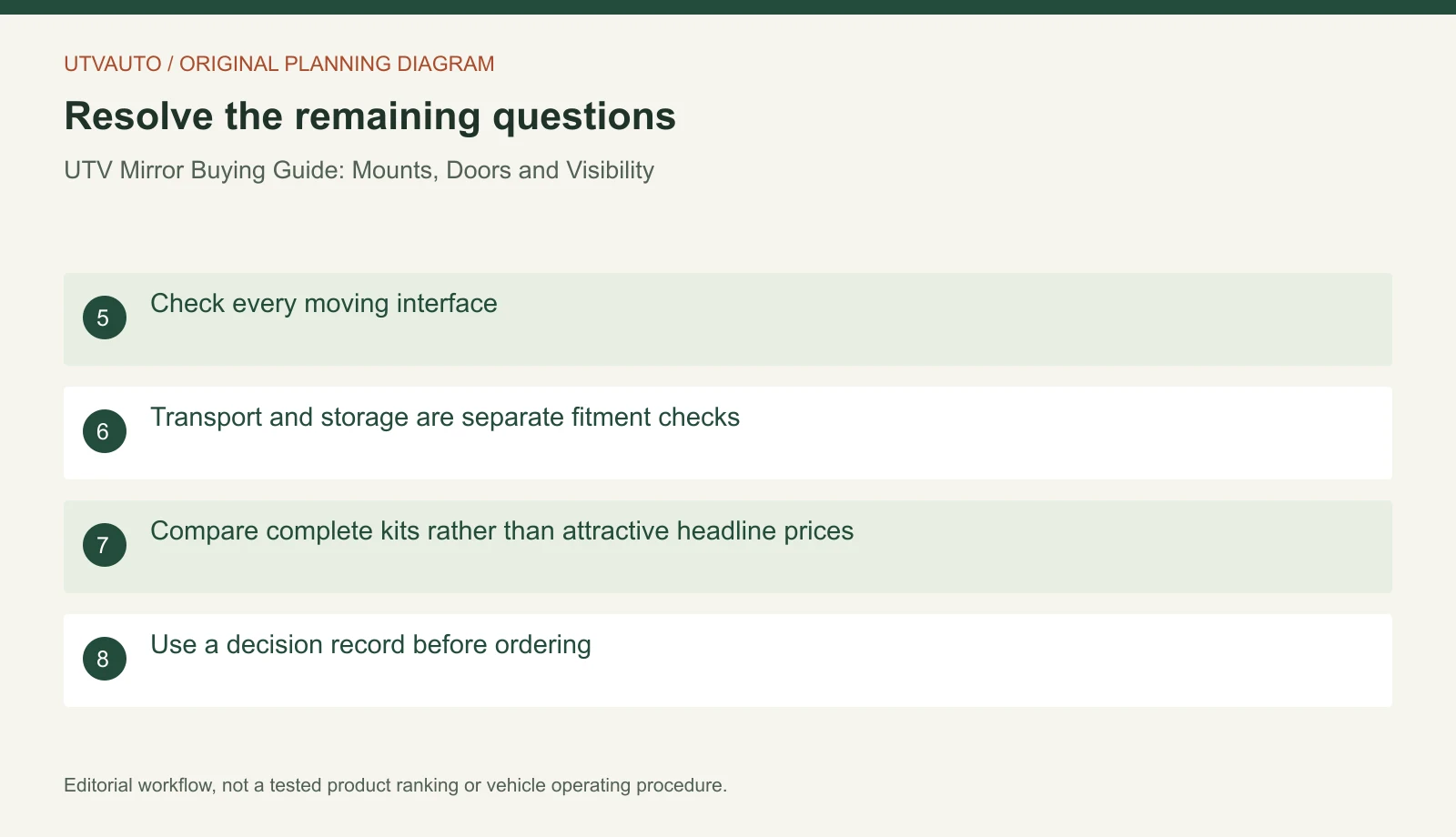
Use a decision record before ordering
For each candidate, save the exact product identifier, the vehicle application, required hardware, excluded components, adjustment questions and transport instructions. Mark each item confirmed, unresolved or incompatible. An unresolved item is a reason to obtain an answer; an explicit exclusion is a reason to choose a documented alternative. Keep the source date because listings and replacement availability can change.
Consider a buyer who has full aftermarket doors and a tip-out windshield. A universal clamp mirror may appear convenient, yet the genuine decision concerns the intersection of three independently supplied systems. Sending the complete parts list to the suppliers is more effective than asking whether the mirror fits a particular engine displacement. The resulting written answer gives you something concrete to compare, order and retain with the vehicle’s maintenance and accessory records.
Compare two candidates with a written decision sheet
Imagine two hypothetical mirror packages. Candidate A uses a documented door mount that matches the identified doors but has an unresolved windshield-clearance question. Candidate B uses a clamp arrangement whose seller has not identified the actual vehicle application. Candidate A is not yet ready to order, but it has a narrower, answerable question. Candidate B still lacks the basic fitment evidence. An attractive price does not make these two evidence positions equivalent.
Write the same fields for both: product number, mounting location, required parts, cab exclusions, adjustment demonstration, replacement parts, transport directions and complete quoted cost. Mark where each answer came from. If a supplier changes the recommended mount, update the whole combination rather than replacing only the product name at the top of the sheet. A different bracket can change the clearance question you thought was settled.
After installation under the approved procedure, retain the instructions and record any adjustment or follow-up question. If a mirror position does not provide the intended view, resolve that with the applicable supplier guidance instead of moving the assembly to an undocumented location. Repeat the compatibility review after changing doors or windshield equipment. The advantage of the decision sheet is that it survives those changes: it shows why the old arrangement was chosen and which assumptions need to be checked again.
Related UTVAUTO resources
- Build a complete cab parts list
- Measure actual equipped vehicle width
- Keep accessory and service evidence
Sources and scope
This is a research-based planning guide, not a UTVAUTO product test, installation or professional inspection. Manufacturer and safety references were checked November 9, 2026. Use the exact vehicle and component instructions for operational requirements.
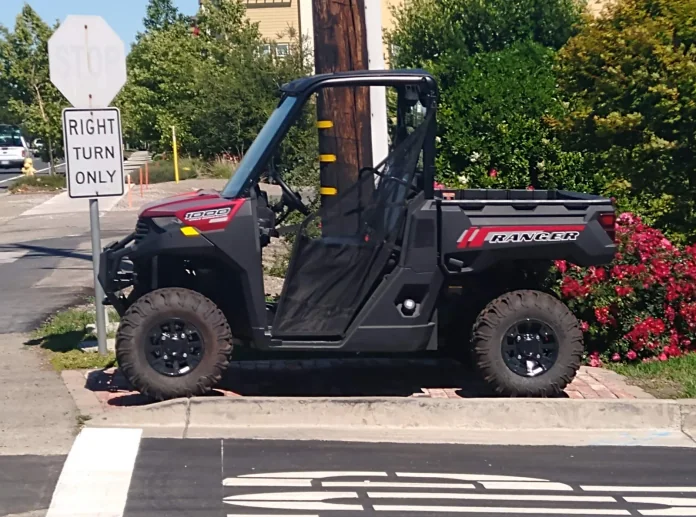
Featured archival reference photograph: 2021 Polaris Ranger 1000. It illustrates vehicle context, not a UTVAUTO test, the exact equipment discussed or an endorsement. DestinationFearFan / Wikimedia Commons / CC BY-SA 4.0. Resized and converted to WebP; photograph retains its stated license.


