
Modifications need evidence before they add value
A modified used UTV can be useful when its equipment matches your work and the configuration is properly documented. Accessories do not automatically make a machine more valuable, capable or suitable. Start with the vehicle’s identity, then audit what changed and what evidence supports the installation. The seller’s original spending is not the same as value to the next owner.
This guide extends a general used-vehicle inspection with a modification-specific record. It is a buyer’s research framework, not a remote mechanical inspection, appraisal or legal opinion. It does not classify all aftermarket parts as defective. The goal is to separate known equipment from unresolved configuration questions before a buyer commits to a vehicle whose current condition may differ substantially from the original specification.
Establish the original configuration first
Record the model year, full model, trim, market and vehicle identification information through appropriate private documents. Locate the matching owner manual and original configuration information. A family name or engine size is not enough to identify the starting point. Keep factory equipment separate from dealer-installed accessories and later owner changes, even when they look similar in an advertisement.
Ask the seller to describe the machine as it is now, rather than copying a factory specification page. Compare that description with the photographs and records. If the seller cannot identify the original trim, write that uncertainty down. It may affect which fitment documents are relevant. Do not fill the gap by choosing the closest-looking brochure model and then using its specifications as if they were confirmed for the offered vehicle.
Build a parts inventory with traceable identifiers
Create a row for every significant change: wheels and tires, suspension, enclosure, lighting, winch, electrical accessories, storage and any powertrain alteration. Record the manufacturer, part number, installation date when known, and whether the original parts are available. A product nickname such as “heavy-duty kit” does not identify what is fitted. Request photographs of labels only where they can be obtained safely.
Attach invoices and installation documents to the relevant row, but keep their meaning limited. An invoice establishes a transaction, not necessarily correct installation or current condition. A photograph may identify an item without proving its hidden hardware. Mark unidentified equipment explicitly. The inventory is valuable because it shows what needs a closer inspection, not because a long list of receipts can substitute for that inspection.
Check fitment as a complete combination
Verify each application line against the exact vehicle and the other installed parts. A roof can affect a windshield choice, and a wheel package can raise questions beyond tire diameter. Ask the component supplier or qualified inspector to resolve combinations that are not covered by the available documents. Do not assume that several individually plausible parts form an approved system when used together.
The linked 2026 RANGER manual warns that modifications can affect stability, loading, electrical capacity and occupant protection. Use the relevant vehicle guidance for your candidate. This warning does not diagnose a particular machine, but it explains why the audit must go beyond appearance. A configuration question that touches a critical system should receive qualified assessment before the buyer treats the machine as ready for ordinary use.
Treat wiring and structural changes as inspection priorities
Ask who installed added electrical equipment and where its instructions are kept. Look for documentation of the intended power supply, protection and component compatibility; do not experiment with wiring during a casual viewing. If the arrangement cannot be explained or there are signs of damage, heat or improvised work, require an appropriate professional inspection before proceeding. This guide does not authorize a buyer to test unknown circuits.
Similarly, record any reported changes to structure, restraints, seating or attachment points and have their suitability assessed. Do not infer approval from fresh paint or neat fabrication. When the seller says an alteration is common, ask for the actual supporting documentation. Popularity is not a specification. A buyer can decline a vehicle with unresolved critical changes without needing to prove that a particular modification has already caused a failure.
Ask what the modification changed about normal use
Have the seller describe the intended purpose of each major addition and whether the machine’s use changed afterward. Ask about operating symptoms, service access and any components that were replaced again. Record the answers as seller statements unless supported independently. A claim that a vehicle was lightly used is not a substitute for an inspection or a dated service record.
Consider whether the new owner can support the configuration. Can replacement parts be identified? Are instructions available? Is a local qualified shop willing to assess it? A specialized setup may be poorly suited to a buyer who needs simple, repeatable property work. The question is not whether the accessory looks impressive. It is whether the current machine can meet the buyer’s task with an understandable maintenance and support path.
Price unresolved issues as unresolved, not as upgrades
Do not give full retail credit for equipment you do not need or cannot identify. Obtain actual quotes for any assessment, correction or return to an appropriate configuration that your purchase plan requires. Keep those quotes separate from the seller’s asking price. Avoid a guessed deduction that makes the deal appear affordable while leaving the underlying safety question unanswered.
If the seller offers original parts, confirm what is present and whether reinstalling them is a documented, practical option. A box of removed components does not establish that the vehicle can cheaply return to factory condition. Ask a qualified shop about the actual work before relying on that possibility. The economic comparison should show the candidate as it can realistically be used, not as an imaginary stock machine assembled from optimistic assumptions.
Finish with an accept, inspect or decline record
For each modification, record one of three outcomes: sufficiently identified for further consideration, requires qualified inspection, or unsuitable for your intended purchase. These are buyer-process labels, not engineering certifications. Keep the inspection findings and the seller’s statements distinct. If an important question remains unanswered, make the next action explicit rather than placing the item in an ambiguous “probably okay” category.
A useful final note names the exact configuration, the unresolved issues and the documents still needed. It may lead to a purchase, a request for inspection or a decision to walk away. Any of those can be a good outcome when based on clear evidence. The purpose of the audit is to avoid paying for unknown complexity while mistaking the quantity of accessories for proof of quality.
Example: a tidy accessory bundle with missing identities
A hypothetical seller advertises a used UTV with upgraded wheels, a light bar and an enclosure. The machine looks clean, but the advertisement gives no part numbers. Begin by asking for the equipment inventory and any installation records. The seller may be able to resolve the missing information easily; do not label the parts unsafe merely because the advertisement was brief.
If the wheel package can be identified but the enclosure cannot, keep the findings separate. A satisfactory answer for one accessory does not approve the whole machine. Request an appropriate inspection and assess whether the unidentified equipment matters to your purchase decision. If the seller cannot support a critical configuration question, it is reasonable to pause or decline rather than invent a favorable explanation.
Keep the negotiation connected to real work. A shop quote for identifying or correcting an issue can inform the economic decision, but a price reduction does not resolve the technical issue itself. The machine still needs a suitable configuration before use. This distinction protects the buyer from treating a bargain as evidence of readiness and protects the seller from unsupported accusations about equipment that simply has not yet been assessed.
Working reference table
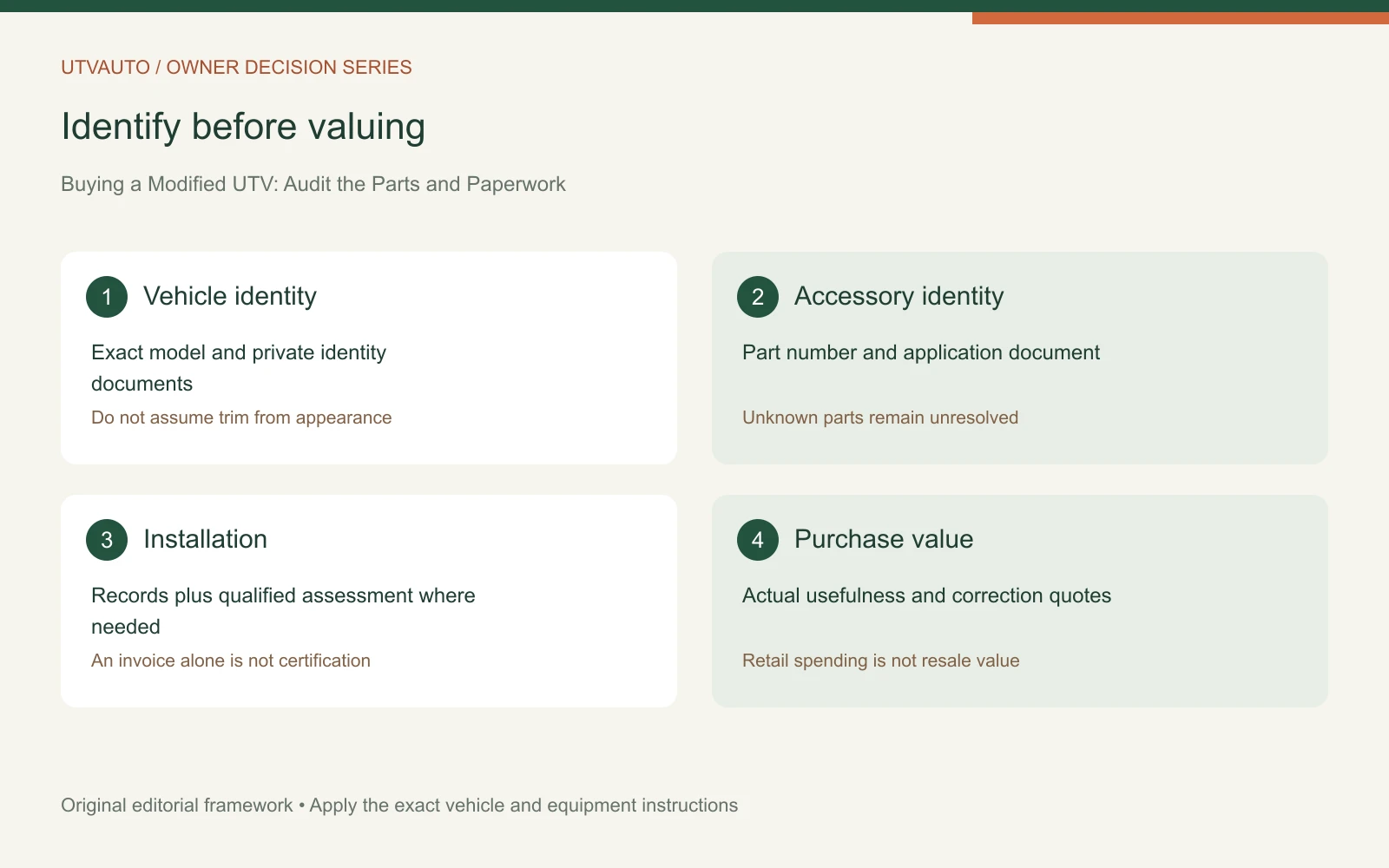
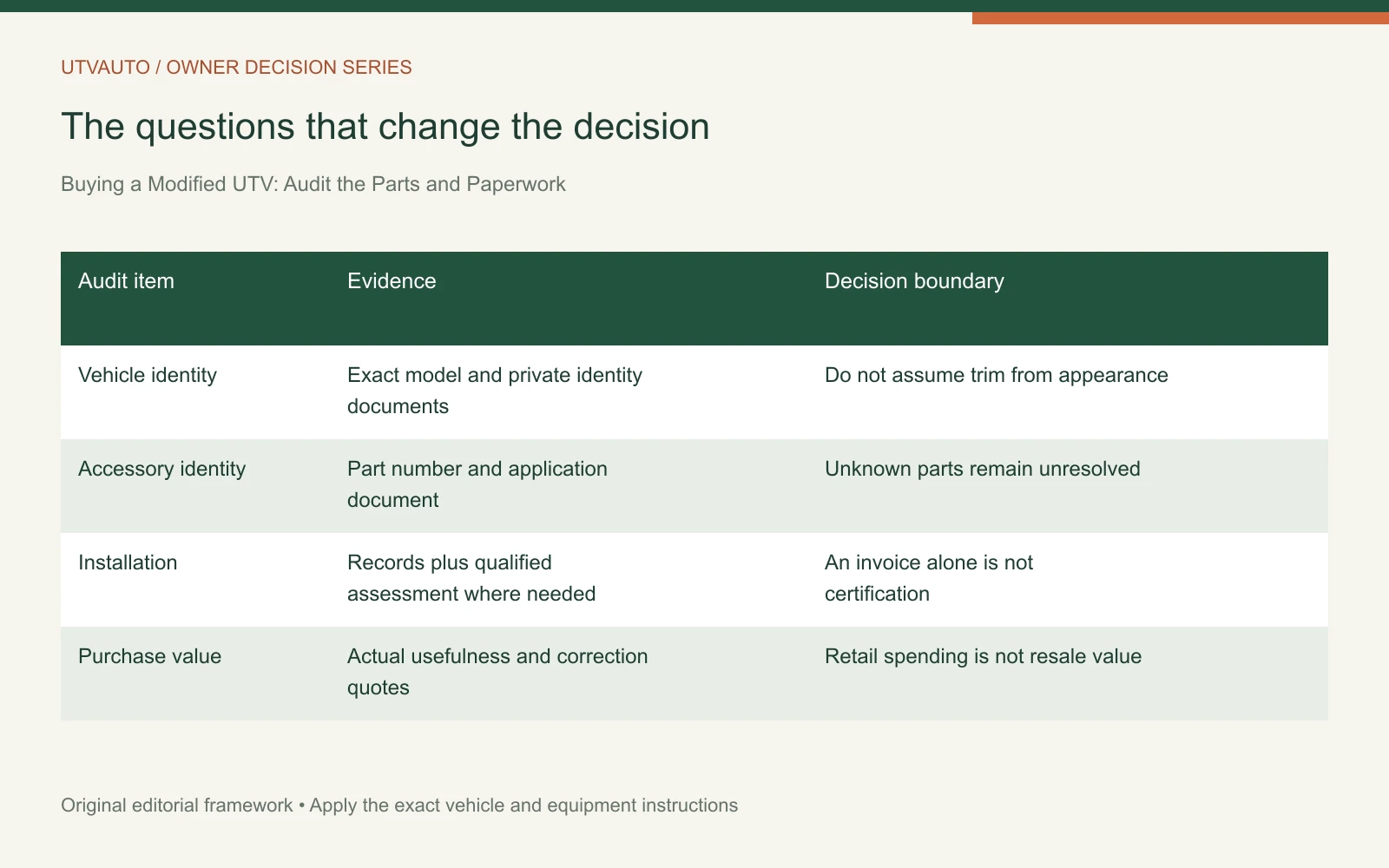
| Audit item | Evidence | Decision boundary |
|---|---|---|
| Vehicle identity | Exact model and private identity documents | Do not assume trim from appearance |
| Accessory identity | Part number and application document | Unknown parts remain unresolved |
| Installation | Records plus qualified assessment where needed | An invoice alone is not certification |
| Purchase value | Actual usefulness and correction quotes | Retail spending is not resale value |
Related UTVAUTO resources
- Use the full used-UTV buying checklist
- Review larger-tire fitment questions
- Understand accessory electrical-load planning
Sources and scope
Research and editorial planning framework, checked November 9, 2026. UTVAUTO has not tested these vehicles, measured their noise, or inspected the reader’s machine. Examples are explicitly hypothetical. Use the exact vehicle manual and obtain qualified assistance for unresolved safety questions.
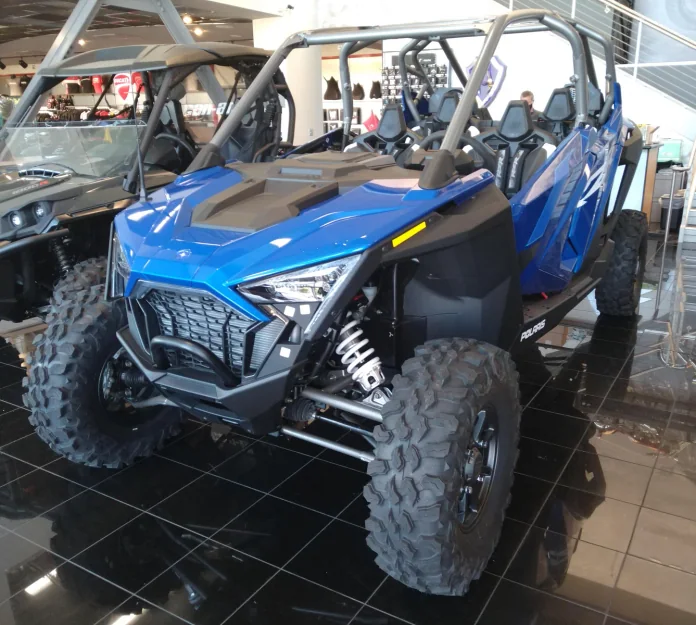
Featured archival reference photograph: 2021 Polaris RZR Pro XP. It illustrates vehicle context, not a UTVAUTO test, the exact equipment discussed or an endorsement. DestinationFearFan / Wikimedia Commons / CC BY-SA 4.0. Resized and converted to WebP; photograph retains its stated license.