
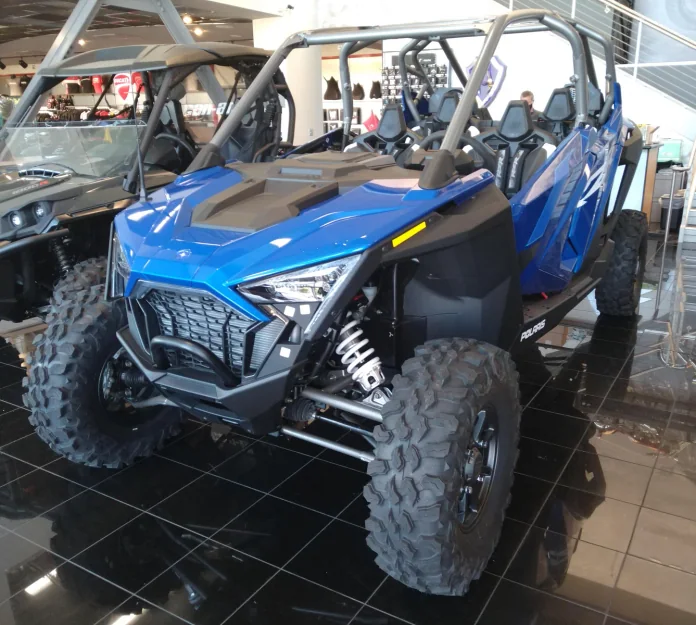
Featured reference photograph: 2021 Polaris RZR Pro XP. It illustrates the vehicle family or accessory context, not the exact current trim or an independently tested installation. DestinationFearFan / Wikimedia Commons / CC BY-SA 4.0. Resized and converted to WebP; photograph retains its stated license.
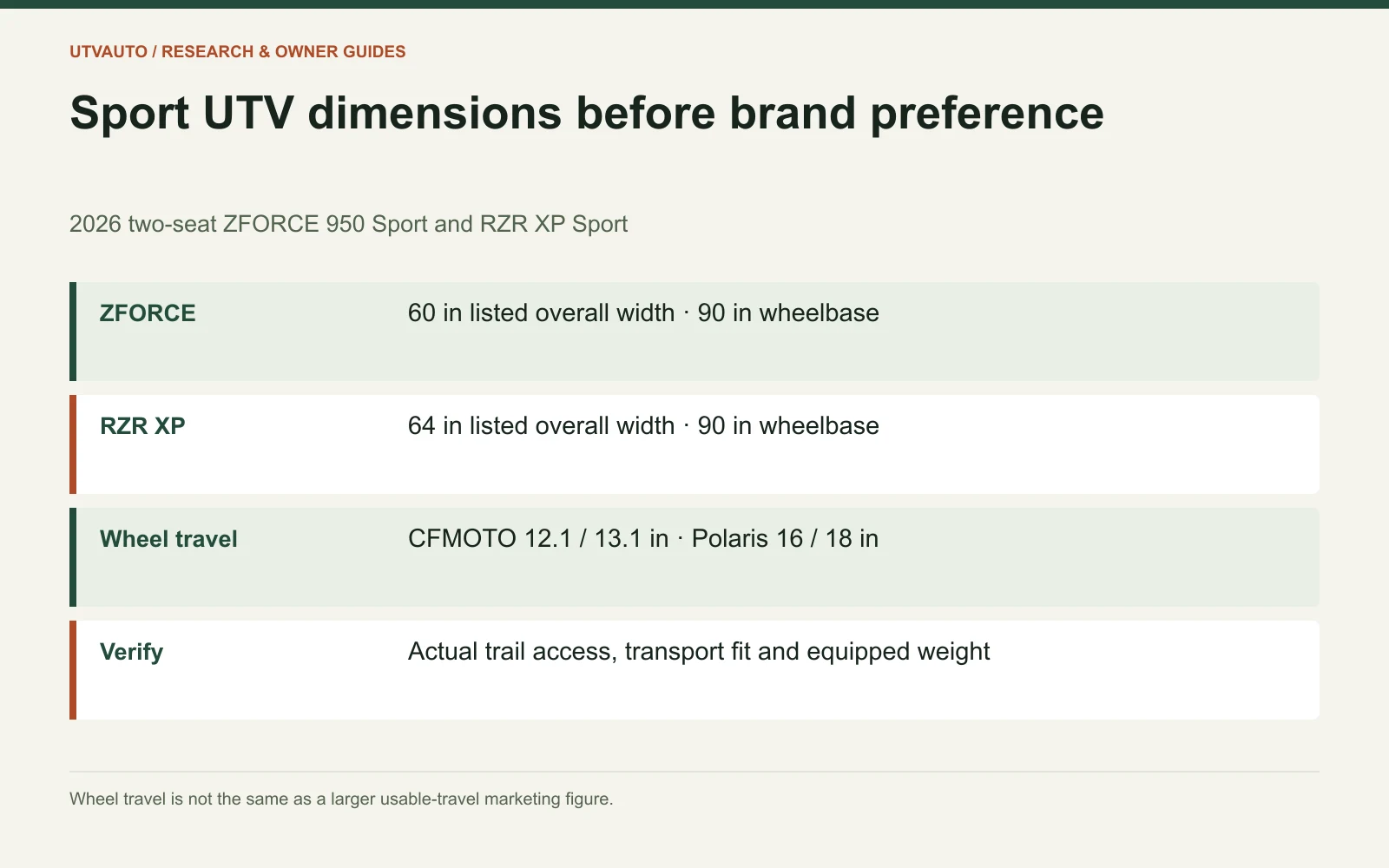
The 2026 ZFORCE 950 Sport is listed four inches narrower overall than the RZR XP Sport, while the Polaris manual lists more front and rear wheel travel. Those are useful shortlist differences, but they do not establish which vehicle rides better on your terrain. Start with actual access and transport constraints, then evaluate the exact configuration.
The comparison is between two-seat U.S. versions. ZFORCE 950 Trail, 950 Sport 4, RZR XP 4 and RZR XP S are different vehicles. Sources are the ZFORCE matrix in CFMOTO’s 2026 brochure and the 2026 RZR XP owner manual, Sport specification column.
Keep model names and measurement definitions aligned
| Published specification | 2026 ZFORCE 950 Sport | 2026 RZR XP Sport |
|---|---|---|
| Engine displacement | 963 cc | 999 cc |
| Seating | 2 | 2 |
| Overall length × width × height | 121 × 60 × 74 in | 119.5 × 64 × 71.1 in |
| Wheelbase | 90 in | 90 in |
| Ground clearance | 12 in | 14 in |
| Front / rear wheel travel | 12.1 / 13.1 in | 16 / 18 in |
| Published dry weight | 1,436 lb | 1,586 lb; California Sport differs |
The RZR travel values here are the manual’s wheel-travel figures, not a larger “usable travel” measure. Do not put different definitions in one row and calculate a percentage advantage. The dry weights likewise remain published figures, not two vehicles weighed with identical equipment and fuel.
A narrower vehicle may still be ineligible for a route
Compare the actual vehicle and installed accessories with the land manager’s current width and vehicle rules. This article does not establish that either vehicle is permitted on a particular trail. A nominal class description is not a substitute for the applicable measurement and access requirements.
For transport, measure the clear deck and rail openings. A common 90-inch wheelbase does not imply equal total length or height. Verify tie-down access, ramp transitions and the loaded weight of the trailer setup rather than choosing by one dimension.
Travel describes movement, not a complete ride test
Suspension geometry, damping, tire setup, load and surface affect the result. More listed travel does not prove less body motion, greater comfort or better durability. A suitable demonstration of both exact units is more useful than comparing promotional suspension photographs.
Check shock adjustment instructions and the condition of a used example. Do not copy settings from another platform or use extra preload as an assumed cure for every load or clearance issue. A vehicle with damaged suspension needs inspection before it can be meaningfully evaluated.
Compare the delivered equipment
The CFMOTO brochure lists a roof, half doors and a winch in its equipment matrix. Verify the actual unit and corresponding Polaris equipment instead of assuming a bare advertised price contains the same setup. Match the accessory types you intend to use, the correct mounting kits and installation charges.
Manufacturer power figures use their own published methods. We have not established a controlled horsepower, acceleration or noise comparison for these configurations. Do not select a vehicle from an invented top-speed figure or predicted repair bill.
Use the shortlist for a concrete next step
Investigate ZFORCE when its documented dimensions and complete package suit the route and budget. Investigate RZR XP when its exact chassis and wheel-travel specification suit your intended use and it fits the transport plan. Reconsider both if the route, seating requirement or loaded trailer is incompatible.
See RZR XP vs XP S before substituting a wider Polaris model, and XP vs XP 4 if you need rear seats. The RZR research center connects those choices to maintenance and used-vehicle checks.
Editorial collection: July 2026. This is a topic collection label, not a backdated first-publication date.


