
Editorial collection: August 2026. Collection month is an editorial label; the page retains its actual first-publication date.
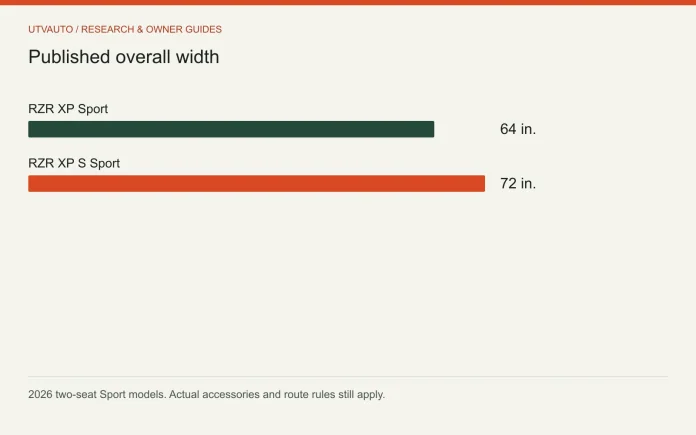
Featured image: original UTVAUTO diagram; supporting sources are explained in the article.
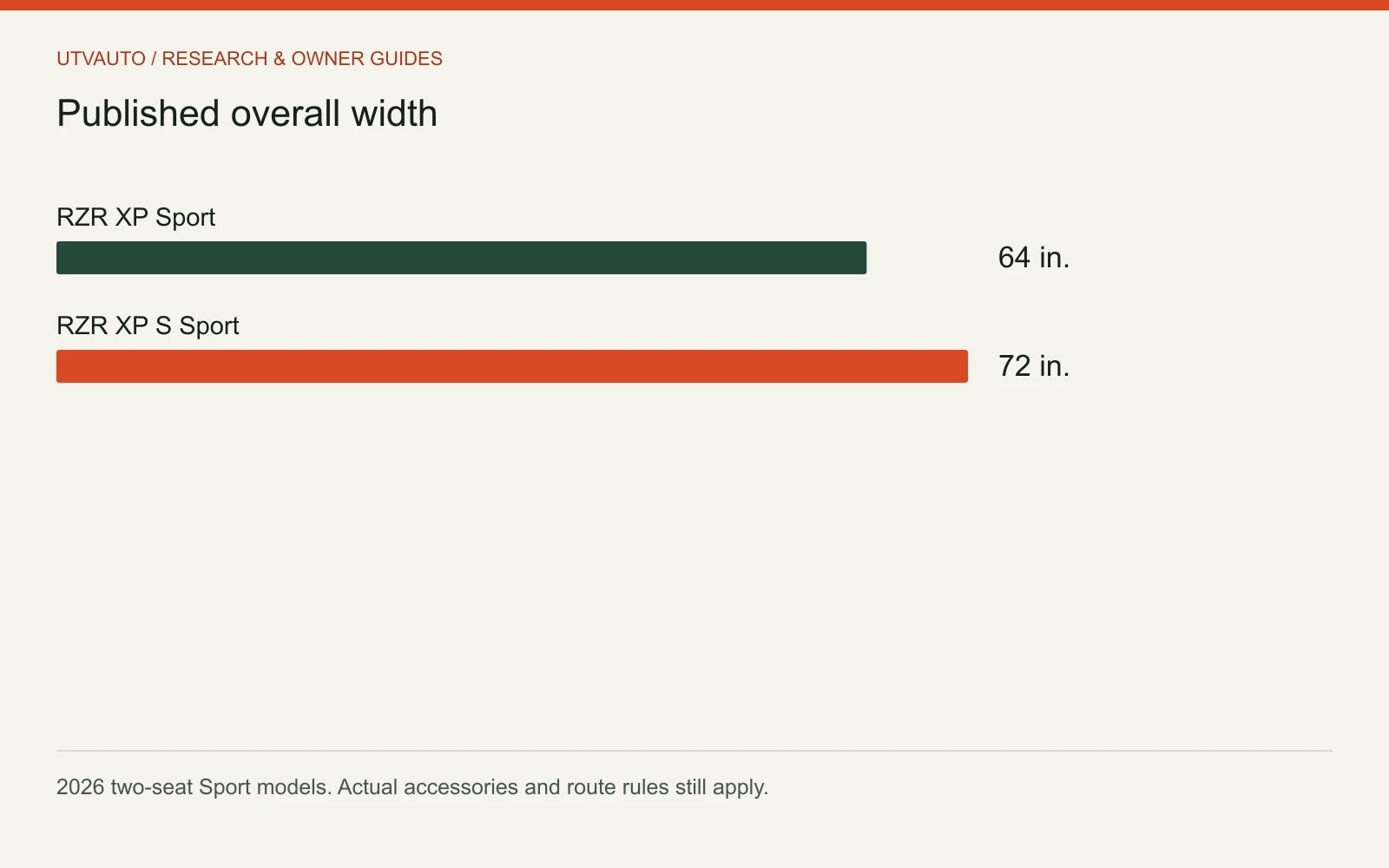
For the U.S. 2026 Polaris RZR XP Sport and XP S Sport, the first practical difference is width: 64 inches for XP versus 72 inches for XP S. The XP S also has larger factory tires, more wheel travel and a different transmission specification. It is a separate configuration, not an ordinary XP fitted with wider wheels.
This guide covers two-seat Sport trims in Polaris owner’s manual 9942079, Specifications. It excludes XP 4, XP S 4, Pro XP, Pro S and other RZR platforms. “XP S” and “Pro S” should not be shortened into the same model name on a quote.
Compare equivalent measurement definitions
| 2026 Sport specification | RZR XP | RZR XP S |
|---|---|---|
| Overall L × W × H | 119.5 × 64 × 71.1 in. | 122 × 72 × 75.5 in. |
| Wheelbase | 90 in. | 90 in. |
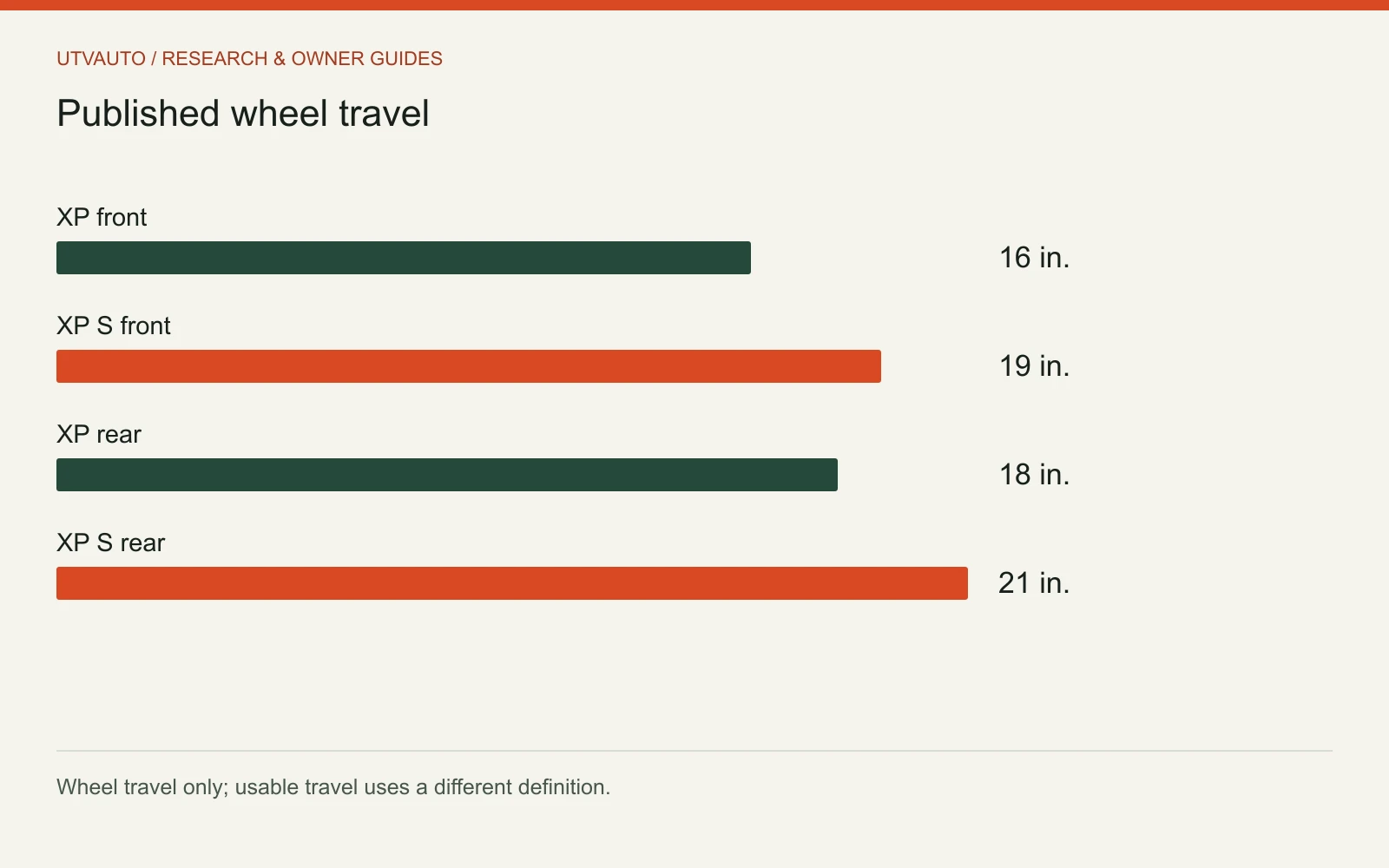
| Front / rear wheel travel | 16 / 18 in. | 19 / 21 in. |
| Ground clearance | 14 in. with 29-inch tires | 16 in. |
| Factory tire layout | 29 × 9-14 front; 29 × 11-14 rear | 32 × 10-15 radial, front and rear |
| Rear-box maximum | 300 lb | 300 lb |
| Maximum weight capacity | 740 lb | 740 lb |
Polaris also publishes usable travel, which is defined differently from wheel travel. The table compares wheel travel at both ends. The values do not establish a safe speed over rough ground or a measured handling advantage.
A width requirement can decide the purchase immediately
The published difference is eight inches. A gate or transport opening that only accommodates the 64-inch machine cannot be assumed to accommodate the 72-inch one. Actual installed wheels, tires, mirrors and other equipment still need measurement. Do not round the wider vehicle downward to force a fit.
For route access, consult the land manager’s current rule and how width is measured. A brochure category is not an access permit. For physical storage, measure the whole approach, including turning and ramp transitions. Use the trailer-fit worksheet to separate dimensions from loaded transport capacity.
More travel needs the right comparison
The XP S has three more inches of published front wheel travel and three more at the rear. That describes wheel movement, not a guaranteed comfort result. Tire construction, inflation, shock setup, terrain and load influence what the rider experiences. We have not performed a matched ride or handling test.
The XP S tire layout is also different: a nominal 32-inch radial tire on 15-inch wheels at each end, rather than the XP Sport’s staggered 29-inch tires on 14-inch wheels. Those changes are part of the factory application. They are not permission to reproduce the XP S specification with an aftermarket wheel-and-tire swap on an XP.
The wider machine does not add rated cargo here
Both identified configurations list a 300 lb rear-box maximum and 740 lb maximum weight capacity in the manual. Put people, cargo and accessories into the combined-load worksheet. Larger dimensions and a more aggressive appearance do not override the specified limits.
A spare, carrier, protection, roof and tools can meaningfully alter the delivered mass. The manual’s dry-weight definition omits serviceable fluids and may exclude some equipment. Do not treat dry weight as the mass you will load on a trailer; use the actual configured vehicle and scale evidence.
What to ask before signing
- Confirm full model name, Sport trim, seating and year in writing.
- Measure the route, opening and actual delivered vehicle before buying equipment around a nominal width.
- Request the matching manual and parts application for belts, filters, wheels and protection.
- Compare completed quotes with the same required equipment and arrange an appropriate demonstration.
Choose the XP when its size and approved capability cover the use case and a wider vehicle would fail an access requirement. Choose the XP S when its larger factory chassis-and-tire package fits your use, transport and operating area. If passenger count is the real requirement, compare XP and XP 4 using their separate dimensions and loading limits.
Do not confuse an XP with a Pro R Boost
If you are researching the newer turbocharged announcement, use the 2027 RZR Pro R Boost buyer guide as a separate platform reference. The XP/XP S dimensions and manual instructions on this page do not establish the specifications or maintenance of a Pro R Boost.

