
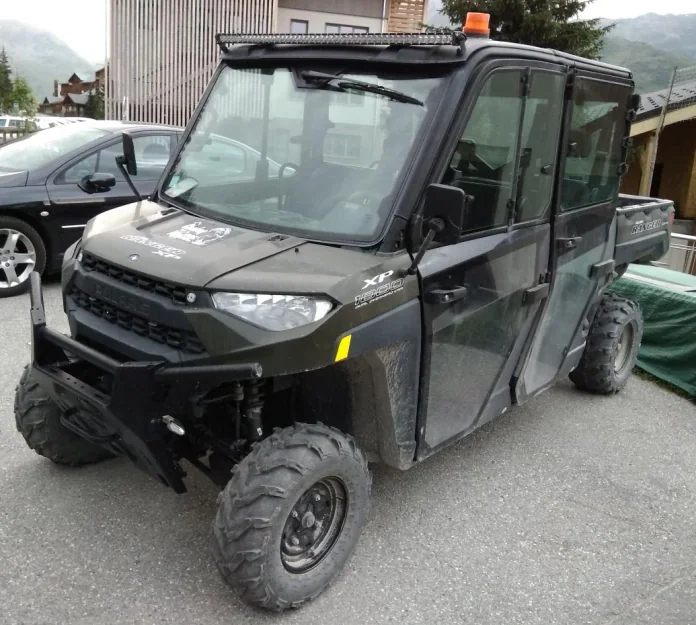
Featured reference photograph: Polaris Ranger XP 1000 black. It illustrates the vehicle family or accessory context, not the exact current trim or an independently tested installation. SolanaBogon / Wikimedia Commons / CC BY 4.0. Resized and converted to WebP; photograph retains its stated license.
A compatible rear panel may help with dust entering a cab, but it is not a universal cure. First identify how the windshield, roof, doors, vents and seals are arranged. Then verify the manufacturer’s recommendation for that system rather than buying a rear panel from a generic promise that it “eliminates dust.”
The 2026 RANGER catalog specifically describes dust swirl behind a roof-and-windshield cab and recommends a rear panel to reduce intrusion. UTVAUTO has not measured a reduction or proved that result for every vehicle and route.
Separate the documented recommendation from a guarantee
The catalog recommendation supports investigating the rear closure as part of this RANGER cab system. It does not establish a dust-removal percentage, a filtration rating or a result for a different platform. A panel that leaves unsealed openings or interferes with another accessory is a different installation.
The same catalog lists fixed poly rear panel 2883773, fixed glass 2879013 and sliding glass 2879015 in the relevant 1000/XP 1000 section. Confirm the full current application, installed doors and roof before treating any of them as a candidate for your vehicle.
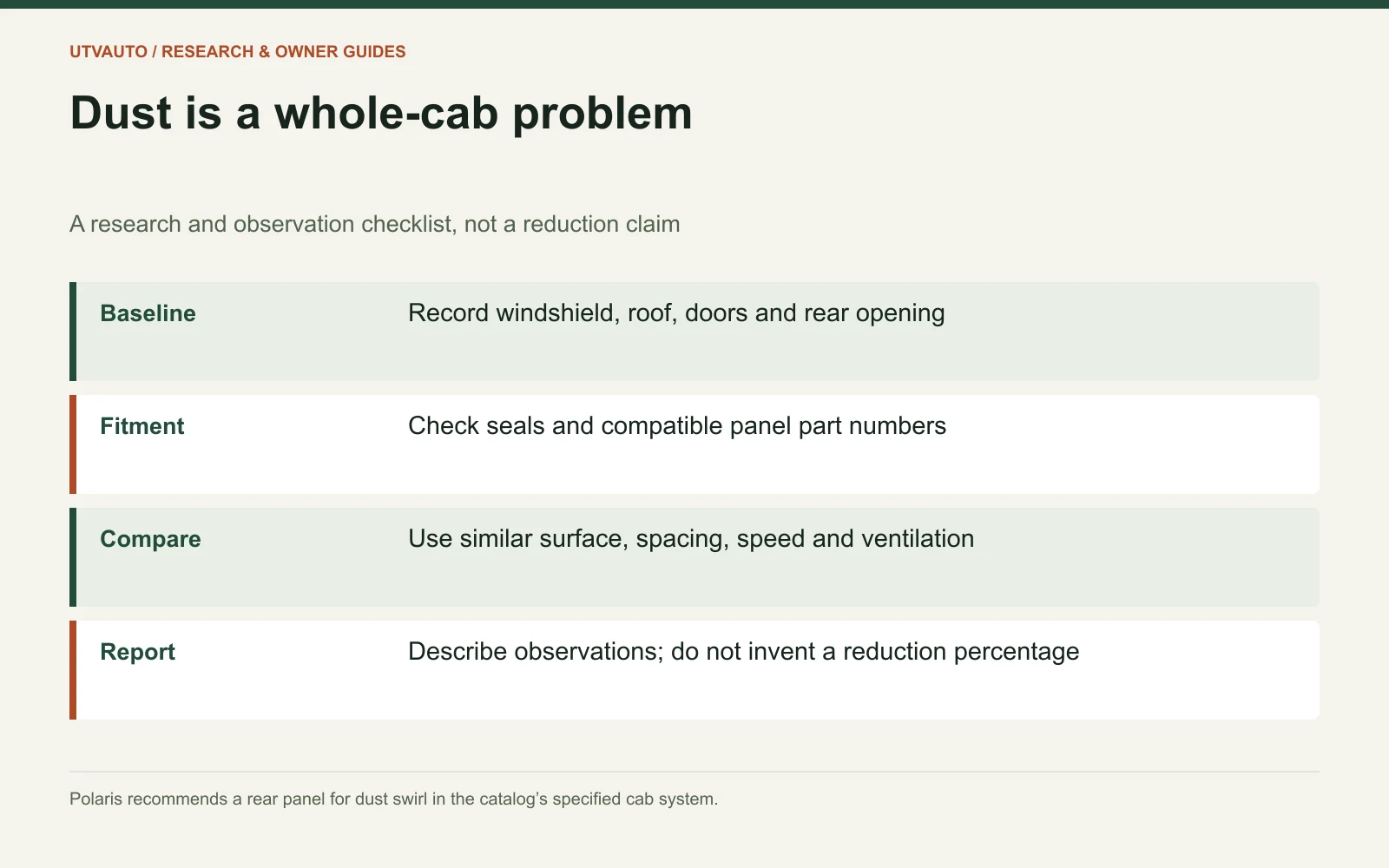
Record the existing cab before changing parts
| Record | Useful detail |
|---|---|
| Front panel | Part number; fixed, half, vented or opening design; permitted operating position |
| Roof and rear opening | Existing parts, openings and whether seals are seated correctly |
| Doors and lower openings | The actual closure arrangement, not the advertised package name |
| Other equipment | Mirrors, light mounts or a cargo accessory that affects fit |
| Conditions | Surface moisture, group spacing, speed and wind during the observation |
Photograph the installation only if you can safely do so while parked. A stationary image can document a gap or part number; it cannot prove the airflow pattern or quantify airborne dust.
Compare changes without overstating the evidence
If the manufacturer approves the configurations you are comparing, keep the route and conditions as similar as practical. Record which permitted vent or panel position was used. Change one variable at a time when possible and stop if visibility becomes unsafe.
A cleaner-looking seat on one trip may reflect a wetter surface or greater distance from the vehicle ahead. Describe a personal observation with its conditions rather than reporting it as a universal test. No UTVAUTO before-and-after test is claimed in this guide.
Ask for installation corrections before another accessory
Check loose or damaged seals and whether the parts are the documented combination. Adding a rear panel cannot correct a windshield or roof that is incompatible with the vehicle. If the complaint started after a cab change, give the supplier the complete part list and installation record.
Do not seal required ventilation, obstruct controls or make unapproved changes to the cab or ROPS in pursuit of a dust-free interior. Resolve fitment and visibility issues with the applicable instructions or qualified support.
Price the specific system change
Compare the exact rear panel, required seals and hardware, installation and any changed windshield/roof components. A sliding rear window offers a different access/ventilation arrangement from a fixed panel; its name does not establish superior dust performance.
See the front-windshield buying guide and the RANGER application checklist before combining parts. The objective is a documented, usable cab arrangement, followed by honest observations of the result.
Editorial collection: September 2026. This is a topic collection label, not a backdated first-publication date.


