
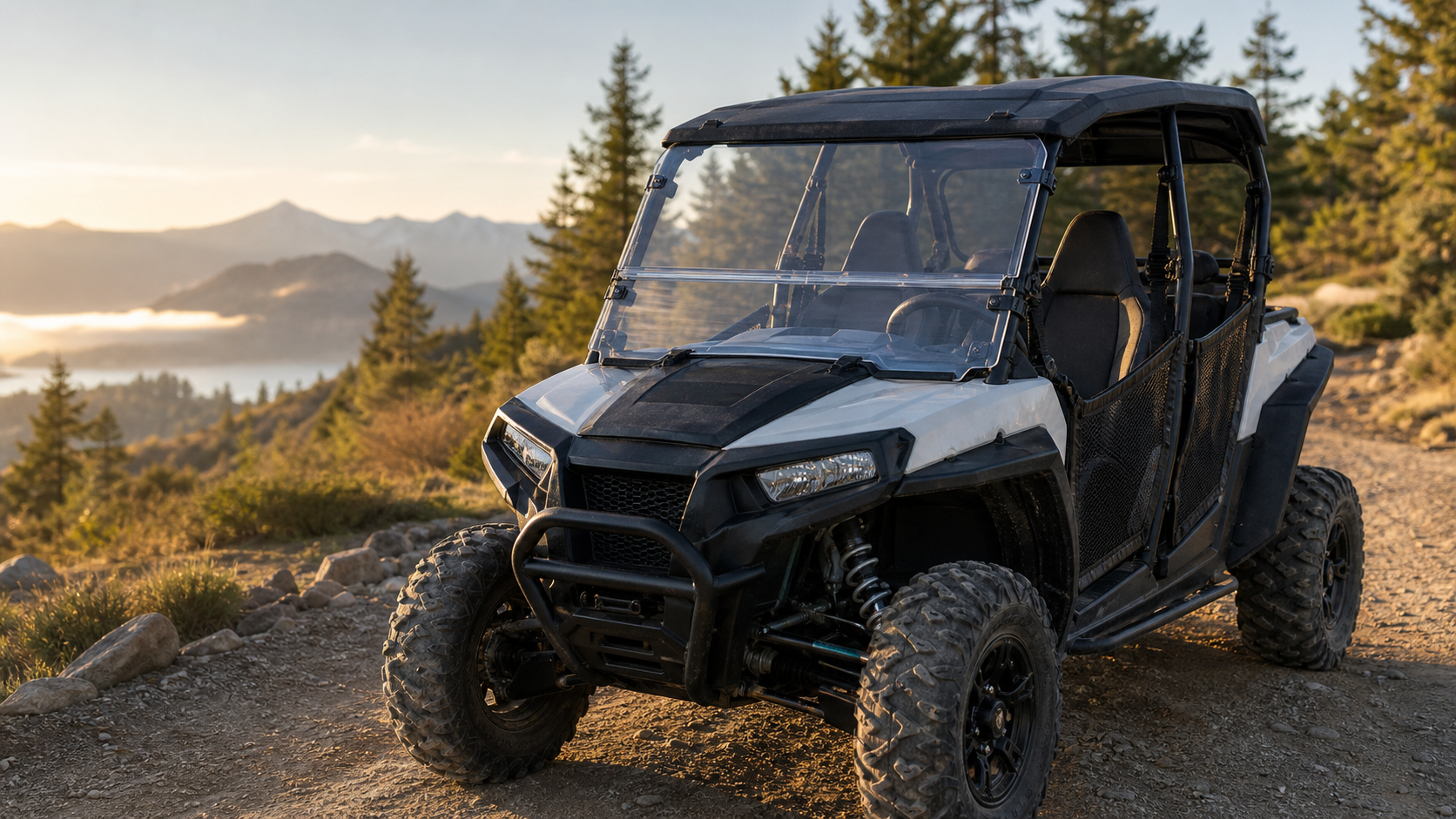
The best UTV windshield depends on weather, dust, trail speed, and whether the machine has a roof, rear panel, or cab. Full glass gives the clearest view and wiper compatibility, polycarbonate is lighter and impact resistant, half windshields improve airflow, and flip designs add flexibility.
Windshield Types Compared
| Type | Best for | Trade-off |
|---|---|---|
| Glass | Cab builds, winter, wipers | Heavy and usually expensive |
| Hard-coated polycarbonate | Trail use and impact resistance | Can scratch if cleaned poorly |
| Acrylic | Budget fair-weather use | Less impact resistant |
| Half windshield | Summer airflow and dust reduction | Less rain and cold protection |
| Flip windshield | Mixed seasons | More moving hardware to maintain |
Dust and Cab Pressure
A full windshield can pull dust into the cab if the rear of the vehicle is open. Roofs, rear panels, lower doors, and vented windshields all affect airflow. If dust is your main complaint, think about the whole cab system instead of buying one panel in isolation.
Fitment Checklist
- Match make, model, year, and trim.
- Check roof and mirror compatibility.
- Confirm clamp style if you have a cage-mounted accessory.
- Choose hard coating if trail branches and cleaning scratches are likely.
- Plan for wipers or washers if riding in rain, snow, or mud.
Cleaning Matters
Use the cleaning method recommended by the windshield maker. Dry wiping dusty polycarbonate can create permanent scratches. Rinse first, use a soft cloth, and avoid harsh solvents unless the product instructions allow them.
Windshield choice pairs naturally with work UTV comparisons such as Can-Am Defender vs Polaris Ranger. Also review pre-ride inspection habits and UTV light bar choices.
FAQ
Is glass better than polycarbonate for a UTV windshield?
Glass is clearer and wiper-friendly, while hard-coated polycarbonate is lighter and better for impact resistance. The better choice depends on use.
Why is my UTV cab dusty after adding a windshield?
Air pressure can pull dust from behind the cab. A rear panel or vented windshield may help.
Can I trailer a UTV with the windshield installed?
Follow the windshield maker’s instructions. Some designs should be removed or secured for transport.
Useful Sources
Choosing For Climate
Cold-weather riders usually appreciate a full windshield, especially with a roof, rear panel, and cab heater. Warm-weather riders may prefer a half or vented windshield because airflow matters more than full coverage. Mixed-season owners often choose a flip windshield so the same machine can handle morning cold and afternoon heat.
Rain and mud change the decision. A full windshield without a wiper can become hard to see through quickly. If you ride in wet conditions, glass or hard-coated polycarbonate with a compatible wiper may be worth the extra cost.
Material Details
Glass gives excellent clarity and is easier to clean, but it adds weight and can break from impact. Polycarbonate is very impact resistant, but non-coated versions scratch easily. Hard-coated polycarbonate is the better trail choice when branches, dust, and cleaning wear are expected. Acrylic is usually a budget choice for lighter use.
- Choose venting if dust or summer heat is a concern.
- Use a rear panel if a full windshield pulls dust into the cab.
- Confirm mirror, roof, and light bar clearance.
- Check whether the windshield can stay installed during trailering.
Bottom Line
A windshield should solve the conditions you actually ride in. For work and winter, full coverage makes sense. For hot trail riding, airflow may matter more. For year-round use, a vented or flip design often gives the best balance.
Accessory Compatibility
Many windshield complaints come from accessory conflicts rather than the windshield itself. A roof lip may block a flip windshield, mirrors may hit clamps, and a roof-mounted light bar can reflect into the driver’s eyes when a clear panel is installed. Before buying, make a list of existing and planned accessories so the windshield fits the whole build.
If children, passengers, or pets ride in the vehicle, visibility and airflow should matter as much as price. A scratched or fogged panel can become a safety issue, especially at dusk, in rain, or on dusty group rides.
Before final installation, sit in the driver seat and check sight lines through the panel, around the clamps, and over the hood. A windshield should improve comfort without creating blind spots, glare, or distracting vibration at normal riding speed.

