
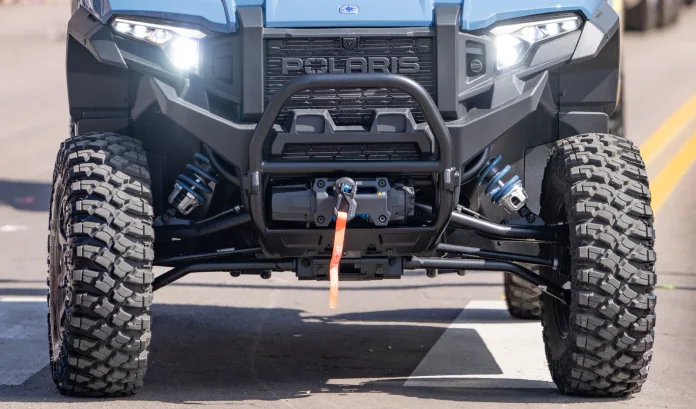
Featured reference photograph: Polaris ATV Winch (53034864566). It illustrates the vehicle family or accessory context, not the exact current trim or an independently tested installation. Tony Webster / Wikimedia Commons / CC BY 2.0. Resized and converted to WebP; photograph retains its stated license.
Inspect a UTV’s synthetic winch rope using the exact rope and winch manufacturer’s criteria before relying on it. Cuts, melting, progressive abrasion or an uncertain history need attention before a pull. A rope that looks acceptable in one photograph has not been cleared for use.
This guide draws inspection principles from WARN’s synthetic-rope guidance, document 87968 A6. That document is not a vehicle-specific UTV mounting or electrical application. Use your actual winch/rope instructions for compatibility, installation, rigging and replacement criteria.
Identify the installed system
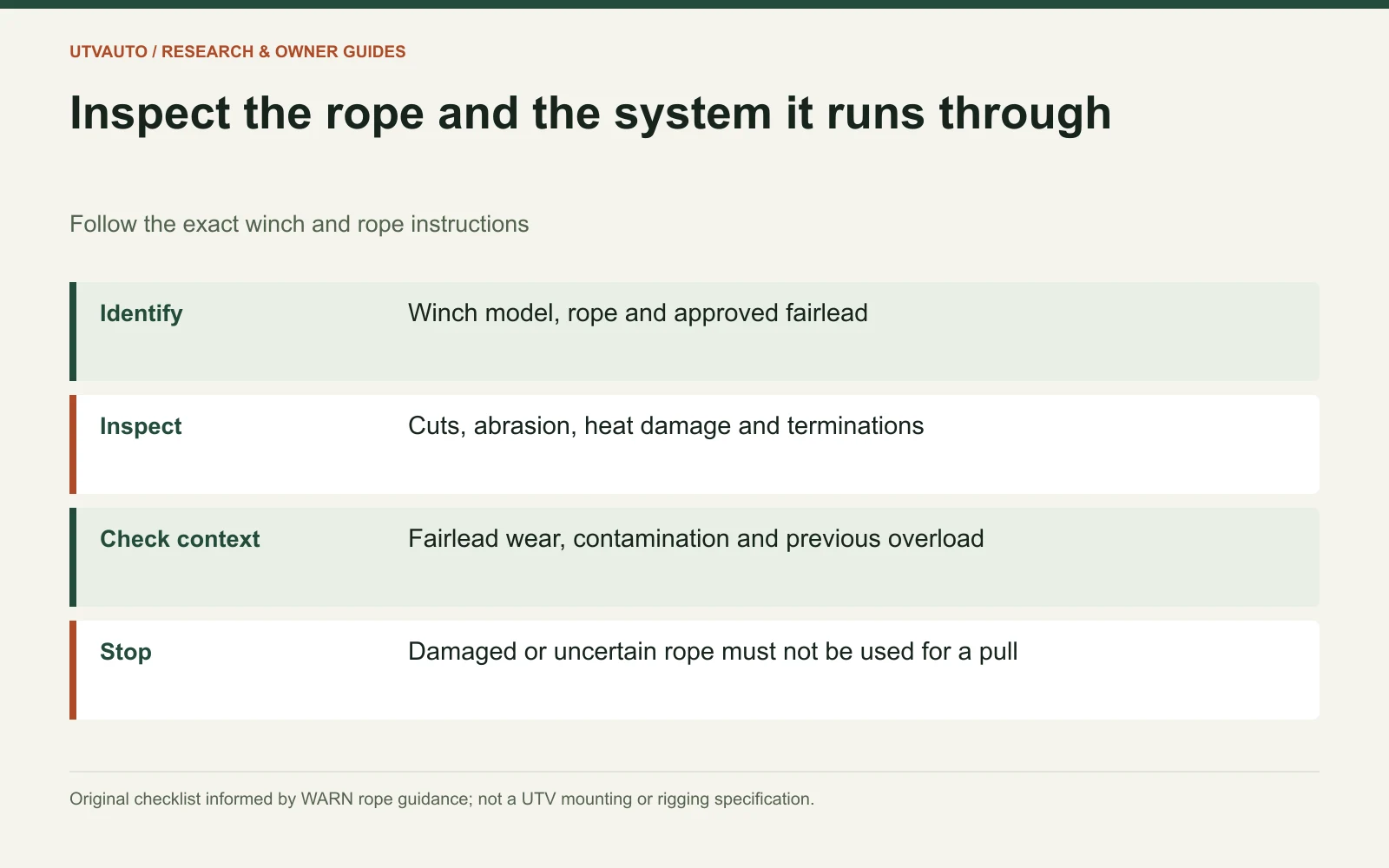
Record the winch model, rope specification, hook/termination and approved fairlead. If the vehicle was bought used, confirm what was changed. Replacing steel cable with synthetic rope is not established as safe merely by matching diameter or advertised breaking strength.
The drum, fairlead, attachment and installation procedure all matter. Do not copy a wrap count, mounting measurement or splice procedure from an unrelated winch. The winch application guide covers the separate initial capacity and mounting decision.
Distinguish observations that need different responses
| Observation | Reason to investigate | Action |
|---|---|---|
| Light surface fuzz that stabilizes | WARN describes initial outer-filament fuzz on new rope | Compare with the exact manufacturer’s criteria; do not assume every fuzzy rope is sound |
| Increasing roughness, cuts or reduced bulk | May indicate wear and lost strength | Stop use and apply the documented inspection/replacement criteria |
| Fused, melted or stiff glazed areas | Potential heat damage | Do not perform another pull to test it |
| Flattening, lumps or unknown chemical contamination | May need specialist assessment or replacement | Resolve the condition before relying on the rope |
WARN also discusses the inner fibers and terminations. We do not turn one visible symptom into a numerical remaining-strength estimate. Manufacturer criteria may distinguish several types of damage; a generic “ten percent is fine” rule is not supplied here.
Inspect without creating another hazard
Follow the winch instructions for unloading, isolating controls and safely exposing the rope for inspection. Keep clear of pinch points and never inspect by handling a moving or loaded rope. If safe inspection cannot be arranged, use qualified service.
Include the hook, sleeves, fairlead and other associated parts in the inspection. A rough or damaged contact surface can damage replacement rope, so replacing the line alone may leave the cause unresolved.
Cleaning does not restore damaged fibers
The cited WARN guidance specifies low-pressure water for its synthetic rope and excludes chemical cleaning. Apply the instructions for your actual rope; do not add solvents or use a pressure washer because the line appears muddy.
After cleaning, unresolved cuts, heat damage or other disqualifying conditions still require the specified action. Improved appearance is not a strength test. When the condition or the correct replacement is uncertain, obtain manufacturer/qualified advice before another pull.
Keep a useful service record
Record the installed part number, installation date, inspection observations and any event that may have damaged the line. This helps the next inspection distinguish an unchanged surface from progressive damage. It is not a universal service-life guarantee.
Use only a documented compatible replacement and the correct installation instructions. The accessory research center connects rope inspection with winch selection, load planning and cleaning guidance.
Editorial collection: October 2026. This is a topic collection label, not a backdated first-publication date.