
Editorial collection: November 2026. Collection month is an editorial label; the page retains its actual first-publication date.
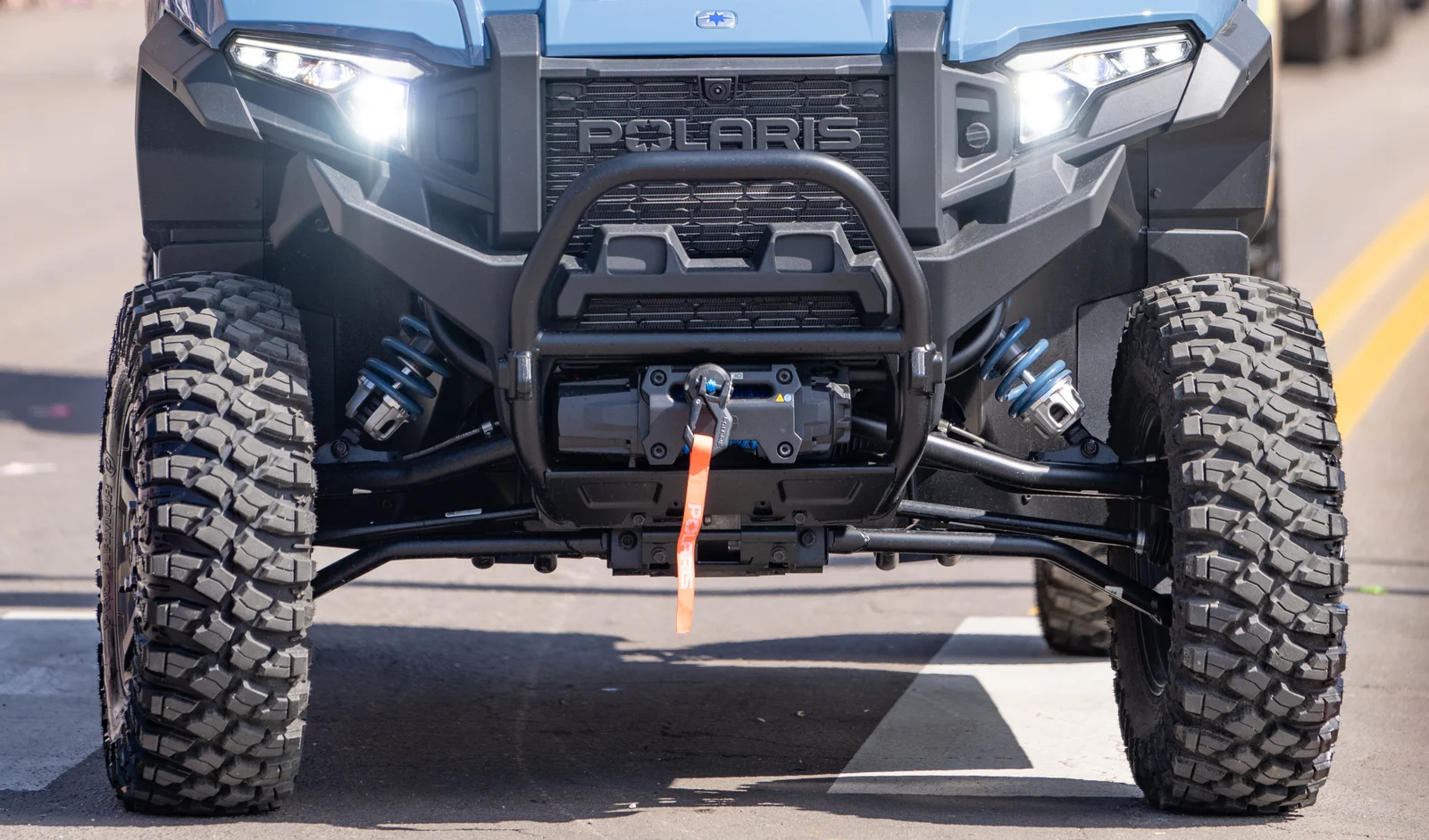
Featured photograph: A winch installed at the front of a Polaris utility vehicle; reference photograph, not a tested product recommendation. Tony Webster / Wikimedia Commons / CC BY 2.0. Resized and converted to WebP; photograph retains its stated license.
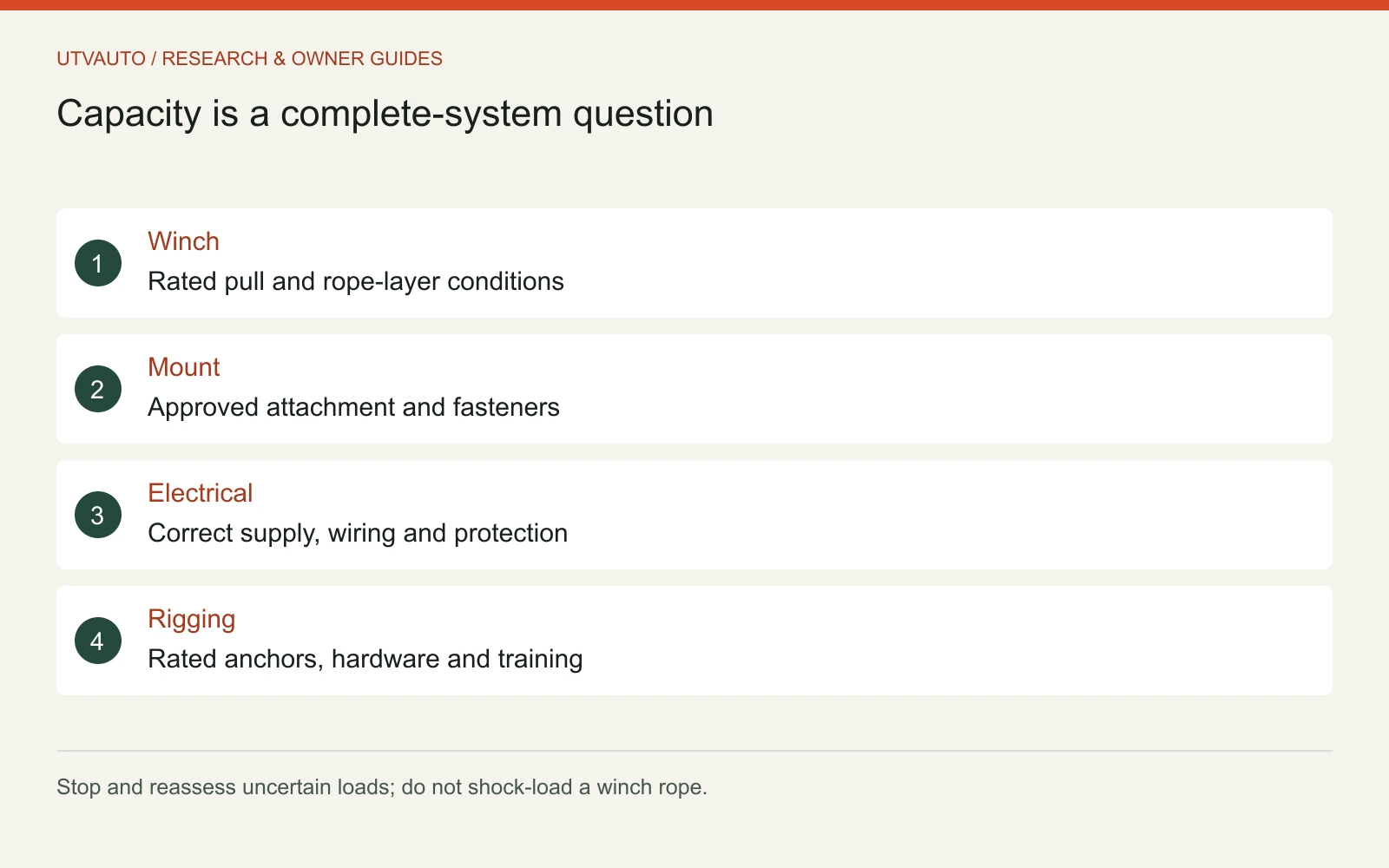
Select a UTV winch using loaded vehicle mass, the winch maker’s sizing guidance, approved mounting, electrical compatibility and intended use. A line-pull number is only one part of the decision. It is not a cargo weight rating or permission to attempt every recovery of a vehicle below that number.
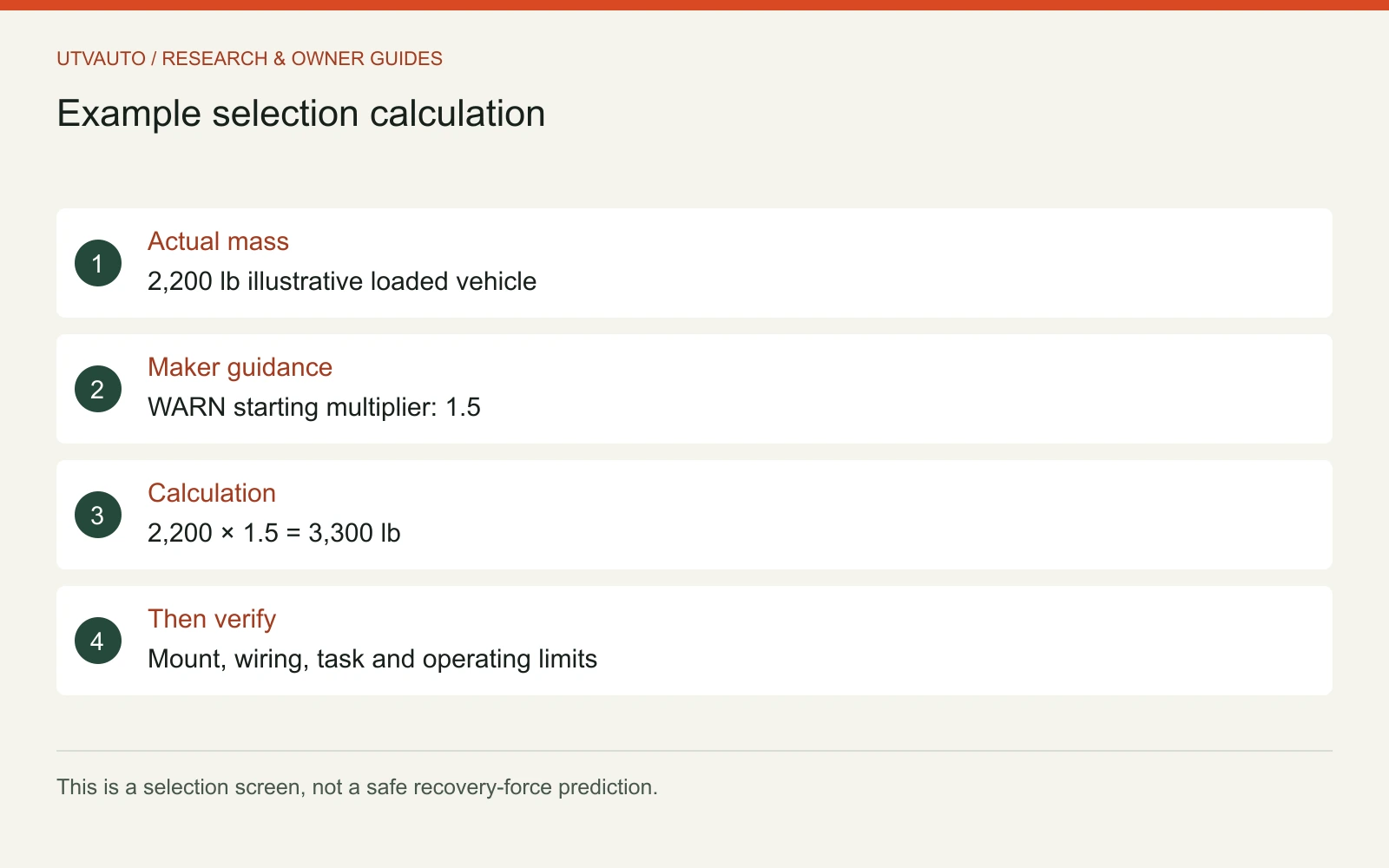
WARN’s Basic Guide to Winching gives a starting selection formula of gross weight multiplied by 1.5 and explains that rated maximum pulling capacity occurs on the first rope layer. Use that as attributed manufacturer guidance, then verify the particular product and complete installation. It is not a universal guarantee that any stuck vehicle can be recovered safely.
A sizing calculation needs the correct input
If an illustrative ready-to-recover vehicle weighs 2,200 lb, the calculation 2,200 × 1.5 gives 3,300 lb. That is a selection screen, not the predicted recovery force. Mud suction, slope, obstacles, rope layers and rigging change the task. Do not use a stripped dry weight when the vehicle normally carries a cab, spare and tools.
Why rope layers matter
As rope builds up on the drum, available pulling capacity decreases from the first-layer rating. More rope on the drum does not mean more available pull. Follow the product’s minimum-wrap instructions and operating limits; do not spool past the safe minimum in an attempt to obtain a larger rating.
A stalled or overheated winch is a reason to stop and reassess, not to add throttle, shock-load the rope or keep operating the control. Read the specific duty and cooling instructions. The vehicle charging system and battery also have to support the installation.
The compatibility checks that a capacity number misses
| Check | Evidence to obtain |
|---|---|
| Mount and fasteners | Approved vehicle application and mounting instructions |
| Drum / fairlead clearance | Correct rope path without rubbing or interference |
| Electrical system | Specified voltage, wiring, protection and battery requirements |
| Controls | Safe installation and predictable operation |
| Rope / hook / accessories | Compatible type, condition and rated application |
| Intended task | Recovery, plow lifting or another approved use |
Do not assume two winches with the same nominal rating share bolt patterns, fairleads or current requirements. Have high-current wiring and uncertain mounting work completed by a qualified installer. A switch that operates correctly does not prove the wiring is adequately protected.
Synthetic rope and wire rope need different care
Inspect the actual product according to its manufacturer’s instructions. Cuts, heat damage, abrasion, crushing and other defects need assessment rather than a generic “looks fine” judgment. Use the approved fairlead and compatible hardware. Do not replace a component with one selected only by diameter or appearance.
WARN’s guide includes rope handling, keeping people clear of the loaded line, safe attachment and correct spooling. Read the complete guide and your product manual before a recovery. This selection article does not replace hands-on training or a recovery plan for the actual terrain.
Do not confuse mechanical advantage with unlimited capacity
A pulley arrangement changes forces and requires correctly rated anchors and rigging. It does not raise every component’s rating or make a weak attachment safe. Do not attach a loaded line to an unapproved suspension, bumper or cargo point. Use trained assistance if the anchor, direction or load path is uncertain.
A winch is not a vehicle restraint for highway transport and should not be used to lift people. For carrying the UTV, use the transport and securement checks. For a plow, check the complete plow lift application rather than treating a recovery rating as approval for repeated blade lifting.
A reviewable purchase decision
Write down the actual configured mass, selection calculation, exact winch and mount part numbers, installation requirements and intended tasks. Ask the supplier to confirm the combination and exclusions. If the paperwork does not resolve a mounting or electrical question, resolve it before purchase rather than choosing the next larger line-pull label.


