
Start with the contents and the installed position
Choose a UTV storage box by listing what it must carry and where it will be mounted. A large advertised volume is not evidence that the box fits your cargo bed, preserves access or stays within the vehicle’s loading requirements. The complete installation includes the box, its mounts and everything inside. Treat those as a system before comparing weather protection, locks or appearance.
This guide addresses removable and permanently mounted cargo-storage purchases. It does not rate a product’s weather resistance or provide a universal mounting procedure. The planning method applies to organizing a purchase; the actual vehicle, box and mounting instructions decide what installation is permitted. A useful shortlist should therefore include both compatible candidates and clear reasons for excluding attractive but unsuitable options.
Make an inventory that can be measured
Separate the contents into tools, recovery equipment, personal supplies and items that should not share the same compartment. Record approximate dimensions and measured weights where those affect the decision. Think about the shape of the largest item rather than adding only the volumes of small objects. A long tool can be difficult to store even when a container has plenty of nominal capacity.
Identify which items need access during an ordinary stop and which are rarely used. The frequently used items should not require unloading an entire box. Keep first-aid and emergency planning distinct from mechanical supplies; follow the appropriate product instructions for their storage. Do not assume a general cargo box is an approved container for fuel, chemicals or any other material with separate transport requirements.
Measure the bed and the opening envelope
Measure the usable installation area between actual obstructions. Include wheel arches, bed hardware, tie-down locations and any accessory already occupying the space. Measure the lid’s opening path and the room needed to remove the contents. A box that physically sits in the bed may still collide with a rear window, light, seat arrangement or another storage assembly when opened.
Consider a hypothetical rectangular space that is wider at its upper edge than at its floor. A supplier’s external width may describe the widest part of the box, while its mounting base has a different footprint. Request both dimensions and a drawing where available. Do not confuse external capacity, internal capacity and the space required for the lid or mounting brackets. Record each measurement with its definition so a seller can answer the actual fitment question.
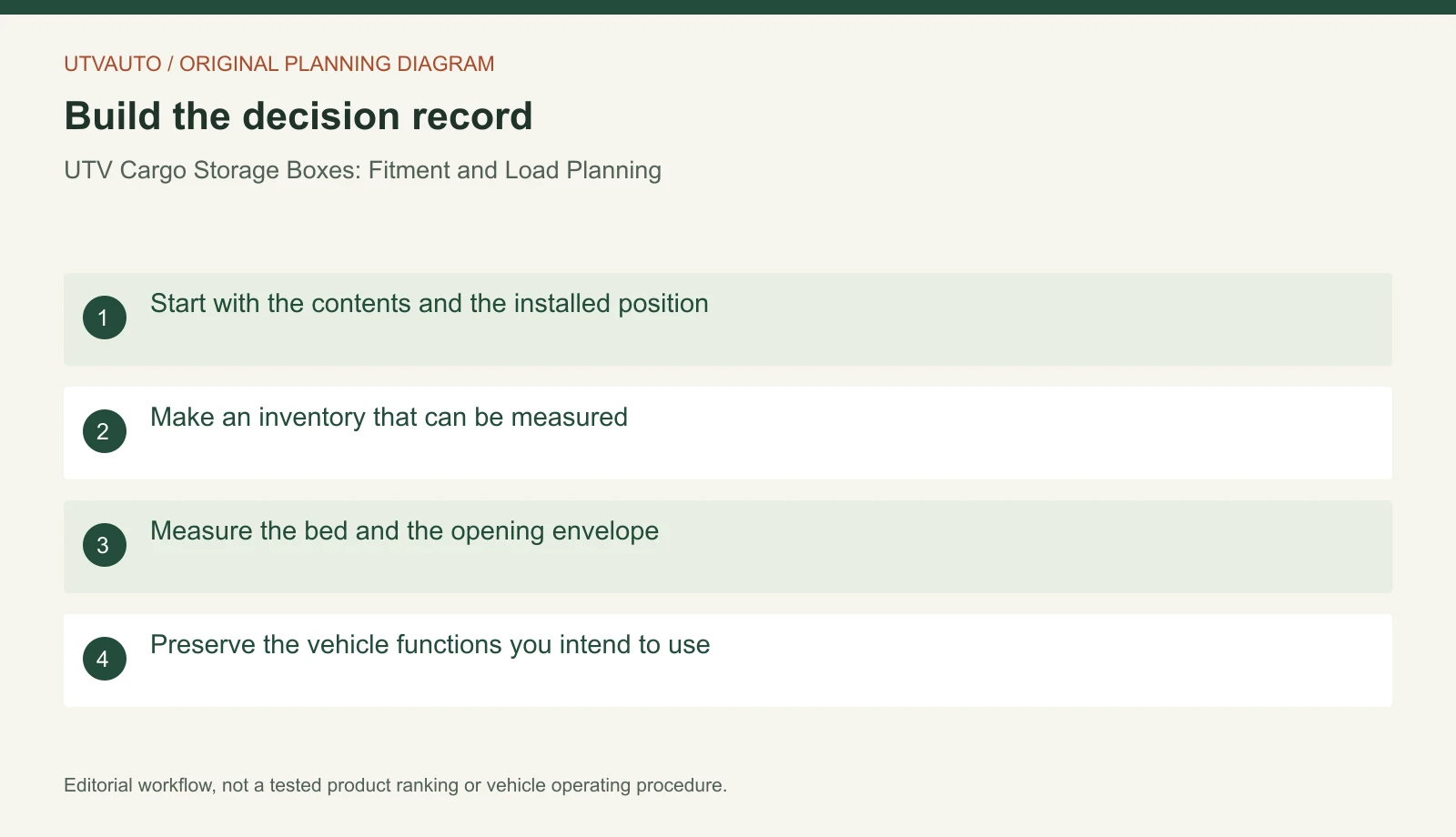
Preserve the vehicle functions you intend to use
List the functions the installation must retain: dumping the bed, accessing service points, using designated tie-downs, reaching a latch or changing an approved seating configuration. Check them with the relevant instructions before ordering. A storage arrangement suitable for one vehicle configuration is not automatically suitable for another version that shares its engine or body styling.
For a multi-purpose vehicle, write two operating scenarios. One might be carrying work tools with the box installed; another might require removing the box to use the cargo area differently. Establish the permitted removal method and the weight of the complete removable assembly. Do not discover after purchase that a supposedly convenient box blocks an access point you need for routine checks or requires an unapproved workaround to change the vehicle configuration.
Count the box and its hardware before the tools
Vehicle capacity, cargo-bed capacity and the strength of an accessory mounting system are separate questions. Use the matching manual to identify how equipment and cargo count toward each applicable limit. A storage box does not increase the bed rating because it organizes the load, and empty space in a box does not establish remaining vehicle payload. Weigh the installation when estimates leave an important decision uncertain.
Use a transparent hypothetical inventory: a box, brackets and contents each have their own entry, and the total is counted once in the relevant vehicle load budget. Avoid counting a factory-installed component twice when using a capacity definition that already includes it. If the supplier provides a box load limit, preserve its exact scope. Do not transfer that value to a different mount, or assume it cancels the vehicle’s lower applicable limit.
Compare retention and mounting documentation
Ask for the approved attachment method, included hardware, required adapters and any excluded applications. A tight fit between two bed walls is not documentation of load retention. Nor is the presence of a lock evidence that a container is secured to the vehicle. Keep theft deterrence, lid closure and attachment strength as separate purchasing questions.
Do not choose a drilling location or modify a protective structure from a generic online photograph. Obtain the actual mounting instructions and resolve conflicts with existing bed equipment. If an advertised quick-release system is part of the appeal, establish how it locks into its operating position and what inspections the instructions require. A replacement latch or bracket should match the documented assembly rather than merely resemble the missing component.
Treat water and dust claims as questions to verify
Ask what a weather-resistance claim covers and whether the manufacturer identifies any test method or limitation. A product description saying weatherproof does not tell you how it behaves during pressure washing, prolonged rain or a damaged seal. UTVAUTO has not performed those tests for the products a reader may be considering. Record the actual stated claim rather than turning it into a numerical performance score.
Look at the documented seal, latch, drainage and cleaning provisions. Ask whether replacement seals and hardware are available, and how an owner should inspect or maintain them. Consider how the contents would be protected if the outer box leaked. Choosing an appropriate inner case for a sensitive item is a different decision from claiming that every item can safely be stored in any sealed-looking compartment.
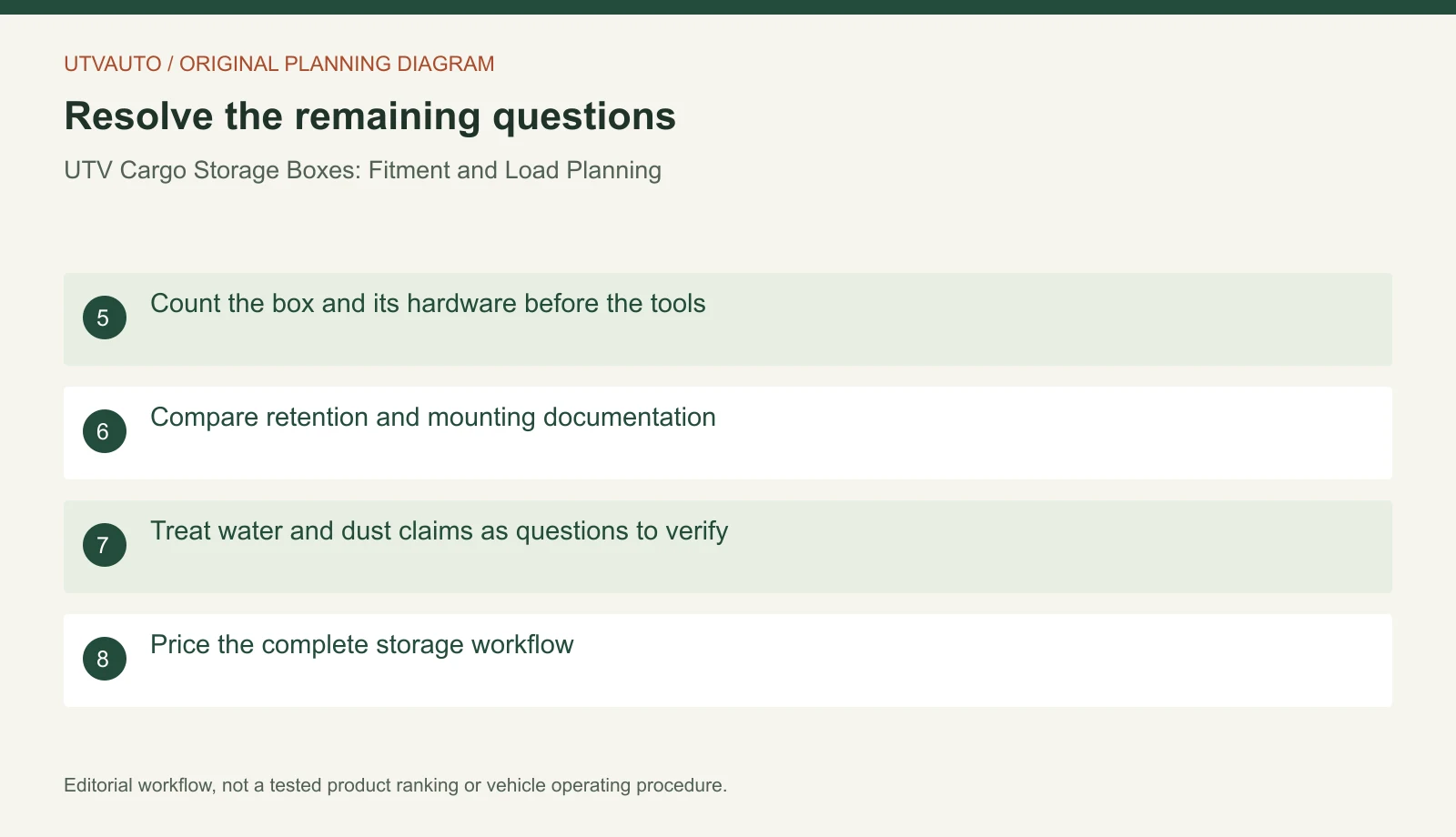
Price the complete storage workflow
Compare the box, mounting kit, required adapters, any approved dividers and installation as one purchase. Establish whether the quoted dimensions describe the same configuration in each candidate. Add the practical cost of removing or relocating existing equipment where that is actually required. A cheaper container can become the more expensive arrangement if the needed mounts or replacement parts are unavailable.
Before ordering, send the seller your vehicle identity, bed measurements, photographs of existing equipment and the list of functions you want to retain. Request a written answer identifying the exact box and mounting package. Save that answer and the instructions with your maintenance records. The result should be an organized load you can identify, access and account for, rather than a large container whose compatibility and weight remain unresolved after delivery.
A worked purchase scenario for a shared property vehicle
Suppose a property owner wants to carry frequently used hand tools and a separate supply bag. One candidate box offers greater nominal volume but blocks convenient access to an existing bed latch. Another has less volume but a documented mounting arrangement and enough room for the measured contents. Neither product becomes the better choice from volume alone. The decision depends on the functions and access the owner actually needs to preserve.
Create a packing trial on paper before buying. List the largest items, the order in which they will be used, and the access needed for each. Identify anything that should be kept in a separately suitable container. Ask the supplier for internal dimensions and the permitted opening envelope, then compare those with the actual bed. Keep uncertain measurements as questions instead of rounding them optimistically to make a candidate fit.
Finally, check the complete loaded arrangement using the correct vehicle definition and the component instructions. Record the weight source for the box and mounts and whether the contents were measured or estimated. If the purchase changes how the bed is used or accessed, update the operating and service notes for everyone sharing the vehicle. The practical gain is an organized installation that another user can understand, rather than a storage solution that works only when its original buyer is present.
Related UTVAUTO resources
- Calculate the counted vehicle load
- A specific Pioneer storage comparison
- Keep installation and parts records
Sources and scope
This is a research-based planning guide, not a UTVAUTO product test, installation or professional inspection. Manufacturer and safety references were checked November 9, 2026. Use the exact vehicle and component instructions for operational requirements.
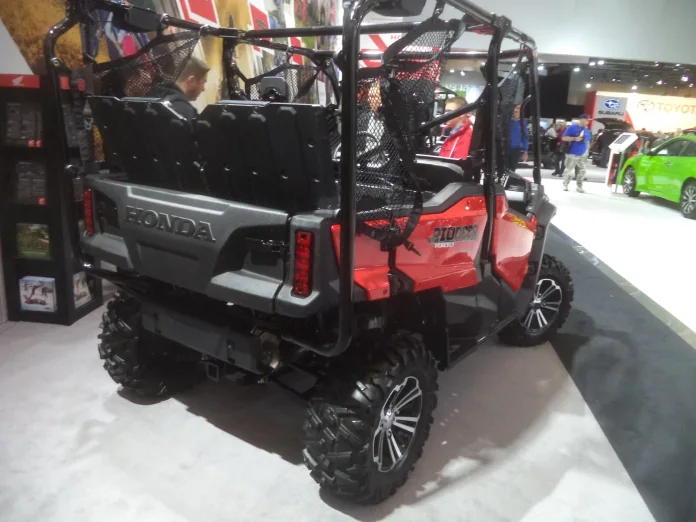
Featured archival reference photograph: Honda Pioneer 2 (31859498244). It illustrates vehicle context, not a UTVAUTO test, the exact equipment discussed or an endorsement. Zytonits / Wikimedia Commons / CC BY-SA 2.0. Resized and converted to WebP; photograph retains its stated license.