
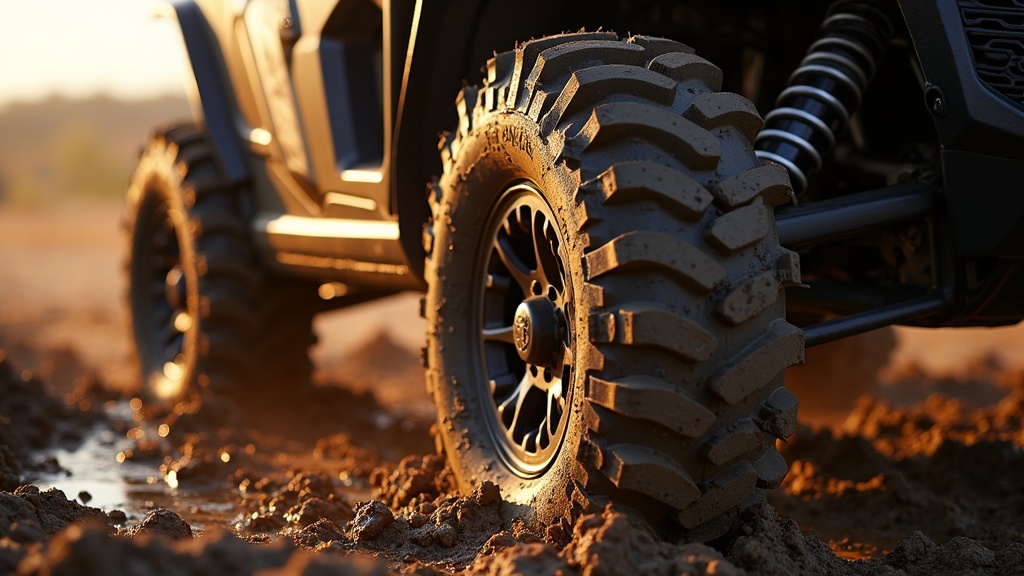
For many recreational UTV riders in mud, a practical starting range is roughly 4-8 PSI, but the safest pressure depends on tire construction, wheel setup, vehicle weight, load, terrain, and whether you are using beadlock wheels. Start conservative, adjust slowly, and always carry a way to reinflate.
Key Takeaways
- Lower tire pressure can improve flotation and traction in soft mud by increasing the tire contact patch.
- Going too low can cause bead separation, sidewall damage, poor steering response, and rim impacts.
- Heavy utility UTVs usually need more pressure than lighter sport UTVs carrying the same tire style.
- Always reinflate before pavement, high-speed hardpack, hauling, or long transport sections.
Why Tire Pressure Matters in Mud
Mud is a low-traction, high-resistance surface. A tire that is too firm tends to dig down and spin. A tire that is slightly aired down can spread vehicle weight over a larger contact patch, helping the tire float and keep the tread working.
The trade-off is support. As pressure drops, the sidewall flexes more. That can help traction, but it also increases the risk of the tire rolling on the rim, unseating the bead, or taking sidewall damage from hidden roots and rocks.
UTV Mud Tire Pressure Starting Points
The table below is a general starting point, not a universal rule. Use your tire manufacturer’s guidance, wheel setup, vehicle manual, and terrain conditions before making final pressure decisions.
| UTV setup | Conservative mud starting range | What to watch |
|---|---|---|
| Light sport UTV | 5-8 PSI | Sidewall roll in fast turns, bead security, rim impacts |
| Mid-size trail or recreation UTV | 6-9 PSI | Load, passenger weight, tire heat, steering response |
| Heavy utility or work UTV | 7-10 PSI | Payload, towing, sidewall support, tire temperature |
| Beadlock wheel setup | May allow lower pressure | Still depends on tire, wheel, load, and terrain |
If you are still choosing tires, read our best UTV tires guide first. Tire type matters as much as pressure: mud tires, all-terrain tires, and hardpack tires respond differently when aired down.
How to Adjust Tire Pressure on the Trail
- Check pressure cold at the trailhead with a low-pressure gauge.
- Start near the higher end of your safe range if the UTV is loaded or the trail includes rocks.
- Drop pressure in 1-2 PSI steps instead of making a large change at once.
- Drive a short test section and check steering, sidewall flex, and traction.
- Stop lowering pressure if the tire feels unstable, folds heavily in turns, or exposes the rim to impacts.
- Air back up before pavement, hardpack, hauling, or faster riding.
Common Mistakes
Running Too Low Without Beadlocks
Very low pressure can work in specialized setups, but it is risky on a typical trail UTV without beadlock wheels. If the bead unseats in mud, the ride can turn into a recovery job quickly.
Forgetting Vehicle Weight
A two-seat sport UTV and a loaded utility UTV do not need the same pressure. Cargo, passengers, tools, coolers, and towing loads all increase the support the tire needs.
Using Mud Pressure on Pavement
Pressure that helps in mud can overheat tires and damage sidewalls on pavement or long hardpack sections. Carry a compressor so airing back up is part of the routine, not an afterthought.
Does Tire Pressure Affect Top Speed?
Yes. Low pressure increases tire flex and rolling resistance, which can reduce speed and add heat. If your main goal is speed rather than mud traction, see our Polaris RZR 1000 top speed guide and Polaris Ranger speed and torque guide for broader setup considerations.
Tools to Carry
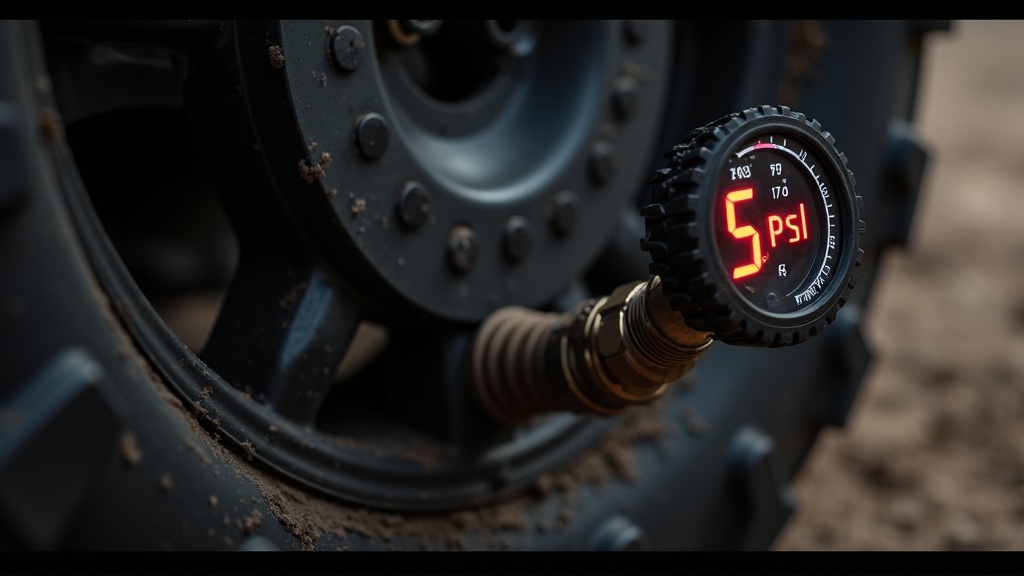
- Low-pressure tire gauge that reads accurately below 15 PSI.
- Portable 12V compressor or other reliable air source.
- Tire deflators or valve-core tool.
- Tire plug kit and sidewall-aware repair plan.
- Gloves, flashlight, and a safe place to work away from trail traffic.
FAQ
What PSI should I run in UTV tires for mud?
Many riders start around 4-8 PSI for mud, but a safer range depends on tire type, wheel setup, vehicle weight, and terrain. If you are unsure, start higher and lower pressure gradually while checking sidewall support.
Can I run 4 PSI without beadlocks?
Sometimes, but it increases the chance of bead separation, especially with sharp steering inputs, side loads, or hidden impacts. For non-beadlock setups, be conservative and avoid dropping pressure just because another rider does.
Should front and rear UTV tires use the same pressure?
Equal pressure is a simple starting point. Some riders adjust front and rear pressure based on load and steering feel, but beginners should keep changes small and predictable.
Do mud tires need less pressure than all-terrain tires?
Not always. Mud tires often have aggressive tread and may have stiffer sidewalls, but pressure still depends on construction, vehicle weight, wheel setup, and terrain. Follow tire manufacturer guidance when available.
Editorial note: Tire pressure affects safety, handling, tire wear, and vehicle reliability. This article provides general setup guidance, not a substitute for your owner’s manual, tire manufacturer guidance, or advice from a qualified technician.

