
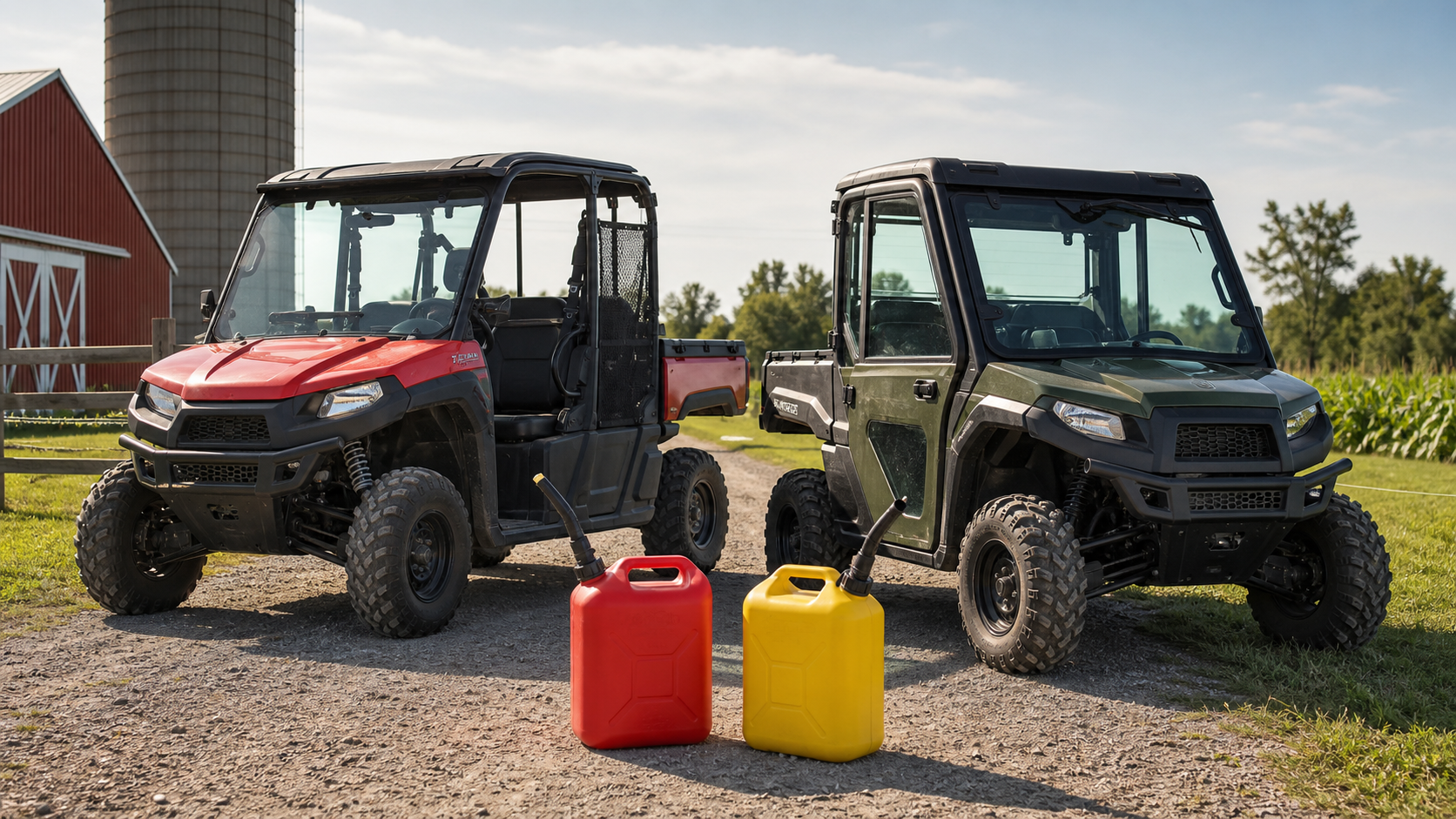
Gas UTVs usually make more sense for mixed recreation, trail riding, and sport use, while diesel UTVs can make sense for farms, estates, job sites, and fleets that value low-speed work and fuel commonality. The best choice depends on how the machine will be used, serviced, stored, and fueled.
Gas vs Diesel Comparison
| Factor | Gas UTV | Diesel UTV |
|---|---|---|
| Best fit | Trail, family, sport, mixed use | Farm, fleet, utility, low-speed work |
| Power feel | Quicker throttle response | Low-speed torque focus |
| Noise and vibration | Often smoother | Can be louder depending on model |
| Fuel logistics | Easy for recreational owners | Useful where diesel is already on site |
| Cold weather | Generally straightforward | May need more cold-weather planning |
When Gas Is The Better Choice
Gas is usually the practical pick for riders who trailer to trails, ride with family, want broader model selection, or care about acceleration and higher-speed comfort. Gas machines also dominate many sport and recreation categories.
When Diesel Makes Sense
Diesel can be attractive when the UTV is part of a working property or fleet that already stores diesel for tractors, trucks, or equipment. It may also suit slow-speed utility tasks where throttle response and high-speed recreation are less important than steady work.
Maintenance and Storage
- Follow the owner manual for fuel, oil, filter, and service requirements.
- Think about cold starts, fuel storage quality, and seasonal use.
- Compare dealer support in your area before choosing a less common drivetrain.
- Do not assume diesel automatically means lower total cost; purchase price and service can offset fuel savings.
For broader ownership planning, read our UTV price comparison guide, beginner UTV buying guide, and pre-ride checklist.
FAQ
Are diesel UTVs better for towing?
They can be useful for low-speed work, but towing depends on the exact model rating, brakes, terrain, payload, and cooling system.
Are gas UTVs better for trails?
Usually, because model selection, throttle response, and suspension choices are broader in recreational gas machines.
Which is cheaper to own?
It depends on purchase price, fuel access, service costs, hours used, and resale. Compare total ownership cost, not only fuel price.
Useful Sources
The Ownership Context Matters
Fuel type is not only an engine decision. It affects storage, cold starts, maintenance habits, resale audience, and how the machine fits with other equipment on the property. A diesel UTV may be logical on a farm that already stores diesel, but less convenient for a recreational owner who fills up at ordinary gas stations on the way to a trailhead.
Performance Expectations
Gas UTVs usually offer broader choices for recreation and sport riding. They tend to feel more responsive and are available across many trim levels. Diesel UTVs are usually positioned around utility work, fleet use, or slow-speed durability rather than fast acceleration. That does not make one better; it makes them different tools.
- Choose gas if trail performance and broad model selection are priorities.
- Consider diesel if fuel commonality and slow utility work matter most.
- Compare actual payload and towing ratings, not assumptions about torque.
- Ask the local dealer which models they service regularly.
- Think about winter storage and fuel quality if the machine sits.
Resale and Long-Term Use
Resale depends heavily on local demand. In rural markets with diesel equipment, a diesel UTV may have a clear buyer. In recreational markets, gas models may be easier to sell because more buyers understand them. Keep records, avoid rough modifications, and maintain the machine well regardless of fuel type.
Bottom Line
For most mixed-use owners, gas is the simpler answer. For farms, fleets, and utility-first buyers with diesel already on site, diesel can make sense. Compare the total system around the machine, not only the engine label.
Questions For The Dealer
Ask the dealer which fuel type they service most often, what parts are commonly stocked, and how warranty support works for your intended use. Also ask about maintenance cost differences between the exact models you are comparing. A fuel type that looks ideal on paper can be frustrating if the nearest qualified service support is far away.
For commercial or farm use, ask whether the machine’s maintenance schedule fits your operating season. Downtime during harvest, hunting season, or winter work may matter more than small differences in fuel economy.

