
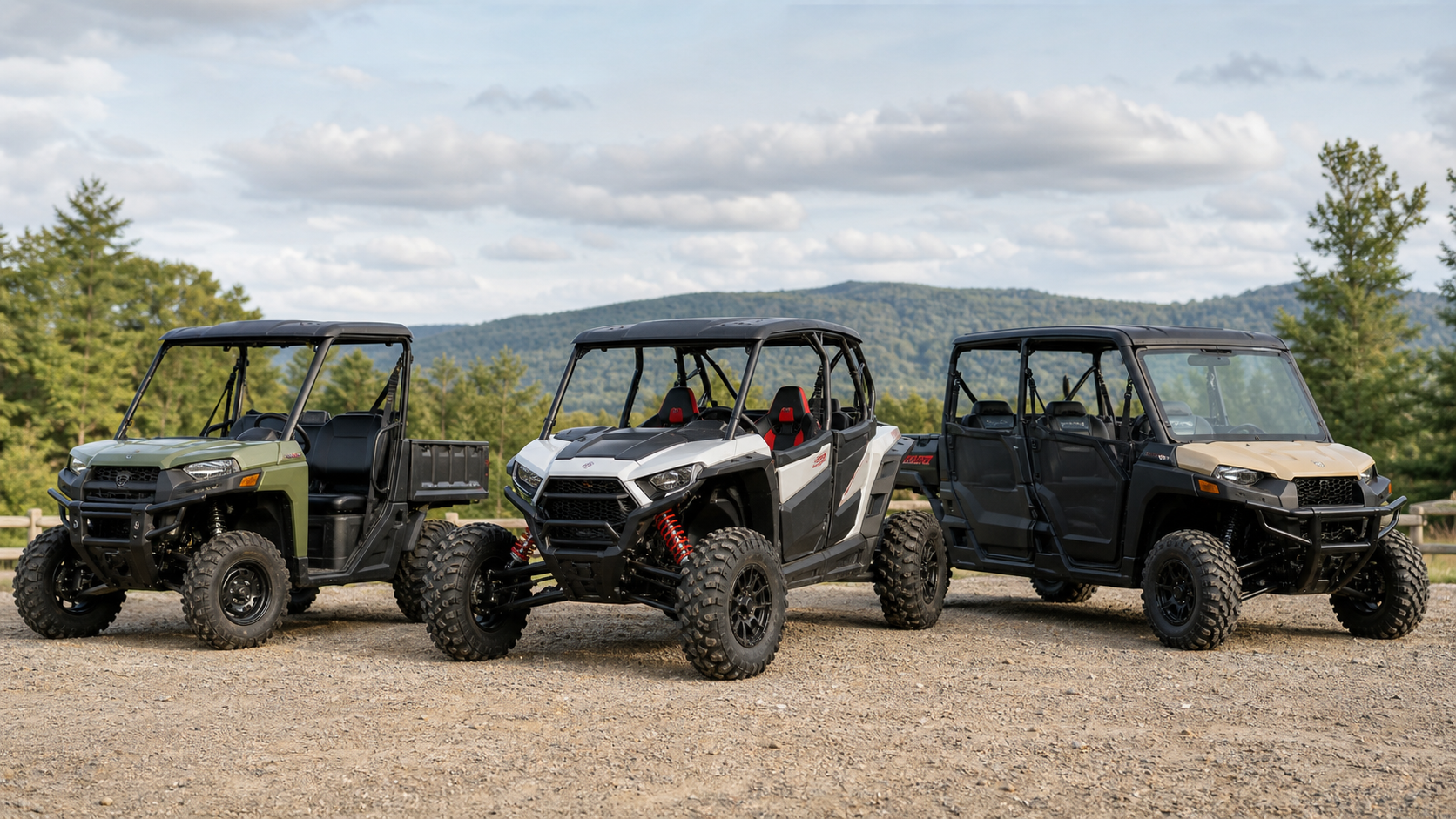
The right UTV starts with the job, not the badge on the hood. A farm owner, trail rider, hunter, and family buyer may all need different seating, payload, suspension, cab comfort, and accessory priorities. Decide how the vehicle will be used 80% of the time before comparing horsepower or top speed.
Use-Case Table
| Primary use | Prioritize | Be careful with |
|---|---|---|
| Farm and property | Payload, towing, bed size, service access | Buying too sporty for slow work |
| Trail riding | Suspension, tire setup, comfort | Ignoring local trail width limits |
| Hunting | Quiet operation, storage, range, tires | Too little cargo room |
| Family riding | Seats, doors, belts, heat control | Buying for speed over safety |
| Mud | Clearance, tires, cooling, belt care | Warranty and maintenance cost |
Budget Beyond Purchase Price
The purchase price is only the first line. Add taxes, dealer fees, trailer needs, insurance, accessories, tires, maintenance, storage, and repairs. A cheaper machine that needs immediate tires, a windshield, lighting, and a winch may not be cheaper after the first season.
New vs Used
- New can offer warranty, current accessories, and known service history.
- Used can save money but needs inspection for abuse, water intrusion, frame damage, belt wear, and neglected maintenance.
- Ask for service records and confirm recalls or campaign work.
- Avoid buying a heavily modified machine unless you understand the trade-offs.
How To Test Fit A UTV
Sit in the driver seat with riding boots, check visibility, reach the controls, inspect seat belt comfort, and test passenger space. If you will tow, plow, or carry tools, inspect bed height, tie-downs, receiver location, and access to service points.
Good starting comparisons include UTV vs ATV, UTV price comparison, and Can-Am Defender vs Polaris Ranger.
FAQ
What is the best UTV for beginners?
The best beginner UTV is usually stable, comfortable, easy to service, and matched to the main use case. Avoid choosing only by horsepower.
Should I buy a two-seat or crew UTV?
Buy the seating you will use often. Crew models carry people better but are longer and less nimble.
How much should I budget for accessories?
Common first-year accessories include tires, windshield, roof, winch, lighting, storage, and battery support. Costs vary widely by brand and machine.
Useful Sources
Questions To Answer Before Visiting A Dealer
Write down the top three jobs for the UTV. Examples include checking fence, hauling firewood, carrying family, hunting access, snow plowing, or weekend trail rides. Then write down the constraints: garage height, trailer size, trail width, budget, dealer distance, and whether you need year-round weather protection.
This short list prevents a common mistake: buying the machine that feels exciting during a short demo but does not match daily use. A high-horsepower sport model may be wrong for slow property work, while a basic utility model may disappoint a rider who mainly wants suspension comfort and trail speed.
Inspection Tips For Used UTVs
- Check frame, skid plates, suspension arms, and roll cage for impact damage.
- Look for water lines, mud packed into hidden areas, and electrical corrosion.
- Inspect tires, brakes, belt area, fluids, and service records.
- Confirm the VIN and ownership paperwork.
- Budget for immediate maintenance after purchase.
Dealer and Parts Support
Dealer support can matter as much as specs. A strong local dealer can help with warranty, recall work, accessories, and parts availability. If two machines are close on paper, the better-supported brand in your region may be easier to own over several years.
Bottom Line
A good UTV buying process is practical. Match the vehicle to the work, price the full ownership package, sit in the machine, verify dealer support, and avoid paying for performance or accessories you will rarely use.
Do Not Skip Safety Fit
A UTV that fits the job still needs to fit the people using it. Check whether each regular passenger can sit with belts positioned correctly and doors or nets closed. Younger passengers may require additional legal and safety considerations depending on your area and the vehicle design. Follow the owner manual and local rules for age, helmets, belts, and passenger limits.
If the UTV will be used by employees, guests, or family members with different experience levels, prioritize predictable handling, clear controls, and training over maximum performance.

