
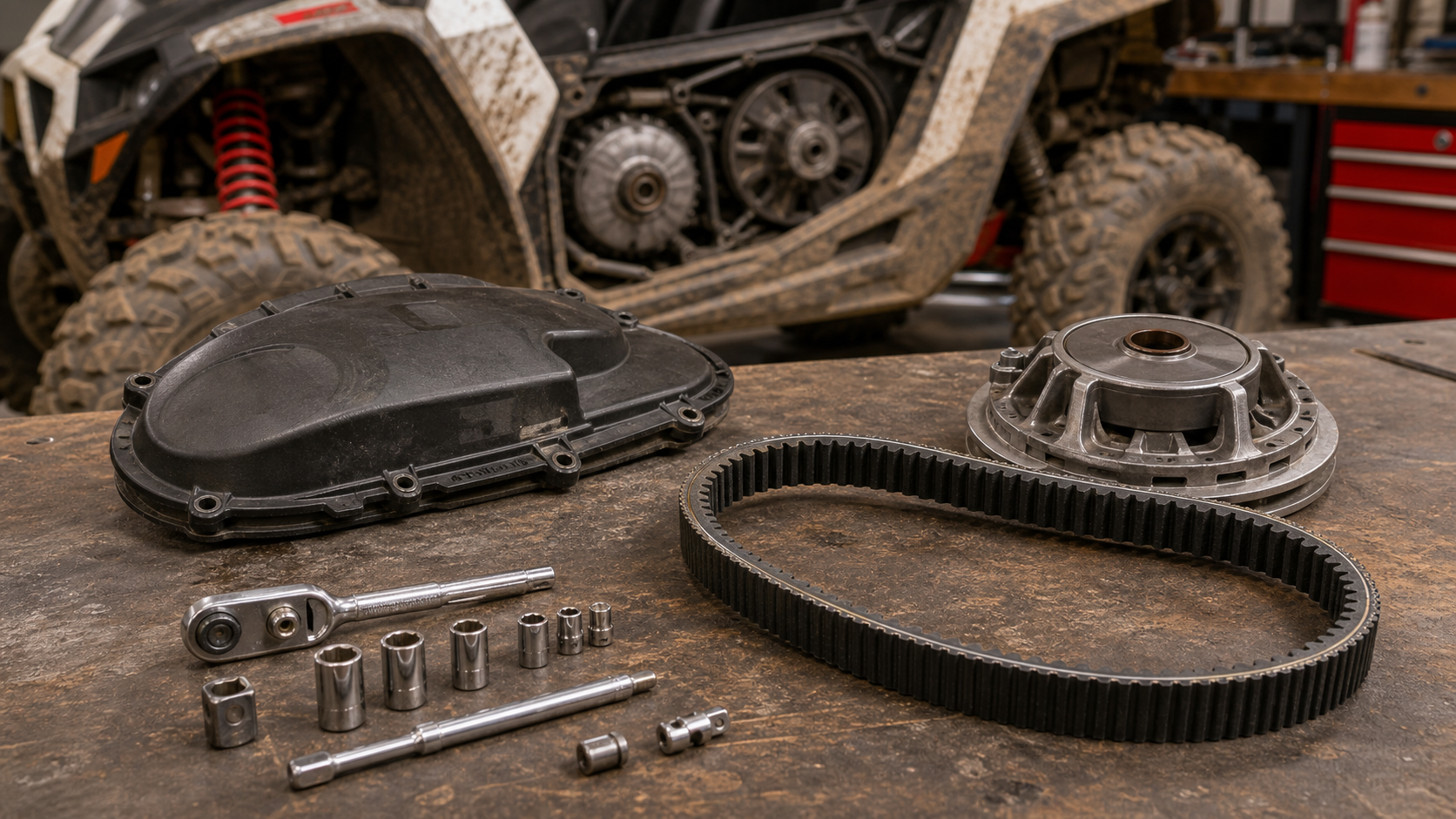
UTV CVT belt life depends on heat control, correct break-in, clutch condition, and driving habits. If you smell burning rubber, feel slipping, hear unusual belt noise, or see belt dust around the clutch cover, inspect the belt before it leaves you stranded.
Belt Symptoms Table
| Symptom | Possible cause | What to check |
|---|---|---|
| Burning smell | Heat and belt slip | Low range use, load, mud, clutch airflow |
| Jerky takeoff | Glazing or clutch issue | Belt surface and clutch sheaves |
| High RPM with poor speed | Slipping belt | Belt width, wear, contamination |
| Belt dust | Normal wear or overheating | Cover seal, venting, riding load |
Break-In and Riding Habits
Many manufacturers recommend a controlled break-in period for a new belt. Avoid full-throttle starts, deep mud pulls, heavy towing, and long high-heat runs immediately after installation. Use low range when crawling, towing, or working slowly so the belt is not slipping under load.
Trail-Side Prevention
- Carry a correct spare belt for your model and year.
- Know how to remove the clutch cover before a ride, not after a failure.
- Keep clutch intake and exhaust vents clear of mud, snow, and debris.
- Let the drivetrain cool after repeated hard pulls.
- Investigate repeated belt failures instead of only replacing belts.
Common Mistakes
The biggest mistake is treating every belt failure as a bad belt. Oversized tires, poor clutch calibration, blocked vents, water intrusion, worn mounts, heavy payloads, and driver technique can all shorten belt life. A second failure soon after replacement means the system needs diagnosis.
For related setup decisions, see UTV tire size explained, best UTV tires, and Polaris RZR 1000 top speed considerations.
FAQ
How often should a UTV belt be changed?
There is no one interval. Inspect by condition and follow the owner manual. Heat, mud, towing, and tire changes can shorten life.
Can oversized tires hurt belt life?
Yes. Larger, heavier tires can increase load on the drivetrain and may require clutch setup changes.
Is belt smell always failure?
Not always, but it is a warning. Let the machine cool and inspect before continuing hard use.
Useful Sources
Heat Is The Main Enemy
CVT belts fail fastest when they slip and overheat. Slow crawling in high range, repeated full-throttle launches, deep mud, heavy towing, and oversized tires can all raise belt temperature. The belt may survive one hard pull, but repeated heat cycles can glaze the surface and weaken the cords.
Low range is not only for steep climbs. It is often the better choice whenever the vehicle is moving slowly under load. If the machine feels like it is revving without moving efficiently, the belt may be slipping and making heat instead of transferring power.
What To Inspect With The Cover Off
- Belt width compared with the service limit.
- Cracks, missing cogs, frayed edges, or glazing.
- Rubber dust buildup inside the clutch cover.
- Water or mud intrusion around seals and vents.
- Clutch sheave grooves, contamination, or unusual wear patterns.
Spare Belt Strategy
A spare belt is only useful if it is correct for the machine and you know the replacement process. Keep the spare clean and protected from oil, fuel, and sharp tools. If your machine needs a special clutch tool, carry it. After a trail-side replacement, ride gently and inspect the clutch area again when you return home.
Bottom Line
Belt maintenance is really heat management. Use the correct range, keep vents clean, break in new belts carefully, and investigate repeat failures. That approach is cheaper than treating belts as disposable trail supplies.
When To Inspect More Often
Inspect the belt more often if the UTV sees deep mud, sand, snow tracks, oversized tires, heavy towing, or repeated slow-speed work. These conditions can create belt heat even when the vehicle is not moving fast. A machine used for easy dry trails may go much longer between inspections than a machine that pulls a loaded trailer around a property every weekend.
Also inspect after water intrusion. Water inside the clutch cover can cause slipping, noise, and belt dust. Follow the manufacturer’s drain and inspection process before riding hard again.
A final practical habit is to treat any belt smell as a maintenance signal, not a normal part of riding. Let the machine cool, reduce load, and inspect when safe. Catching a heat problem early can save the belt, clutch parts, and the rest of the ride.

