
Compare complete configurations, not a door count
An enclosed UTV cab can suit repeated cold or wet work, while an open setup can suit owners who prioritize easy access and airflow. Neither description proves that one configuration is quieter, dust free or comfortable for every ride. The useful comparison is between two complete, compatible setups used for the same tasks. A roof and windshield added to an open machine do not automatically reproduce a factory cab system.
Start by describing when the vehicle must work, who uses it and what weather usually stops the job. This guide provides a configuration worksheet rather than a product ranking. It does not claim that UTVAUTO has measured cabin temperatures or sound levels. The decision should rest on verified fitment, an appropriate demonstration and a complete installed quote, with unresolved performance claims clearly separated from facts.
Write a weather brief before shopping for panels
List the months, typical trip length and type of exposure involved. A short trip between buildings raises different questions from several hours in open terrain. Note whether the work must proceed during rain or can wait. Identify where riders enter with muddy boots, wet clothing or bulky equipment. These details help you ask about access, cleaning and visibility instead of choosing a cab only because its photographs look comfortable.
Do not turn a general climate label into a temperature guarantee. “Winter use” can mean occasional sheltered property work or sustained exposure with repeated door openings. Write the actual tasks beside the weather conditions. If you cannot describe a condition you need the enclosure to address, postpone buying the corresponding component. A configuration brief limits unnecessary purchases and makes two dealer proposals easier to compare fairly.
Treat glazing, doors and ventilation as a system
Make a component map for the exact model year and seating configuration. Record the roof, front windshield, rear panel, doors, seals and opening mechanisms. Add the part number and installation-document reference for each item. A product described as fitting a vehicle family may still exclude a particular door, roof or windshield arrangement. Ask the supplier to resolve those exclusions in writing before installation.
For a mixed-brand setup, identify which company will answer questions about the combined configuration. A collection of individually plausible parts is not evidence of compatibility. Confirm whether a windshield can open without hitting another accessory and whether service access remains available. Keep the answers with the invoice. If the retailer cannot identify the combination being sold, treat the uncertainty as a configuration problem to solve before paying for the bundle.
Check visibility in the state you will actually use
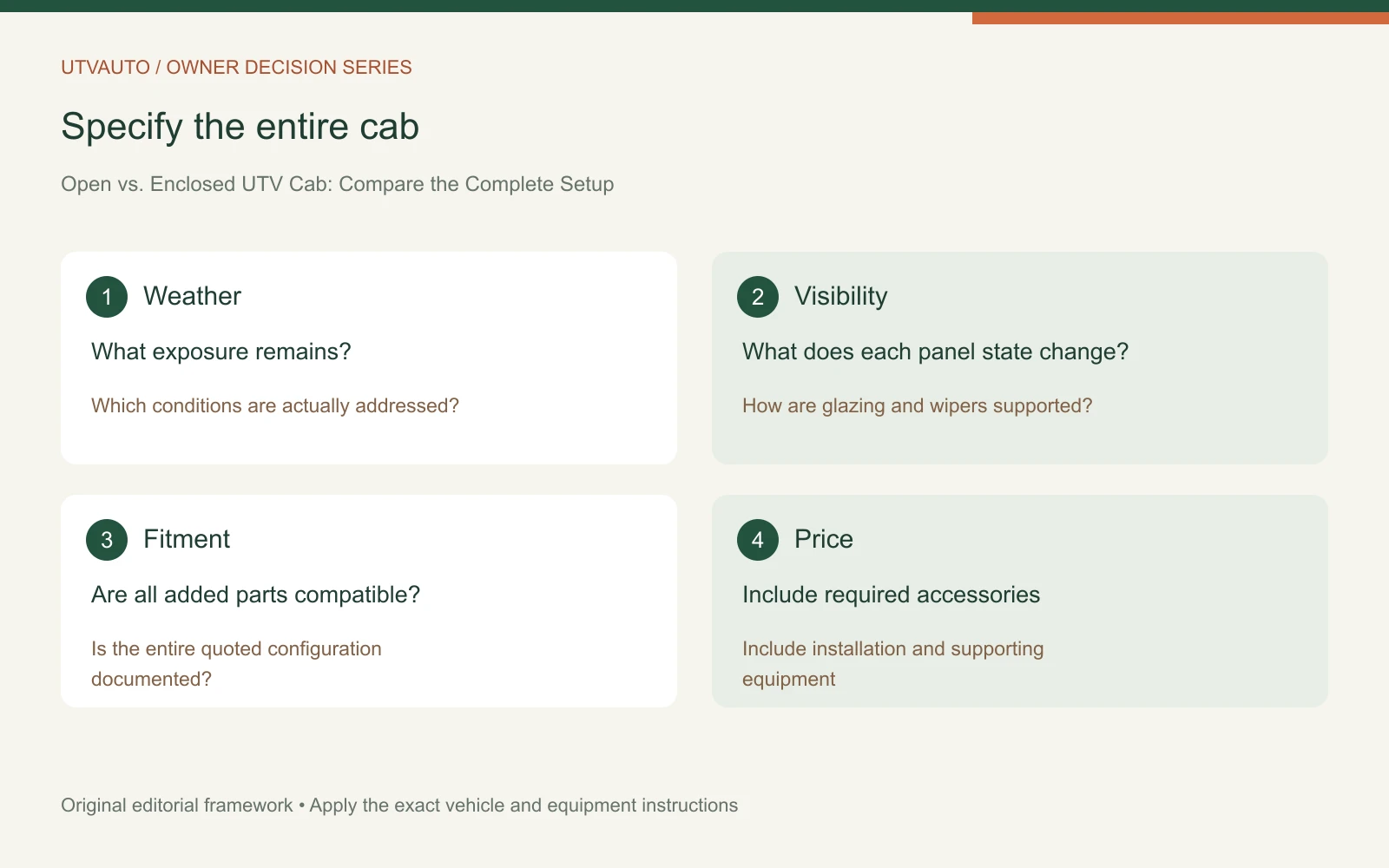
Sit in the stationary vehicle with your normal helmet and other riding equipment. Check the forward view, mirrors and the area around panel frames. Ask for a demonstration of any wiper, washer or defogging feature included in the exact build. A showroom vehicle with clean, dry glass cannot establish how the same configuration performs in mud, darkness or changing weather, so describe the conditions you still need to evaluate.
Look at the operating states rather than one attractive parked view. A panel may be open, closed, latched or partly tilted; each state can change what the rider sees or reaches. Avoid moving or defeating required occupant-protection equipment to improve a sightline. If an accessory obstructs necessary visibility or access, ask for a compatible alternative. Do not assume that a more expensive enclosure eliminates the need to inspect those details.
Separate comfort claims from measurements
Treat quieter, warmer and less dusty as claims that require context. Ask what vehicle configuration, speed, weather and measurement method support the statement. A demonstration can help you judge controls and perceived comfort, but it does not create a universal performance result. Compare the complete builds under reasonably similar conditions where an authorized demonstration is available.
If noise is a major concern, do not infer hearing protection from a closed door or a premium trim name. Obtain appropriate exposure advice and measurements for the intended work. Similarly, distinguish air movement from temperature control and a rear panel from a documented dust-management solution. Record what you observed and what the seller merely described. That small distinction prevents a pleasant showroom experience from becoming an unsupported technical conclusion in your purchase notes.
Account for weight, power and maintenance access
The linked 2026 RANGER owner manual identifies added accessory weight as part of the vehicle-loading problem. Use the actual machine’s limits and the installed configuration when planning people and cargo. A door or heater is not weightless simply because it came in a package. Request the information needed to update your load budget rather than subtracting a guessed figure from a brochure capacity.
Ask what additional electrical equipment is included, who installs it and where its approved instructions are kept. Check access to routine service points before accepting the vehicle. Record replaceable items such as seals, latches or glazing using actual part references. This is not a forecast that those items will fail; it is a way to understand what ownership involves and whether support is available for the configuration you are considering.
Compare installed price and seasonal flexibility
Build two itemized quotes containing the vehicle, compatible cab components, required supporting parts, installation and applicable fees. Avoid comparing a factory-equipped price with a bare vehicle price while assuming the missing accessories cost nothing. Mark optional equipment distinctly. Request confirmation of any advertised package content because a display vehicle can carry items beyond the quoted configuration.
If you expect seasonal changes, ask which components the manufacturer permits to be removed and what work that requires. Do not assume every panel is intended for frequent removal or that the remaining setup is approved. Include storage space and the practical effort involved in your comparison. A modular configuration can be useful only if the allowed seasonal arrangement matches your needs and you can manage the changes correctly.
Use a configuration acceptance checklist
Before accepting the vehicle, match the installed equipment to the written quote and retain the relevant installation documents. Check ordinary access, latching and visibility with the machine stationary. Ask the dealer to explain the permitted panel positions and any restrictions that apply during operation or transport. If an item differs from the quote, obtain a corrected description rather than relying on memory of a conversation.
Choose the enclosed setup when its documented configuration addresses work you actually perform and its total ownership requirements are acceptable. Choose a simpler setup when it meets the same tasks with fewer unnecessary components. Keep unresolved questions visible until someone qualified answers them. The best outcome is a coherent cab specification that fits your vehicle and use, not the highest number of panels or the longest accessory list.
A practical shortlist for two different owners
Imagine one owner who makes repeated short trips between buildings and another who spends occasional long days on open trails. Both are considering the same vehicle family. The first owner may prioritize straightforward entry and useful weather protection during repeated stops. The second may prioritize the permitted ventilation options and easy cleaning. These are hypothetical requirements, not evidence that a particular cab performs better for either person.
Give each owner a separate must-have list and ask the dealer to show a configuration meeting it. For each proposed build, record the supporting part references, remaining exposure questions and complete installed price. Do not add points for features that do not serve the brief. An option can be expensive and well made while still being irrelevant to the owner’s task.
If neither build addresses a critical requirement, broaden the vehicle shortlist rather than forcing a compromise through more unverified accessories. Keep a record of why each proposal was retained or rejected. This creates an intelligible decision trail when seasonal conditions or work change later. It also makes clear which expectations were actually supported at purchase and which were assumptions that still needed a demonstration or qualified answer.
Working reference table
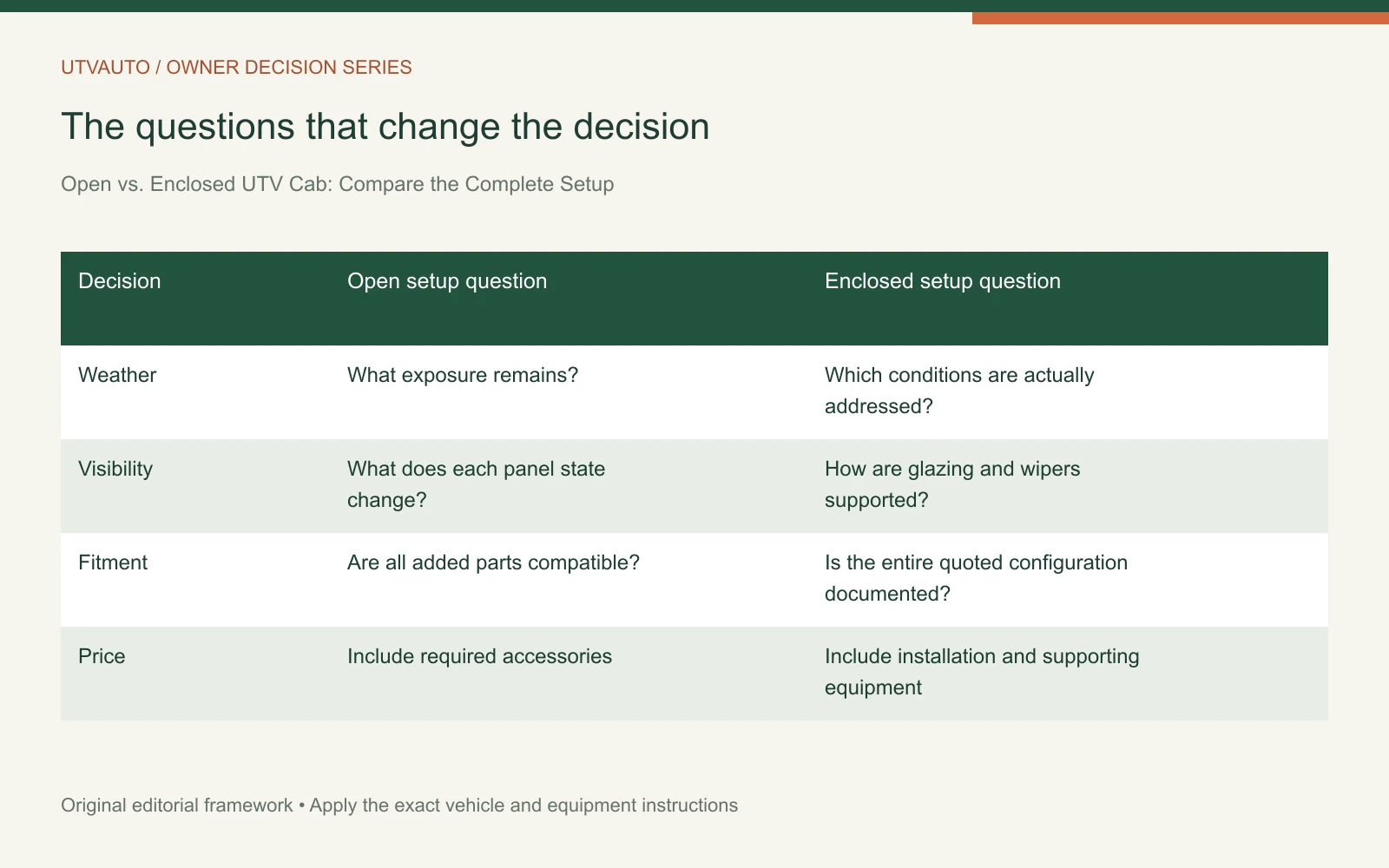
| Decision | Open setup question | Enclosed setup question |
|---|---|---|
| Weather | What exposure remains? | Which conditions are actually addressed? |
| Visibility | What does each panel state change? | How are glazing and wipers supported? |
| Fitment | Are all added parts compatible? | Is the entire quoted configuration documented? |
| Price | Include required accessories | Include installation and supporting equipment |
Related UTVAUTO resources
- Check roof compatibility
- Understand rear-panel dust questions
- Research cab heater requirements
- Update the vehicle load budget
Sources and scope
Research and editorial planning framework, checked November 9, 2026. UTVAUTO has not tested these vehicles, measured their noise, or inspected the reader’s machine. Examples are explicitly hypothetical. Use the exact vehicle manual and obtain qualified assistance for unresolved safety questions.
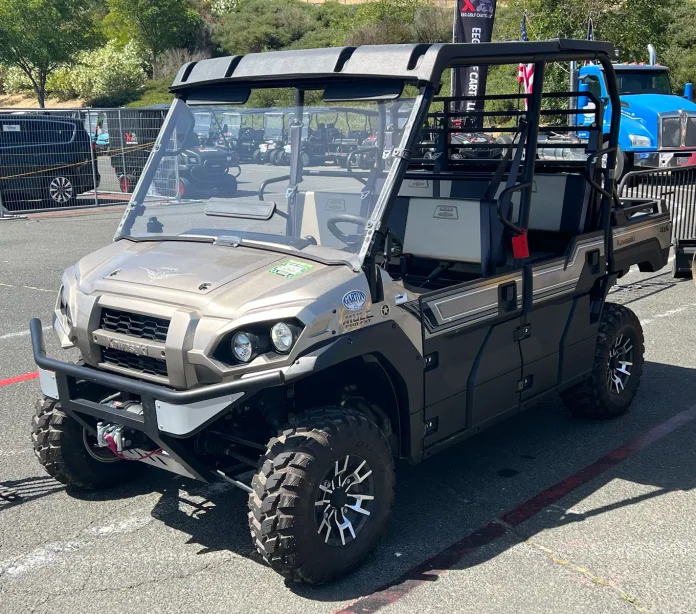
Featured archival reference photograph: Kawasaki Mule PRO-FXT 1000 LE Sonoma 2024. It illustrates vehicle context, not a UTVAUTO test, the exact equipment discussed or an endorsement. TaurusEmerald / Wikimedia Commons / CC BY-SA 4.0. Resized and converted to WebP; photograph retains its stated license.


