
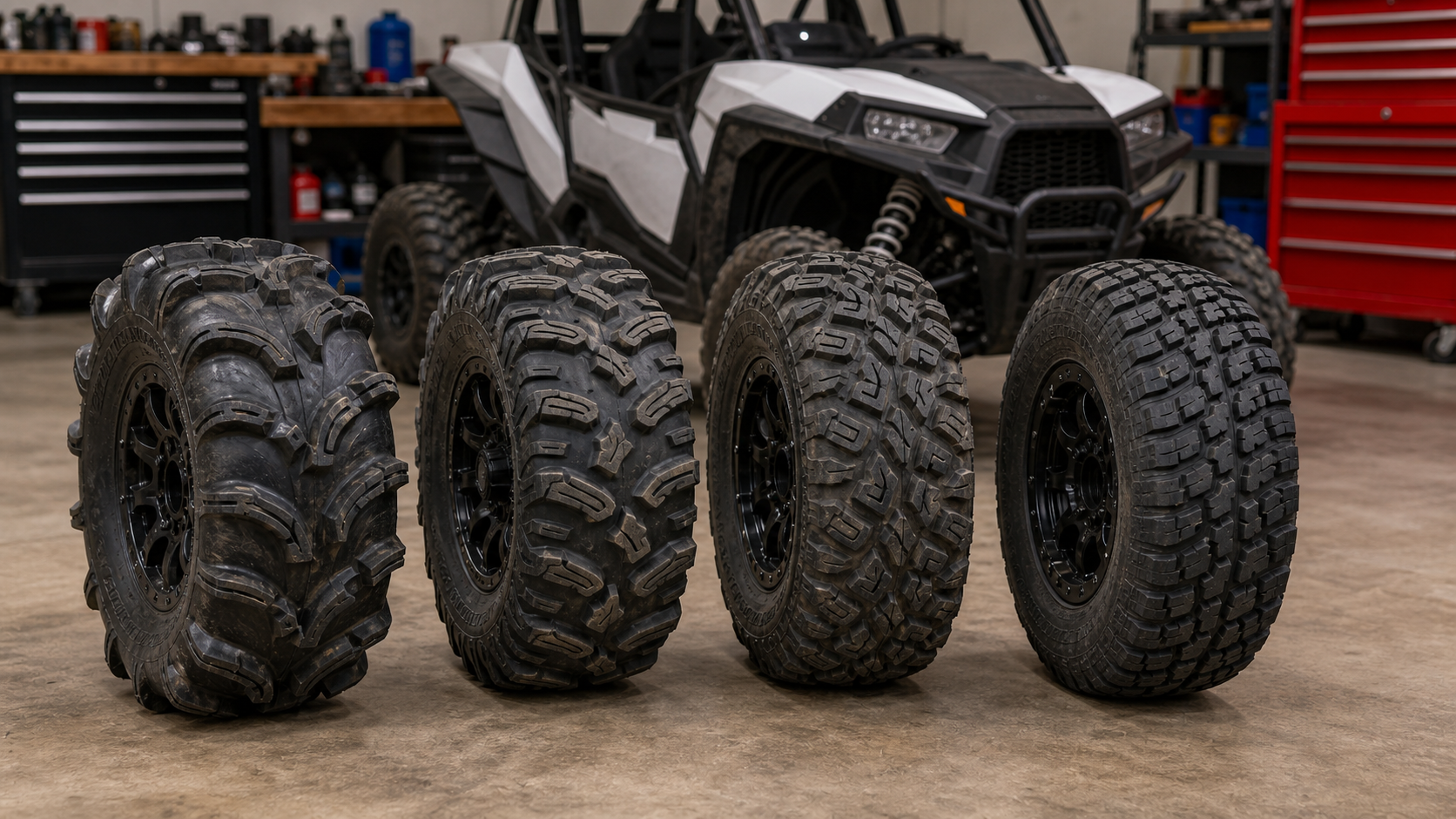
The best UTV tire is the one matched to your terrain, wheel size, load, and riding style. A mud tire can feel terrible on hardpack, a light trail tire can wear quickly under farm loads, and an oversized tire can create rubbing, clutch strain, or speedometer error.
This guide explains how to choose UTV tires without guessing. It focuses on tire type, size, ply rating, tread pattern, load use, and fitment checks rather than pushing one universal product.
Quick UTV Tire Comparison
| Tire type | Best for | Trade-offs | Common buyer mistake |
|---|---|---|---|
| All-terrain | Mixed trail, ranch, hunting, light utility | Not the strongest in deep mud or sand | Expecting one tire to dominate every surface |
| Mud | Wet trails, deep ruts, clay, swampy ground | Rougher ride, more noise, heavier feel | Buying aggressive lugs for mostly hardpack use |
| Hardpack / desert | Fast dry trails, rocks, desert, packed dirt | Less bite in soft mud | Ignoring sidewall strength |
| Sand | Dunes and soft sand | Poor general-purpose traction | Using paddle-style tires outside sand conditions |
| Turf / utility | Lawns, farms, light work, property maintenance | Limited aggressive trail grip | Choosing too soft a tire for heavy loads |
Start With Terrain, Not Brand
UTV tire shopping gets easier when you start with the ground you actually ride on. A tire that looks perfect in photos may be wrong for your use case if the lug depth, rubber compound, and sidewall design do not match your terrain.
For mixed trail and work use, an all-terrain tire is usually the safest starting point. It gives predictable handling, manageable rolling resistance, and enough tread for gravel, dirt, and moderate mud. For deep mud, choose larger voids and aggressive lugs. For rocky or desert trails, prioritize sidewall protection and puncture resistance.
Check Tire Size and Fitment Before Buying
UTV tire size is usually written as height x width – wheel diameter, such as 28×10-14. The first number is overall tire height, the second is tire width, and the final number is wheel diameter in inches.
- Height: A taller tire can add ground clearance but may rub at full steering lock or suspension compression.
- Width: A wider tire can add flotation and grip, but may increase steering effort and contact bodywork.
- Wheel diameter: This must match your wheel. A 14-inch tire fits a 14-inch wheel, not a 12-inch wheel.
Before upsizing, check the owner’s manual, factory tire size, wheel offset, suspension clearance, and whether your machine already has a lift kit. If you ride a Polaris RZR, start with our Polaris RZR 1000 top speed guide to understand how tire size can affect gearing and speed.
Ply Rating and Sidewall Strength Matter
Ply rating is often used as a shorthand for toughness, though modern tire construction is more complex than old fabric-ply counts. For UTV owners, the practical point is simple: heavier machines, rocky terrain, and work use usually need stronger casing and sidewall protection.
A lighter tire can feel quicker and more comfortable, but may be easier to puncture. A heavier tire can improve durability, but may slow acceleration, add stress to driveline components, and require clutch tuning on some machines.
Choose Tires by Use Case
Best UTV Tires for Trail Riding
Trail riders should look for predictable steering, good braking traction, moderate weight, and enough sidewall strength for rocks and roots. Extreme mud tires can feel vague and heavy on tight trails, so do not buy more tread than you need.
Best UTV Tires for Farm and Utility Work
Utility users should prioritize load capacity, puncture resistance, and controlled wear. If your UTV hauls tools, feed, firewood, or fencing supplies, tire durability may matter more than aggressive appearance.
For work-focused machines, compare tire needs with vehicle use cases in our Can-Am Defender vs. Polaris Ranger comparison.
Best UTV Tires for Mud
Mud tires need open tread voids, strong self-cleaning ability, and enough lug depth to pull through soft ground. The trade-off is that they can ride rougher, create more vibration, and wear faster on hard surfaces.
Best UTV Tires for Rocks and Desert
Rock and desert riders should look for reinforced sidewalls, a durable carcass, and a tread pattern that keeps contact with uneven surfaces. A tire failure far from the trailer is more than an inconvenience, so durability should outrank appearance.
Do Bigger Tires Make a UTV Faster?
Bigger tires can change effective gearing and sometimes increase theoretical top speed, but they can also reduce acceleration, add rotating weight, increase belt heat, and make the machine feel slower in real conditions. On many UTVs, a balanced setup is better than simply installing the largest tire that fits.
If speed is your main concern, read How to Improve Polaris Ranger Speed and Torque Safely before making drivetrain or engine changes.
After choosing the right size and tread, setup still matters. See UTV Tire Size Explained for fitment basics and Best UTV Tire Pressure for Mud Riding for safe mud setup guidance.
UTV Tire Buying Checklist
- Confirm stock tire size and wheel diameter.
- Check clearance at full steering lock and full suspension compression.
- Match tread design to your actual terrain.
- Consider tire weight, not just height and width.
- Verify load rating for work use.
- Ask whether clutch tuning is recommended after major tire size changes.
- Carry a repair kit, air source, and spare plan for remote rides.
Common UTV Tire Mistakes
The most common mistake is buying tires for the terrain you imagine instead of the terrain you actually ride. A second mistake is upsizing without checking clearance. A third is ignoring tire weight, which can affect acceleration, braking, belt temperature, and suspension feel.
For sport UTV buyers, tire choice should also match the machine’s personality. Our Can-Am Maverick vs. Polaris RZR comparison explains how performance priorities differ across lineups.
FAQ
What is the best all-around UTV tire?
For most mixed-use riders, a quality all-terrain UTV tire is the best starting point. It gives balanced traction, reasonable ride comfort, and better versatility than a tire built only for mud, sand, or turf.
Can I put larger tires on my UTV?
Often yes, but only after checking clearance, wheel offset, suspension setup, gearing, and manufacturer guidance. Oversized tires can rub and may add stress to the belt, clutch, axles, steering, and brakes.
Are mud tires bad for trail riding?
Mud tires are not automatically bad, but they can be heavier, louder, and less precise on hardpack trails. If you only ride mud occasionally, an aggressive all-terrain tire may be easier to live with.
Do UTV tires affect top speed?
Yes. Tire height, weight, and tread design can affect acceleration, belt temperature, gearing feel, and top speed. Larger tires are not always faster in real riding conditions.
Editorial note: Tire fitment and performance vary by vehicle, year, trim, wheel setup, suspension setup, tire construction, and riding conditions. Verify fitment with the tire manufacturer, your vehicle manual, or a qualified dealer before buying.

