
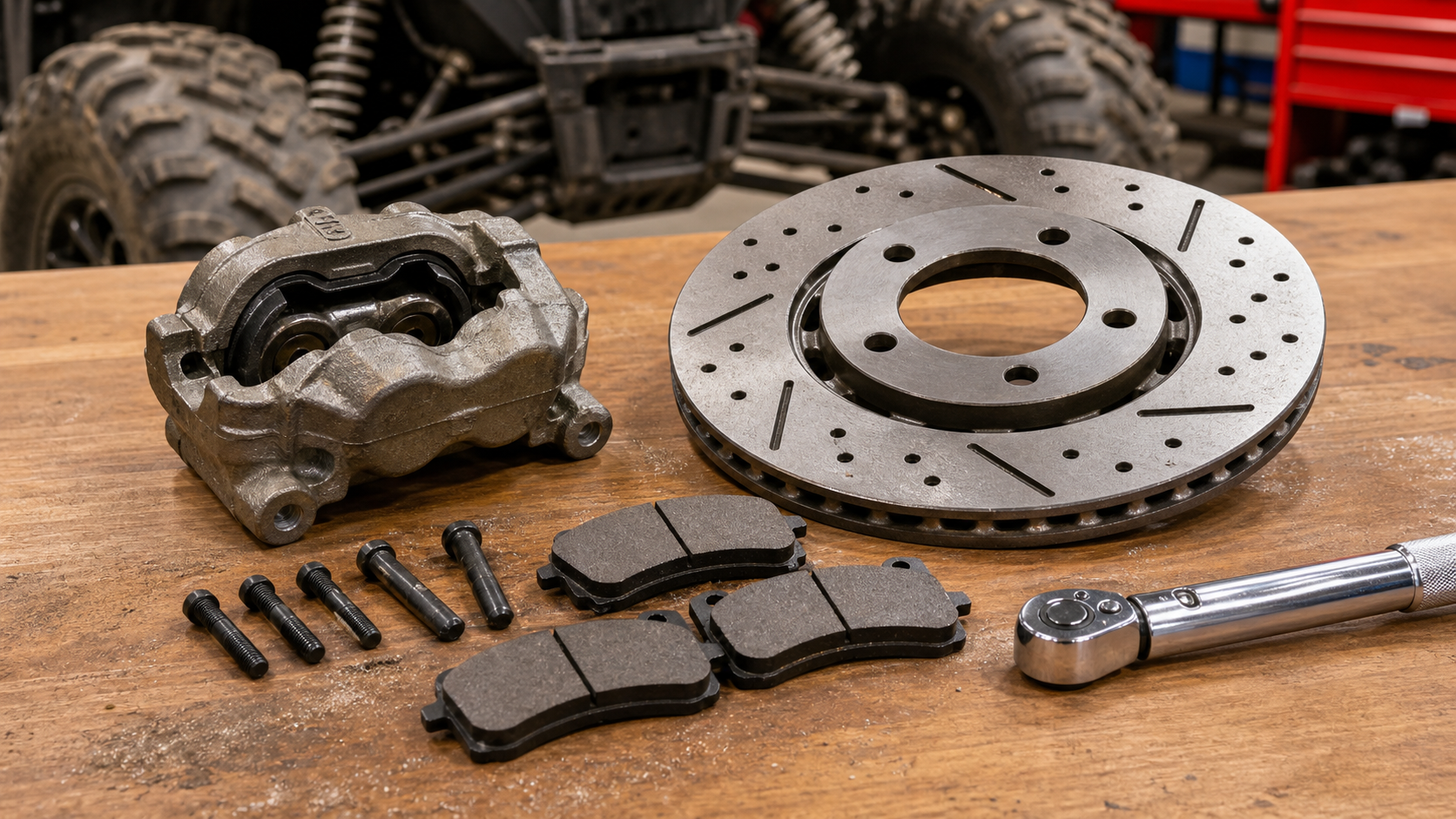
The best UTV brake pads are the pads that match your terrain, load, wheel size, and riding speed. Sintered pads usually handle mud, heat, and heavy work better, while organic or semi-metallic pads can feel quieter and smoother for lighter trail use. Fitment matters more than brand hype, so always verify model year, trim, caliper type, and rotor condition before ordering.
Quick Buying Table
| Pad type | Best for | Watch out for |
|---|---|---|
| Sintered metal | Mud, steep terrain, towing, heavy loads | Can be noisier and may wear rotors faster |
| Semi-metallic | Mixed trail and utility riding | Quality varies widely by brand |
| Organic | Light recreational use and lower noise | Less heat resistance under heavy braking |
| Severe-duty kits | Loaded work UTVs and oversized tires | Higher cost and may feel aggressive |
How To Choose Brake Pads
Start with how the machine is used. A ranch UTV hauling feed, climbing hills, or towing a trailer needs more heat capacity than a weekend machine on dry two-track roads. Mud riders should also think about abrasion because grit can shorten pad and rotor life quickly.
- Confirm the exact make, model, year, and trim before buying.
- Inspect rotor thickness, grooves, and heat spots; new pads cannot fix a damaged rotor.
- Match pad compound to tire size and payload. Larger tires add rotating mass.
- Replace pads in axle pairs so braking stays balanced.
- Bed new pads according to the pad maker or service manual.
When To Replace UTV Brake Pads
Replace pads when friction material is near the service limit in the owner manual, when braking noise changes suddenly, when stopping distance increases, or when the pedal feels inconsistent after bleeding and inspection. If the vehicle is used in mud or water, check more often than a casual trail rider would.
Internal Links For The Same Maintenance Cluster
Brake performance is tied to tire setup. See our best UTV tires guide, mud tire pressure guide, and pre-ride inspection checklist before changing parts.
FAQ
Are sintered pads worth it for a UTV?
They are often worth it for heavy utility work, mud, steep descents, or oversized tires because they handle heat and contamination well. For light trail riding, a quieter semi-metallic pad may be enough.
Should I replace rotors with brake pads?
Not automatically. Replace or service rotors when they are below spec, badly grooved, warped, cracked, or contaminated.
Can ATV brake pads fit a UTV?
Sometimes platforms share components, but do not assume. Verify the exact part number by model year and trim.
Useful Sources
How Riding Conditions Change Brake Pad Choice
Brake pads live a different life on every machine. A UTV used for ranch work may spend hours at low speed with a loaded bed, which builds heat in a different way than a sport UTV making short, fast stops on dry trails. Mud adds another problem because grit can act like sandpaper between the pad and rotor. Water crossings can cool parts quickly, but they can also carry silt into the caliper area. This is why one rider may love a soft, quiet pad while another rider burns through the same style in a few weekends.
If your UTV has larger-than-stock tires, heavy cargo, a cab kit, tracks, or frequent towing duty, treat the brake system as part of the whole setup. More weight and rotating mass can ask more from the pads and rotors. A stronger compound may help, but it does not replace good maintenance, correct tire pressure, and careful downhill driving.
Fitment and Quality Checks Before Ordering
Online fitment tools are useful, but they are not perfect. Compare the pad shape, caliper style, model year, and trim. Some vehicles change brake parts within a generation, and special editions can use different hardware. When possible, compare the part number against the manufacturer or supplier fitment chart, then inspect the old pad before opening new packaging.
- Check whether the kit includes springs, clips, shims, or only friction pads.
- Avoid mystery pads with no fitment data, compound information, or support contact.
- Buy from sellers that accept returns if the fitment chart is wrong.
- Inspect brake fluid color and pedal feel while servicing the pads.
Bottom Line
For most utility owners, a quality sintered or severe-duty pad is the safer shortlist. For lighter trail use, a reputable semi-metallic pad can be easier to live with. The winning pad is the one that fits correctly, handles your heat load, and is supported by regular inspection.

