
Editorial collection: July 2026. Collection month is an editorial label; the page retains its actual first-publication date.
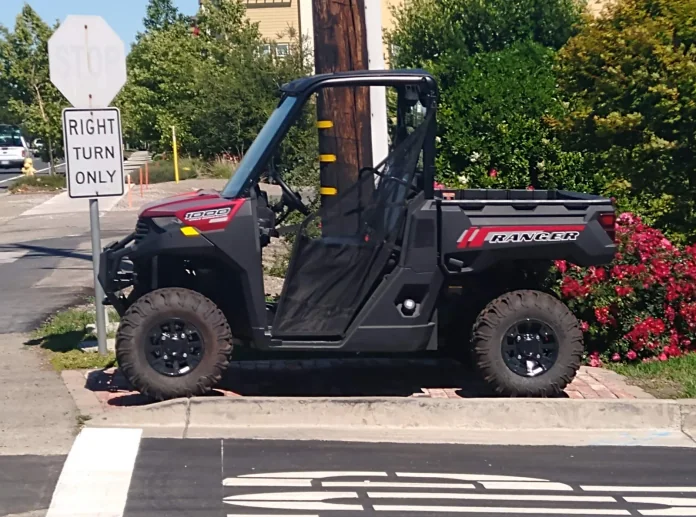
Featured photograph: 2021 RANGER 1000 reference photograph; the service requirements in this guide are for the identified 2026 manual. DestinationFearFan / Wikimedia Commons / CC BY-SA 4.0. Resized and converted to WebP; photograph retains its stated license.
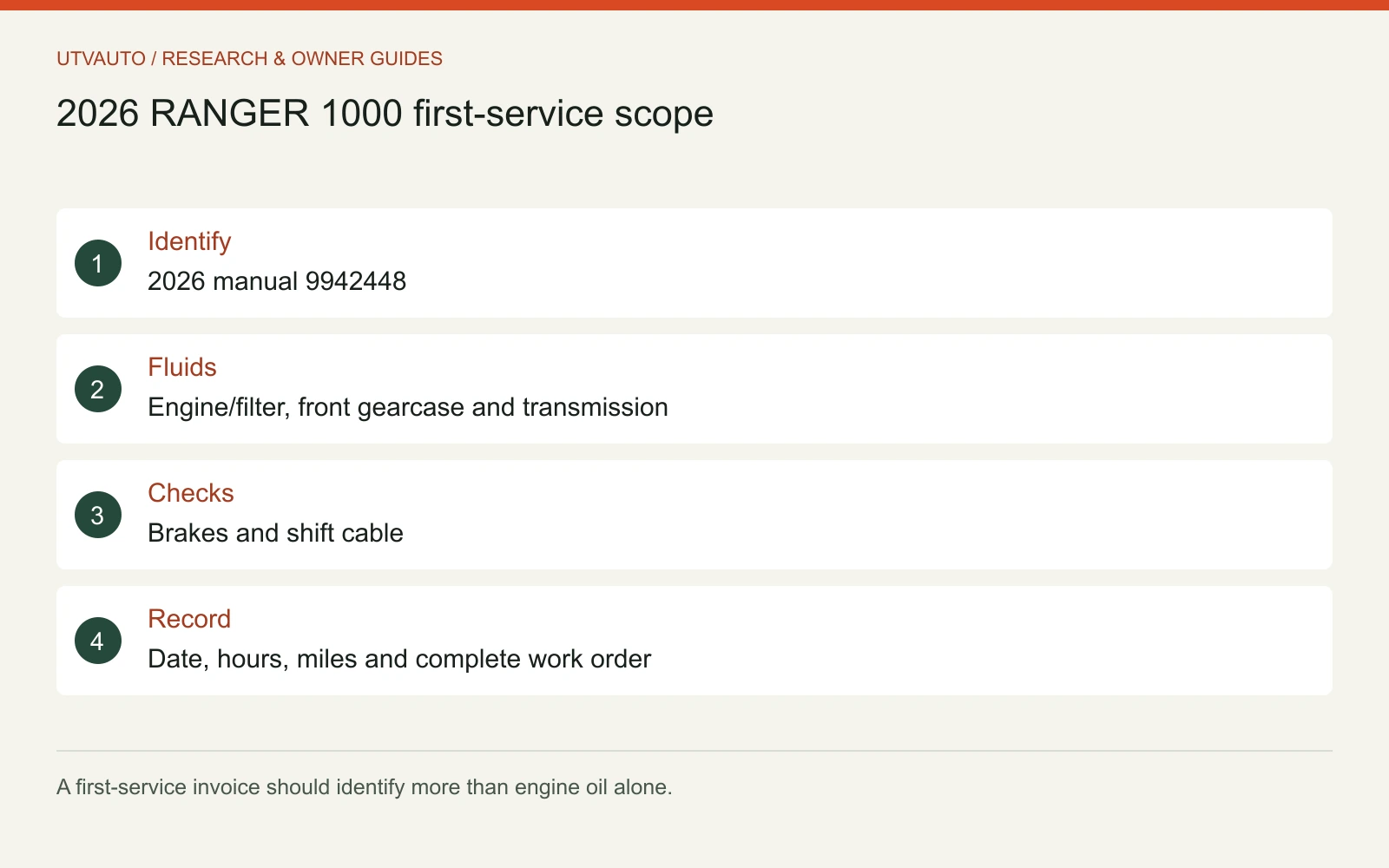
For the 2026 Polaris RANGER 1000 and RANGER CREW 1000 covered by owner’s manual 9942448, the initial service chart is headed 25 hours / 500 miles (800 km). It includes engine oil and filter, front gearcase fluid and transmission fluid changes, plus brake and shift-cable checks. Do not reduce the first service to an engine-oil change alone.
This guide follows Polaris’s model-specific manual, Maintenance Schedule section. It excludes RANGER XP, XD, Kinetic and other years. A broad help article or a maintenance poster may describe several different machines; use the exact chart for your vehicle and confirm any revision conflict with Polaris.
What belongs on the first-service work order?
| Item in the initial chart | Specified action |
|---|---|
| Engine oil and filter | Change both |
| Front gearcase fluid | Change fluid |
| Transmission fluid | Change fluid |
| Brake system | Check fluid level, leaks and pad wear; correct as required |
| Shift cable | Inspect and adjust as needed |
These are task summaries, not complete fluid-change procedures. The matching manual supplies fluid specifications, level-check methods, access instructions and tightening values. A recurring service interval for another RANGER engine does not establish the first service for this one.
First service and break-in are related, but different
The manual’s break-in discussion describes the first 25 operating hours or the time used for the first two full tanks of gasoline. That operating guidance explains how a new engine and driveline should be treated. The scheduled-service table separately identifies the work to complete. Finishing two tanks is not proof that fluids and inspections were performed.
Record the odometer and engine hours from delivery onward. If one threshold arrives before the other, do not wait for both. Ask the servicing shop to confirm the appropriate due point for your operating pattern and manual revision, including severe use. Do not reset a reminder merely to make the display disappear.
The recurring clock does not simply restart at 25 hours
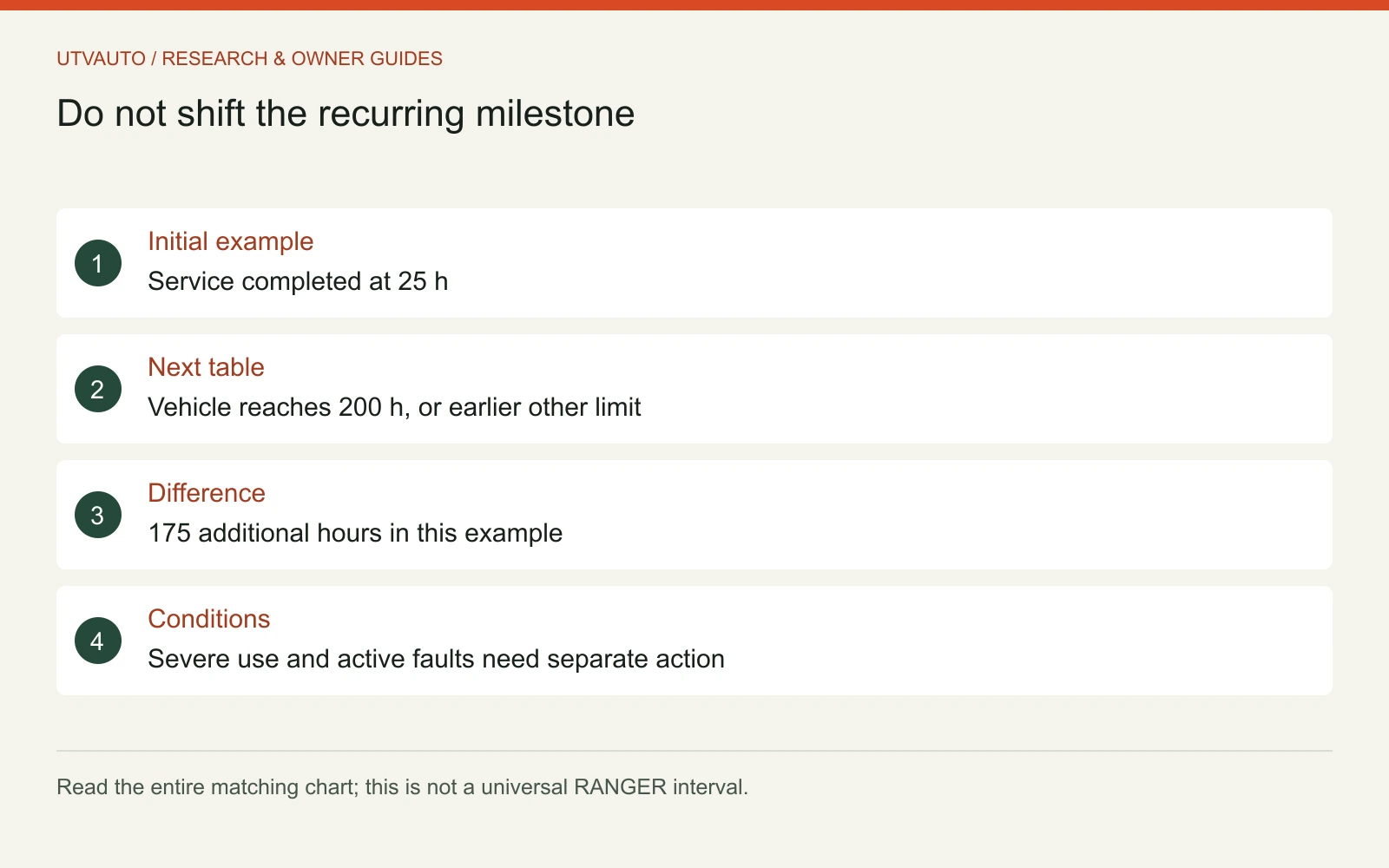
The same manual identifies the next major table as 200 hours / 2,000 miles (3,200 km) or yearly and explains that the first occurrence is measured against the vehicle’s accumulated use. It does not say “200 more hours after the first service.” The one-time initial work also does not become a requirement to replace every listed fluid every 25 hours.
Illustration: an initial service at 25 hours followed by a vehicle reaching 200 hours represents 175 additional operating hours. It is not a basis to postpone that table to 225 hours. Other mileage, calendar or condition-triggered work can arrive sooner. This arithmetic illustrates the chart’s structure, not an extension of any interval.
Severe use changes the plan
Polaris directs severe-use vehicles to 50% of the stated interval and lists conditions including frequent mud, water or sand immersion, sustained high rpm, prolonged slow heavy-load work, extended idling and cold short trips. Record these conditions rather than describing every trip simply as “normal.” Have the dealer clarify application to the complete service plan when necessary.
A small mileage total can conceal many engine hours. For a property vehicle, include stationary running and slow work in the service conversation. Neither low mileage nor clean body panels establish that the engine oil is still within its applicable service interval.
What to collect before the appointment
- Full model code, year and the manual number you used.
- Delivery date, current hours and odometer, plus the date of any earlier work.
- Notes on mud, towing, idle time, cold short trips and any warnings or leaks.
- An itemized work order showing every required task, not just an “oil service” package.
If you find a fuel leak, persistent oil-pressure warning, overheating or abnormal mechanical behavior, arrange assessment before continuing to operate. Do not wait for a scheduled milestone to address an active fault. Store the completed invoice and next-due thresholds with your vehicle service and ownership records.


