
Editorial collection: October 2026. Collection month is an editorial label; the page retains its actual first-publication date.
Featured image: original UTVAUTO diagram; supporting sources are explained in the article.
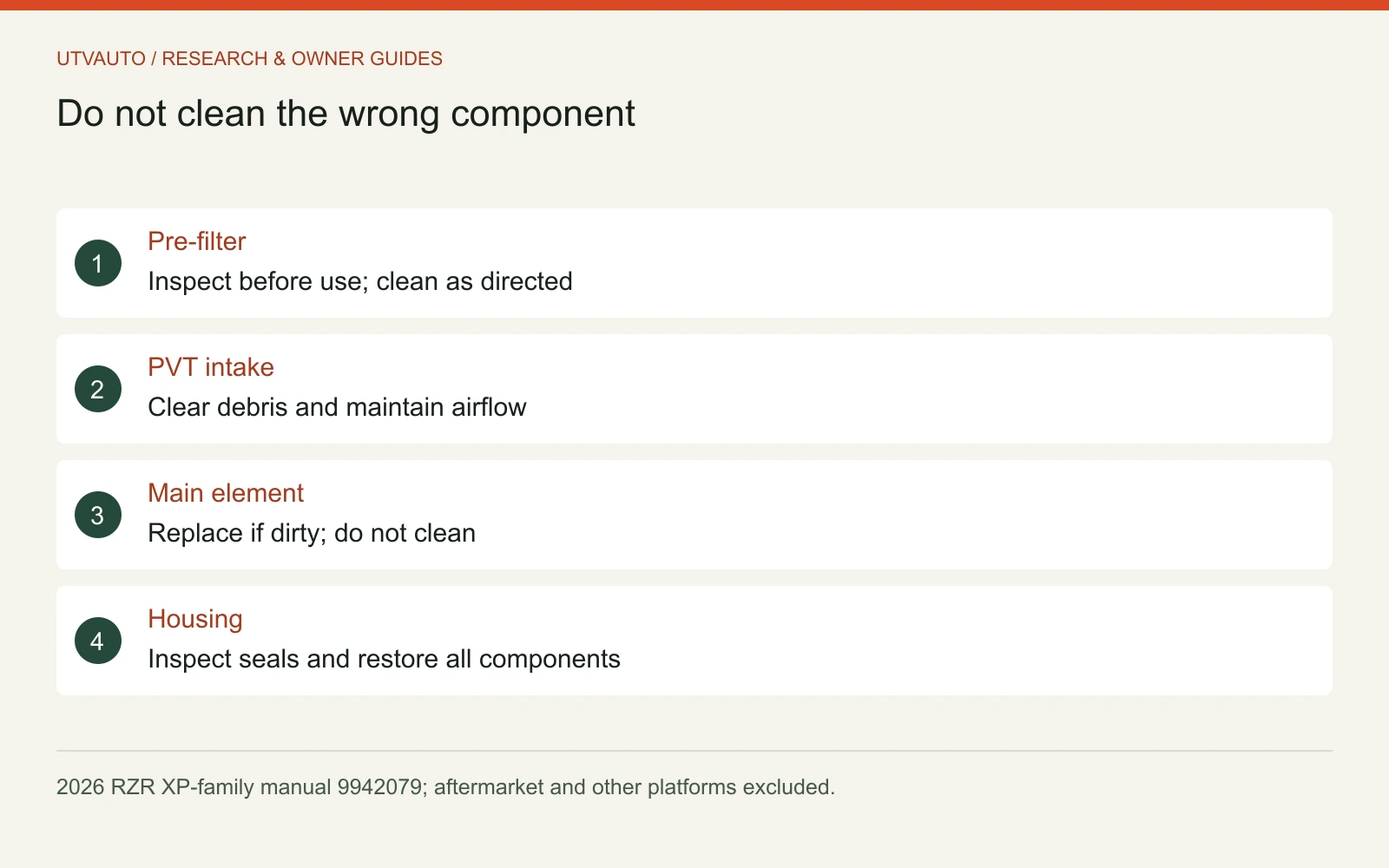
For the 2026 Polaris RZR XP family covered by manual 9942079, the engine intake pre-filter, clutch/PVT intake and main engine air filter have different maintenance instructions. Polaris permits cleaning the intake pre-filter as directed, but says not to clean the main engine air filter. Confusing the two can turn routine service into intake contamination.
This guide follows the official 2026 XP / XP 4 / XP S / XP S 4 manual, sections 7.7.11.1–2. It excludes Pro XP, Turbo R, Pro R, other years and aftermarket intake systems. Confirm the actual application before using a part or procedure advertised simply as “RZR 1000.”
Identify the component before deciding to wash it
| Component | Manual instruction | Do not assume |
|---|---|---|
| Engine intake pre-filter | Inspect before use; clean with soapy water when needed and dry as directed | That every filter element is washable |
| Clutch/PVT air intake | Periodically inspect and clear debris for airflow | That this is the engine’s main air filter |
| Main engine air filter | Inspect and replace when dirty or damaged; do not clean | That compressed air or washing restores it |
| Airbox and cover seal | Keep clean, inspect and reassemble correctly | That a new element fixes a damaged housing |
Check external airflow before opening the airbox
The manual identifies the engine pre-filter on the right side and the clutch intake on the left. Cargo must not block either side. Before a trip, check the actual openings rather than looking only at the condition of the engine filter inside its housing.
The pre-filter cleaning instruction is specific to that component: soapy water followed by drying with low-pressure compressed air. It is not permission to direct a pressure washer into an intake. The PVT opening needs its own debris inspection. If you cannot identify which opening serves which system, use the manual’s drawing before starting work.
Prepare a clean service area
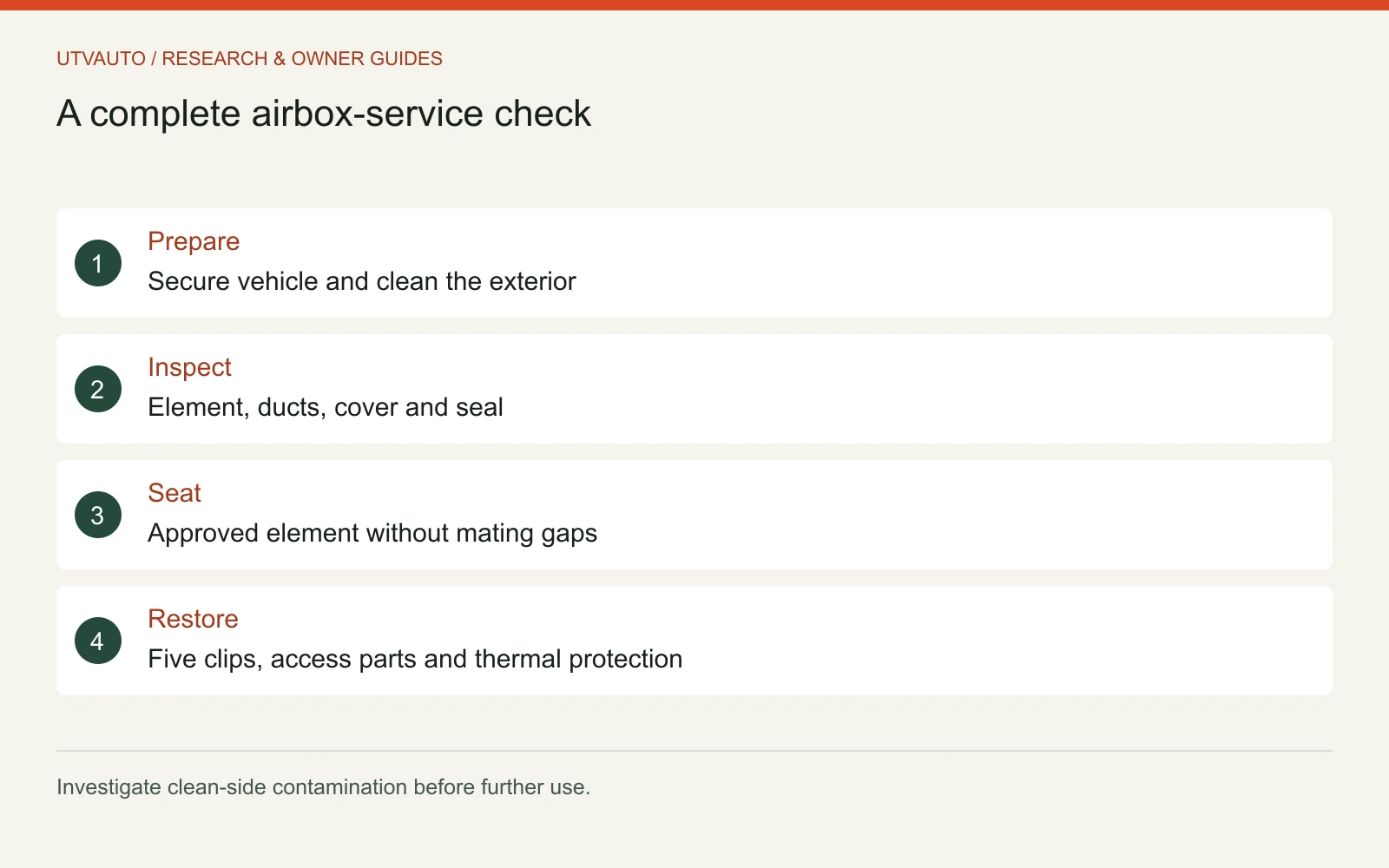
Park on level ground, select PARK, stop the engine and remove the key. Follow the matching safety instructions and access-panel procedure. The manual describes removing the relevant seats and rear access panel before opening the airbox. Clean dirt from the surrounding area first so it does not drop into the clean side.
The airbox cover has five clips in the referenced procedure. Keep hardware and removed parts organized. Do not run the engine with the airbox open to check whether it sounds different. If a cover, clip, duct or sealing surface is damaged, resolve that condition rather than using a new filter to mask it.
Inspect the element and restore the seal
Remove and inspect the element as shown in the manual. Reuse only a clean, serviceable element; replace a dirty one with the approved application. Polaris expressly says not to attempt to clean the main filter. Do not substitute a generic compressed-air routine or a foam-filter oiling process.
Check the airbox cover seal and remove dirt with the prescribed clean, dry method. The element must be fully seated with no gaps at its mating surfaces. Align the cover and secure every clip, then restore the access panel, seats and thermal-protection components. Those final items are part of completing the job, not optional trim.
When the finding calls for professional assessment
Dirt or water on the clean side, a displaced element, a split duct or damaged sealing surface needs investigation before further use. Record what you see without blowing material toward the engine. A dirty engine intake is not a condition to ignore because the scheduled filter interval has not yet arrived.
After reassembly, stop if a warning, abnormal running or a new intake-related symptom appears. Do not repeatedly restart an uncertain configuration to see whether it clears. Have a qualified technician confirm the intake is intact and correctly assembled.
Keep a service record that helps next time
- Exact year, full XP-family model and manual number.
- Filter application, date, hours and mileage.
- External-intake condition and any wet or dusty operating history.
- What was cleaned, what was replaced and whether contamination or damage was found.
Use the pre-ride checklist between scheduled services. For washing the exterior, the washing guide explains why avoiding intake openings matters; its RANGER-specific pressure limits are not automatically XP limits.

