
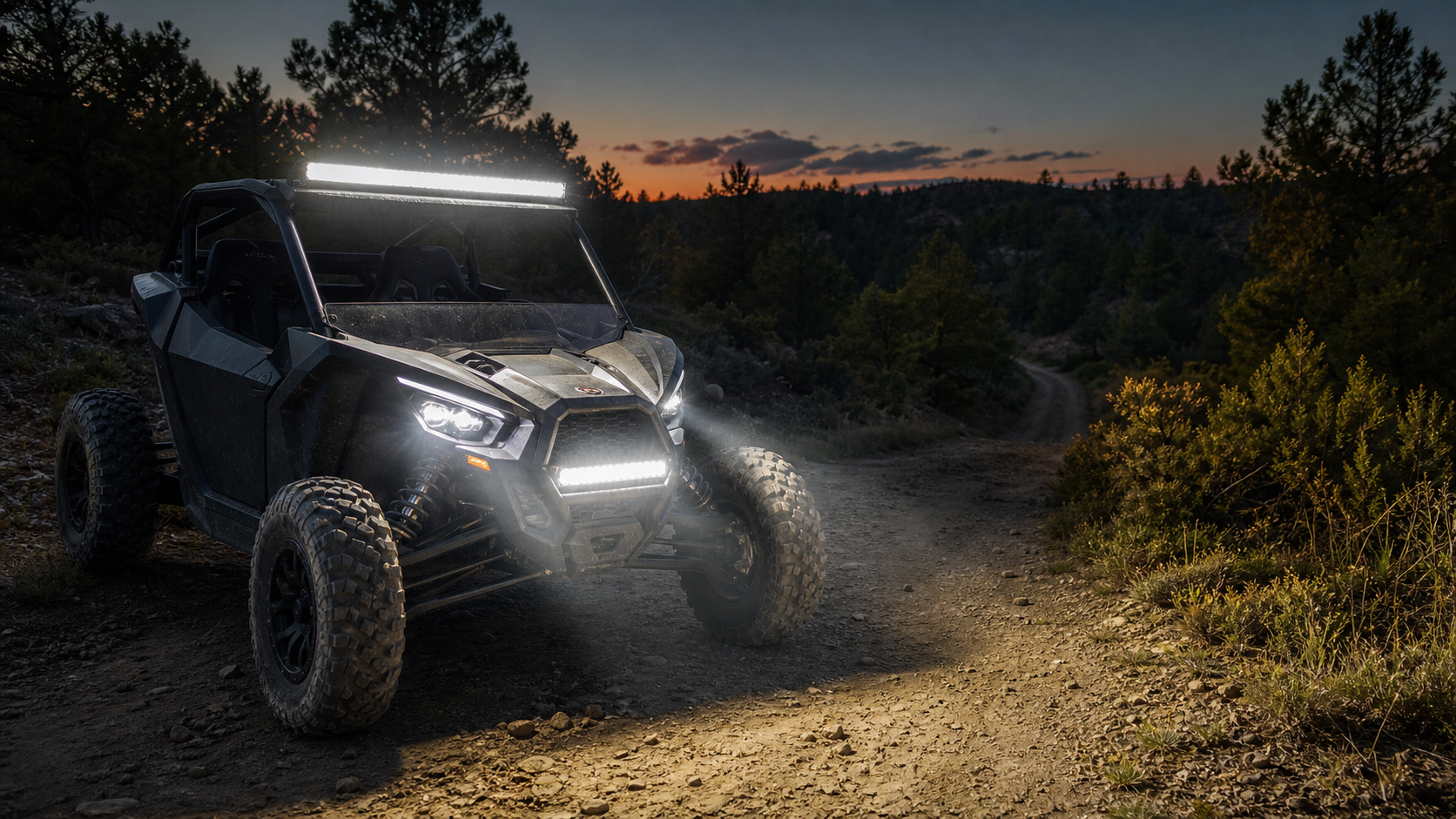
A good UTV light bar should match your riding speed, terrain, electrical system, and mounting location. Flood beams help with slow work and corners, spot beams reach farther at speed, and combo beams are the common middle ground. Wiring quality is just as important as brightness.
Beam Pattern Guide
| Beam | Best use | Notes |
|---|---|---|
| Flood | Work, camps, tight woods | Wide light, shorter reach |
| Spot | Open trails and higher speed | Long reach, narrower view |
| Combo | General UTV use | Balanced pattern |
| Scene lights | Loading, repairs, hunting setup | Low glare when mounted correctly |
Mounting Choices
Roof mounts give distance but can create hood glare. Bumper mounts reduce glare but may be blocked by brush, cargo, or winch hardware. A-pillar pods can help with corners but need careful aiming so they do not blind other riders.
Wiring and Safety
- Use fused wiring sized for the current draw.
- Use relays or quality switch panels when the light requires it.
- Keep wiring away from exhaust, steering, suspension, and sharp edges.
- Seal connectors against water and mud.
- Check local rules before using auxiliary lights on public roads.
Brightness Is Not Everything
Raw lumen claims are not always comparable. Lens design, beam control, color temperature, vibration resistance, waterproofing, and warranty support can matter more than the biggest number on a product page.
Lighting is part of the same ownership cluster as pre-ride inspection, battery maintenance, and work UTV comparison shopping.
FAQ
What size light bar is best for a UTV?
Many owners use compact bars or pods for practical trail use. The best size depends on mounting space, alternator capacity, and glare control.
Do UTV light bars drain the battery?
They can if the draw is high, wiring is poor, or the machine idles for long periods. Check electrical capacity before adding multiple accessories.
Are UTV light bars street legal?
Rules vary by location. Many auxiliary off-road lights must be covered or turned off on public roads.
Useful Sources
Color Temperature and Glare
Very cool white lights can look bright on a product page but create glare in dust, rain, snow, and fog. Warmer light can be easier on the eyes in some conditions. Beam control matters more than color alone. A focused pattern that puts light where you need it is safer than a scattered beam that reflects off the hood or blinds riders ahead.
Electrical Planning
Before adding a high-output light bar, look at the UTV charging system, existing accessories, and how the machine is used. A plow, winch, heater, stereo, and several lights can draw more power than expected at low rpm. Use proper fusing and quality switches, and avoid stacking too many accessories on one weak circuit.
- Use weather-resistant connectors.
- Protect wires through the roll cage and firewall areas.
- Aim lights after installation, not just during mounting.
- Add labels if using a multi-switch panel.
- Check local road rules before using auxiliary lights outside private property or trails.
Mounting For Real Use
A roof bar can shine farther but may reflect from the hood, windshield, or dust. Bumper lights keep glare lower but are more exposed to mud and brush. Side pods help in turns and work areas, but they should be aimed low enough to avoid shining into other riders’ eyes.
Bottom Line
Buy lighting as a system: beam pattern, mount, wiring, switch, charging capacity, and legal use. A modest, well-aimed setup is often more useful than an oversized bar installed with weak wiring.
Maintenance After Installation
After the first few rides, recheck mounts, wire routing, switch operation, and connector seals. Vibration can loosen hardware and trail debris can damage wiring. If the lights flicker, dim, or reset other accessories, stop using the system until the wiring and charging capacity are checked.
Keep lenses clean but avoid harsh solvents unless the manufacturer allows them. Mud baked onto a hot lens can reduce output and create glare. A simple inspection during regular washing helps lights stay useful instead of becoming decoration.
If you ride with other machines, courtesy matters too. Aim lights low enough for the job and turn off rear or side scene lights when they are not needed. Good lighting helps the group see; poorly aimed lighting makes everyone less comfortable.

