
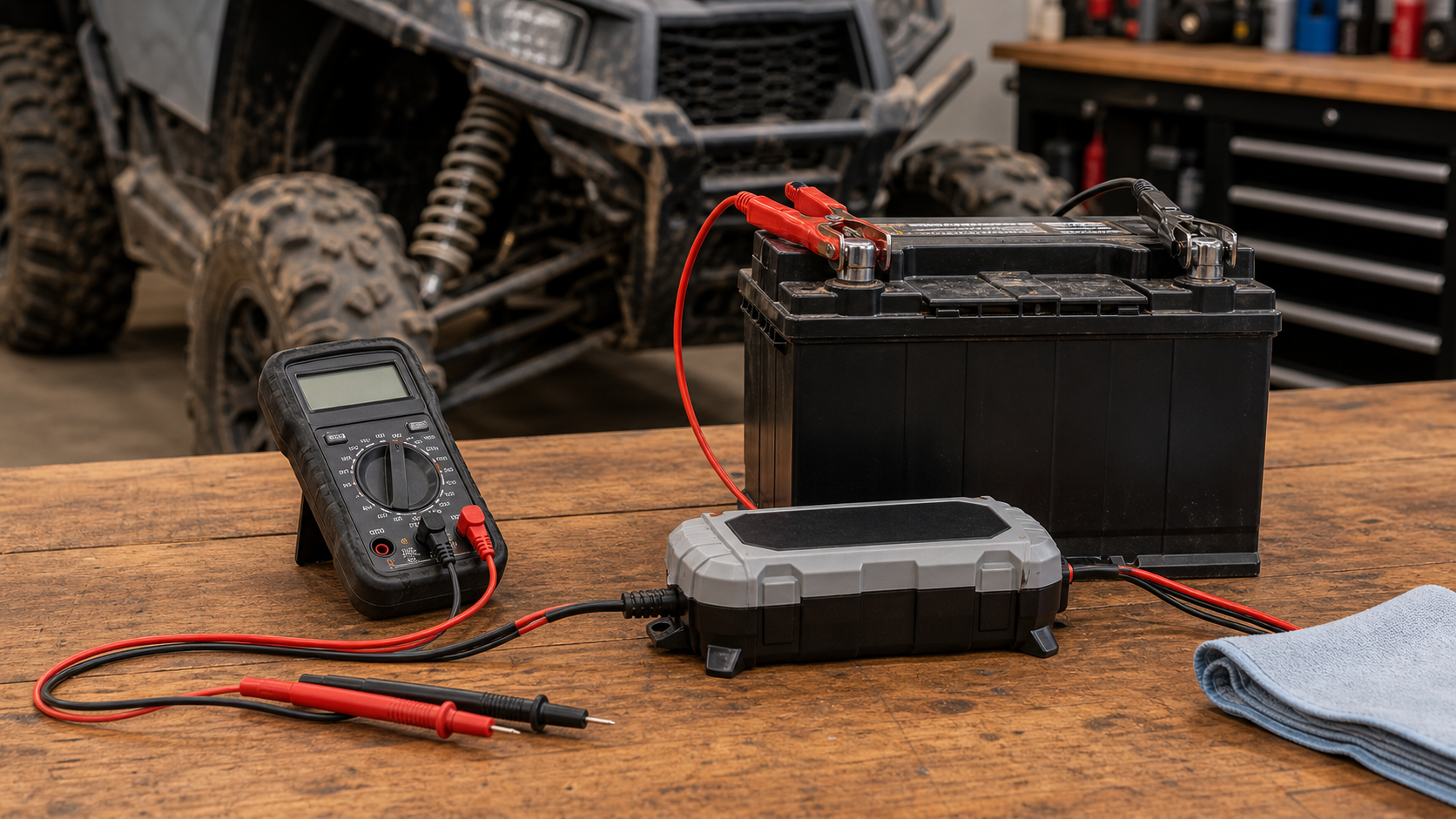
A healthy UTV battery depends on clean terminals, correct charging, and smart storage. Most starting problems come from low charge, corrosion, loose cables, parasitic draw, or an aging battery that can no longer hold voltage under load. Before replacing parts, test the battery and charging system.
Battery Care Checklist
| Task | Recommended habit |
|---|---|
| Check terminal tightness | Before long rides and at service intervals |
| Clean corrosion | When white, blue, or green buildup appears |
| Use a maintainer | During long storage periods |
| Load test battery | When starting slows or voltage drops |
| Inspect charging voltage | When new batteries keep dying |
Charging and Storage
Use a charger or maintainer compatible with your battery type. Lead-acid, AGM, and lithium batteries can require different charging profiles. Store the machine in a dry place when possible, turn accessories off, and disconnect or maintain the battery during long idle periods.
Common Symptoms
- Slow cranking can point to low charge, weak battery, bad cables, or cold-weather load.
- Clicking without cranking often means low voltage or poor connections.
- A battery that dies overnight may have parasitic draw from accessories, lighting, audio, or wiring faults.
- Repeated failures after replacement can indicate charging-system problems.
Accessory Load Matters
Light bars, winches, heaters, stereos, and GPS units can draw more power than owners expect. If you add electrical accessories, use proper fusing, relays where appropriate, clean grounds, and wire sizes suited to the load. Poor accessory wiring can create both reliability and fire risks.
Build battery checks into the UTV pre-ride inspection. For winter or mud use, also review tire pressure choices and light bar selection.
FAQ
Can I use a car battery charger on a UTV battery?
Only if the charger supports the battery type and appropriate amperage. A high-output automotive charger can damage small powersports batteries.
Should I disconnect the battery in storage?
It can help reduce parasitic draw, but a quality maintainer is often better for long storage when used correctly.
Why does my UTV battery keep dying?
Common causes include an old battery, loose terminals, parasitic draw, faulty accessory wiring, or charging-system problems.
Useful Sources
How To Test Before Replacing Parts
A battery can show acceptable resting voltage and still fail under load. That is why a load test is more useful than a quick glance at a voltmeter. If the battery drops heavily while cranking, it may be weak even after charging. If voltage stays strong at the battery but the starter struggles, inspect cables, grounds, solenoids, and starter connections.
Charging voltage should also be checked according to the service manual. A new battery that keeps dying is often a symptom rather than the root cause. Accessories wired directly to the battery, stuck relays, poor grounds, or a charging-system fault can drain or undercharge the battery.
Seasonal Storage Plan
Clean the battery case, remove corrosion, and fully charge the battery before storage. If the UTV sits for weeks, use a maintainer designed for the battery chemistry. Store removable batteries where temperatures are stable and where the case cannot be damaged. Do not place metal tools across terminals.
- Label accessory circuits so future troubleshooting is easier.
- Keep the battery hold-down secure; vibration shortens battery life.
- Replace cracked terminal covers and damaged cables.
- Check winch and light wiring after hard mud or water use.
Battery Upgrade Notes
A bigger or premium battery can help when the machine has a cab heater, winch, lights, sprayer, or audio system, but it should fit securely and match the charging system. Upgrading the battery will not fix poor wiring or parasitic draw. Fix the electrical basics first, then decide whether more capacity is useful.
Cold Weather Notes
Cold weather reduces available cranking power and makes weak batteries show their age. If the UTV is used for plowing, winter feeding, or hunting, test the battery before the season starts rather than waiting for the first cold morning. Keep terminals clean, confirm the maintainer is working, and avoid short trips with heavy accessory use that never give the charging system time to recover.
If you switch to a lithium powersports battery, read the battery maker’s cold-start and charging instructions carefully. Lithium can work well in some powersports applications, but it is not a universal drop-in answer for every vehicle, climate, or charging system.

