
Book instruction before building a difficult first ride
For an adult new to ATVs, the most useful first plan is structured instruction followed by an appropriate progression, rather than a demanding group outing. Riding experience on another type of vehicle should not be treated as proof of ATV competence. Start by confirming a suitable course and the provider’s requirements. Use this guide to organize preparation, not to replace an instructor or teach riding maneuvers through text.
The worksheet is for adult beginners considering US training options. It does not recommend a particular ATV for a child, define legal riding privileges or certify anyone’s fitness to operate. Youth training requires its own age-appropriate vehicle and provider guidance. The editorial contribution is a preparation and handover record that connects course requirements, the actual machine and the next realistic learning step.
Check the provider’s current course structure
The ATV Safety Institute currently describes its RiderCourse as online learning followed by hands-on instruction with a licensed instructor. Confirm the current local offering, booking requirements and schedule directly with the provider before arranging transport. Availability and eligibility should not be inferred from an old advertisement or a friend’s experience at a different location.
Ask whether the course is intended for your experience level and whether you bring a vehicle or use one supplied by the provider. Record the answer and the contact date. If you need an accommodation, discuss it with the provider early instead of assuming the course format can be changed on arrival. A confirmed place in the correct session is more useful than a vague intention to attend training sometime after the first trail trip.
Identify the machine the course expects
If bringing an ATV, provide the full model and year and ask what condition and configuration the provider requires. Do not assume a machine qualifies merely because it starts. Have unresolved mechanical concerns assessed appropriately before the course. Keep modifications visible in the discussion so the provider can decide whether the offered machine suits the instruction, rather than discovering unfamiliar equipment when the session begins.
Locate the correct owner manual and become familiar with its identification and inspection information without attempting unsupported repairs. Ask the provider what pre-course reading is useful. If a loan vehicle is supplied, ask how familiarization is handled and what information you need to bring. Keep the focus on a suitable learning setup. A powerful or heavily equipped ATV is not automatically the best vehicle for beginning instruction.
Confirm equipment rather than improvising at check-in
Request the provider’s exact clothing and protective-equipment requirements. Check the equipment you intend to use against those instructions and the equipment manufacturers’ fitting guidance. Do not treat ordinary casual clothing as a substitute because the course takes place in a controlled area. If an item is missing or fit is uncertain, resolve the question with the provider before the course date.
Bring the combination you will actually wear together so compatibility questions are not overlooked. A helmet, eye protection and other equipment should not create a problem that is discovered only when instruction starts. If the provider offers loan items, confirm what is available and any fitting arrangements. The objective is to arrive ready to learn, with attention available for instruction instead of last-minute equipment substitutions.
Separate transport logistics from riding readiness
Make a transport plan that fits the actual ATV and uses appropriate equipment and instructions. Do not allow the excitement of a first course to turn loading or unloading into an improvised demonstration. If you lack suitable transport or experience, ask the provider about practical options before booking a session that assumes you can bring your own machine. This article does not supply a generic loading procedure.
Prepare the administrative items the provider requests and keep contact details available. Confirm arrival time, location, weather arrangements and what happens if the machine is unsuitable on the day. Share the plan with anyone helping with transport. Solving these details in advance does not make someone a competent rider, but it removes avoidable distractions and reduces pressure to rush tasks that should follow their own established procedures.
Take useful learning notes without inventing a score
After instruction, record the course, date and vehicle used, together with the instructor’s stated next steps. Keep a distinction between completing a course and demonstrating competence in every riding environment. Ask which skills need further supervised practice and what setting is appropriate. Do not convert a positive experience into a claim that you are ready for every trail or group pace.
Use plain descriptions in your notes. “Need more practice with the instructor’s recommended exercise” is more useful than an invented percentage score. If the course gives a formal record, keep it in its original form. Do not edit its meaning to satisfy a riding group’s expectations. The point of a learning record is to preserve the next action while the feedback is fresh, not to create a badge that ends the learning process.
Plan the next outing around the learner
Discuss the first post-course outing with the instructor or another appropriately qualified person. Identify a suitable setting, companions and a way to stop without pressure. A route selected for experienced riders may be a poor continuation of beginner training, even if the group promises to wait. Make the learner’s needs explicit before anyone commits to a demanding itinerary.
Avoid making progress depend on keeping up with faster participants or carrying out unfamiliar tasks in public. Establish that asking to stop or change the plan is acceptable. Record the agreed limits and the person responsible for supporting the outing. This is a planning framework, not a substitute for route-specific knowledge or instruction. The right next step can be another lesson rather than a longer ride.
Keep training separate from permission and vehicle suitability
A course record does not by itself establish where an ATV may legally operate, whether a particular trail is open or whether a vehicle is suitable for every rider. Verify access and applicable requirements through the responsible authorities for the actual location. Do not treat a dealer’s broad description of the machine as a nationwide permission statement.
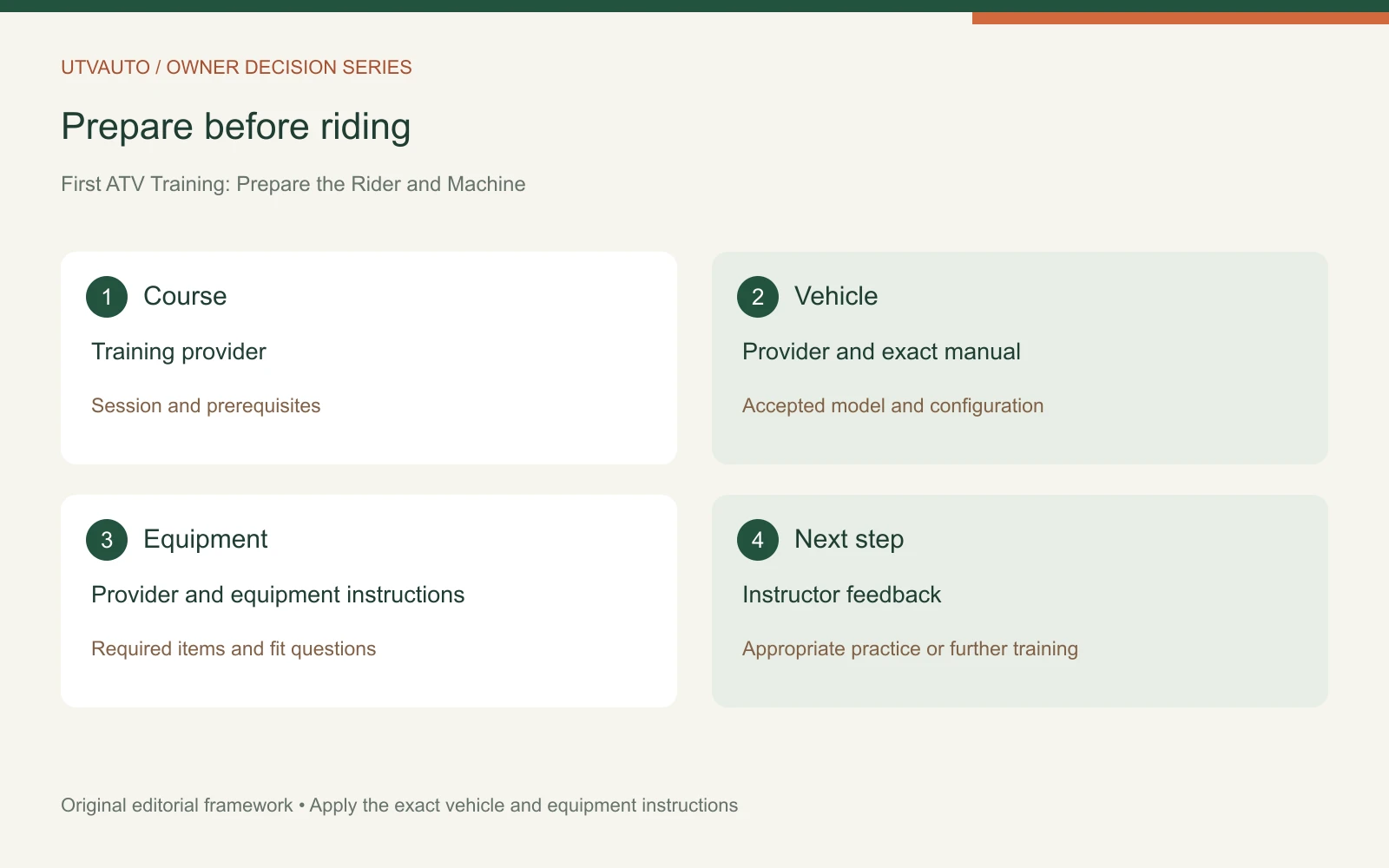
Finish the preparation record with four confirmed items: the provider and session, the accepted vehicle arrangement, required equipment and the next learning step. Keep unresolved questions visible and revisit them before the first outing. Good preparation gives instruction room to work. It helps a new owner move from enthusiasm toward a realistic understanding of the machine, the environment and the skills that still need development.
Example: change a first outing after instructor feedback
A hypothetical adult beginner books training before joining friends for a weekend ride. After the course, the instructor recommends further practice in an appropriate controlled setting. The original group route includes unfamiliar conditions and little opportunity to leave early. The useful response is to change the next outing, not to argue that the course booking obliges the rider to complete the original plan.
Tell the group what support is needed without inventing a claim about certification or competence. Arrange the recommended next step and keep the demanding route for a later decision. If friends are disappointed, avoid turning their schedule into a test of readiness. A training record should help the rider choose appropriate conditions, not become evidence used to pressure someone into a setting they have not prepared for.
At the next review, ask what improved and what still needs instruction. Save those notes alongside the course details and the vehicle information. Progress is individual and should be informed by qualified feedback. There is no universal number of outings after which every beginner becomes ready for every environment. A staged plan remains useful precisely because it can change when actual learning produces a clearer picture of the rider’s needs.
Working reference table
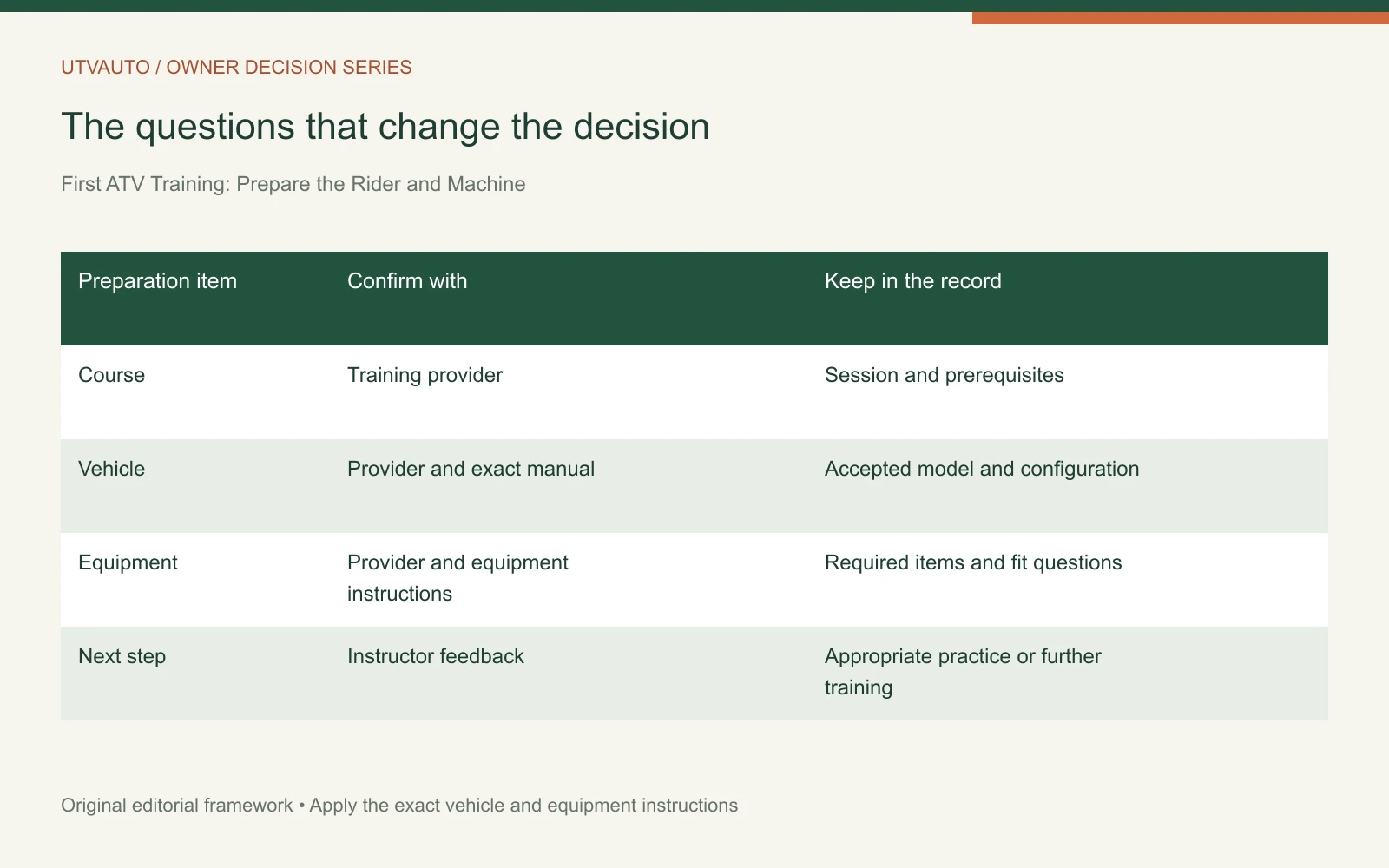
| Preparation item | Confirm with | Keep in the record |
|---|---|---|
| Course | Training provider | Session and prerequisites |
| Vehicle | Provider and exact manual | Accepted model and configuration |
| Equipment | Provider and equipment instructions | Required items and fit questions |
| Next step | Instructor feedback | Appropriate practice or further training |
Related UTVAUTO resources
- Check ATV passenger-design restrictions
- Identify the actual ATV tire configuration
- Understand why vehicle preparation matters; use ATV-specific instructions
Sources and scope
Research and editorial planning framework, checked November 9, 2026. UTVAUTO has not tested these vehicles, measured their noise, or inspected the reader’s machine. Examples are explicitly hypothetical. Use the exact vehicle manual and obtain qualified assistance for unresolved safety questions.
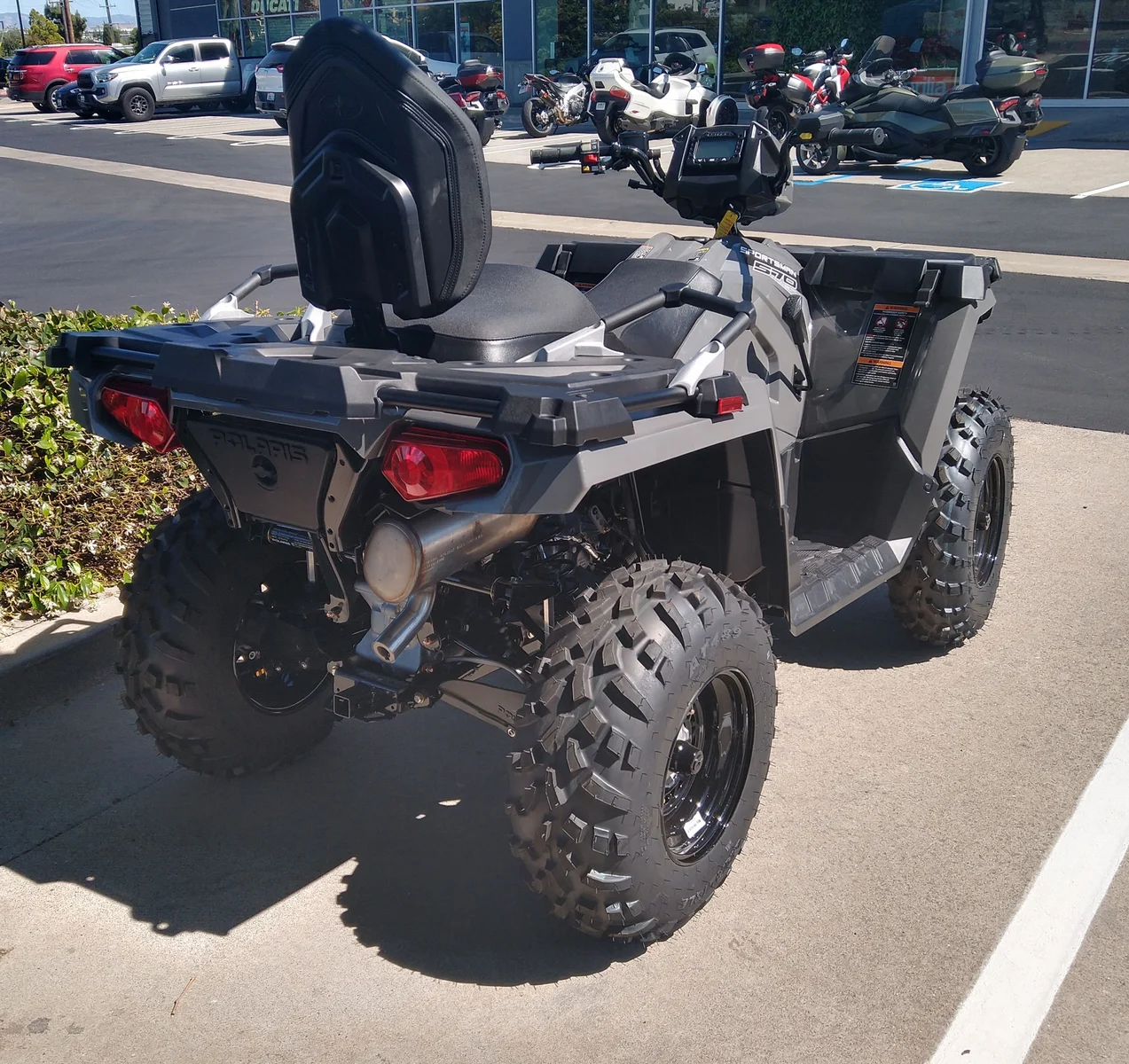
Featured archival reference photograph: 2021 Polaris Sportsman 570. It illustrates vehicle context, not a UTVAUTO test, the exact equipment discussed or an endorsement. DestinationFearFan / Wikimedia Commons / CC BY-SA 4.0. Resized and converted to WebP; photograph retains its stated license.