Build a complete equipment plan before choosing extras
ATV riding equipment should be planned as a complete system that fits the actual rider and use. A helmet purchase alone does not answer the questions about eye protection, gloves, boots and clothing. The U.S. Consumer Product Safety Commission recommends protective equipment and hands-on training for ATV riders. Use that foundation to organize the purchase rather than treating a fashionable accessory as a substitute for the basic equipment.
This guide is a preparation and fitment checklist, not a protective-equipment certification or a claim that any outfit eliminates injury risk. UTVAUTO has not impact-tested helmets or compared garment performance. Follow the actual manufacturer’s fitting, use and replacement instructions, and obtain appropriate help where fit or compatibility remains uncertain. Different equipment can share a size label without fitting the same person in the same way.
Use the course requirements as a practical starting list
The ATV Safety Institute’s course preparation page lists a DOT-compliant motorcycle helmet, goggles or a face shield, over-the-ankle boots, ATV or motorcycle gloves, long pants and a long-sleeved shirt or jacket. It also identifies the owner manual and an age-appropriate ATV as items to prepare. Check the current requirements for the specific training provider and appointment rather than assuming a general list covers every situation.
Make the list personal. Identify which items you already own, whether their condition and history are known, and what remains to be fitted or obtained. A borrowed item should be evaluated for the actual user rather than accepted because it belonged to an experienced rider. Contact the provider early if equipment availability may prevent participation. That is more useful than discovering a missing requirement after arriving for the course.
Evaluate the helmet under its own instructions
Record the helmet’s manufacturer, model, size, relevant labeling and instruction reference. Follow its fitting procedure and any advice from a competent equipment supplier. Do not choose a helmet solely from a head-size number copied from another brand’s chart. A measurement is a starting input to a fitting process, not a guarantee that the internal shape and retention system suit the individual.
Bring the eye protection and any other normally worn compatible items into the fitting discussion. Avoid adding unapproved material or modifying the helmet to solve a pressure or retention problem. If the history of a used helmet is unknown, treat that uncertainty seriously and seek the manufacturer’s guidance rather than using appearance as proof of condition. This article does not prescribe an impact threshold, expiration rule or replacement interval for every helmet.
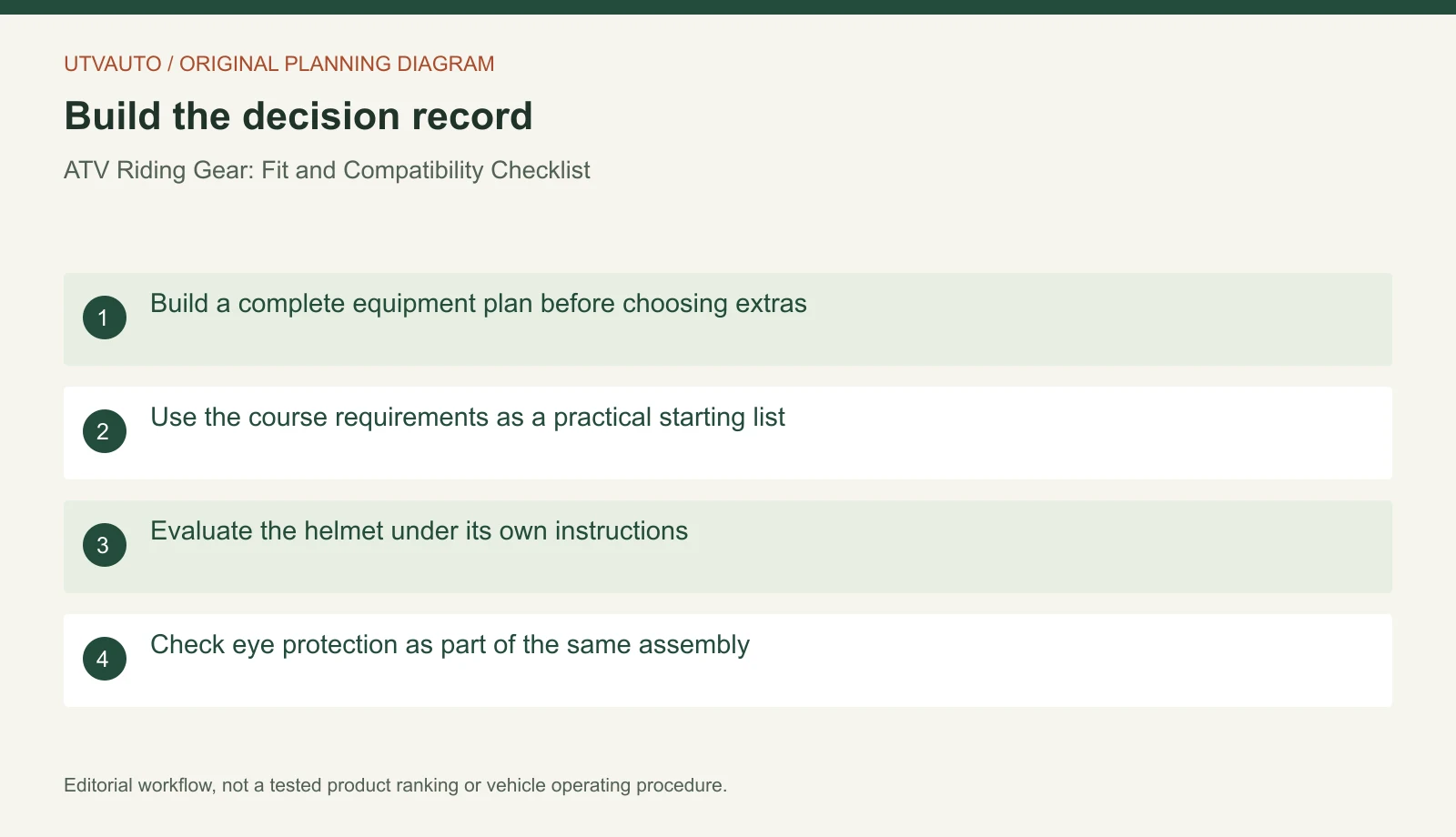
Check eye protection as part of the same assembly
Identify the eye-protection arrangement specified for the helmet and intended activity. Confirm that the goggles or shield are suitable for the actual helmet and fit the rider correctly under the applicable instructions. A product described as compatible with many helmets still needs to be evaluated with the specific assembly. Look at how it sits and how adjustments affect the complete fit while stationary.
Ask about cleaning, storage and replacement lenses or shields before purchasing a system. A scratched, damaged or unsuitable viewing surface can create a practical problem even when the surrounding equipment looks new. Do not apply a treatment or cleaning product merely because it worked on a different material. Preserve the manufacturer’s care information so an unfamiliar coating does not get treated like ordinary household glass.
Try gloves and boots with the real controls in mind
Fit gloves and footwear for the actual rider, then evaluate the ability to identify and reach the relevant controls in an appropriate stationary setting. Follow the vehicle and equipment instructions, with help from the training provider where needed. A large glove or stiff boot should not be assumed suitable simply because it offers a reassuring appearance. Control access and the required equipment need to work together.
Consider the complete clothing arrangement when checking fit. Sleeves, cuffs and other layers should not create an unresolved interference problem. Avoid claiming that one generic work item is equivalent to every product designed for riding. Ask the equipment supplier what the product is intended for and how it should be worn. Keep unresolved control-access issues visible rather than planning to get used to a combination that has not been appropriately evaluated.
Plan weather layers without changing protective fit
List the expected conditions for the planned activity and ask how the selected equipment accommodates appropriate layers. Check the full arrangement rather than fitting each piece in isolation. Adding a layer later can change how a helmet, glove, boot or garment fits. A system that works during an indoor fitting still needs to be appropriate for its intended use under the relevant instructions.
Do not rely on a general online guide to recommend a particular outfit for every temperature or medical circumstance. Use the training provider, product information and the rider’s actual needs to resolve the arrangement. Carrying a dry spare layer can be part of preparation, but its storage and accessibility still need thought. The objective is a usable plan for the outing, not a universal claim that one garment package handles all weather.
Keep equipment history and care information
Create a short record of each major item’s identity, purchase information, instructions and known history. Note damage or an event that requires assessment under the manufacturer’s guidance. A price tag, a clean surface or a seller’s general assurance does not establish the protective condition of an item with uncertain history. Keep the difference between known facts and assumptions visible.
Follow the item-specific cleaning and storage directions. Ask about replacement components and approved accessories rather than combining parts because they appear to fit. Review the equipment before the next activity, especially after changes in the rider’s fit, the helmet or the eye-protection arrangement. This simple record can prevent a replacement lens, mount or other component from being chosen solely by appearance.
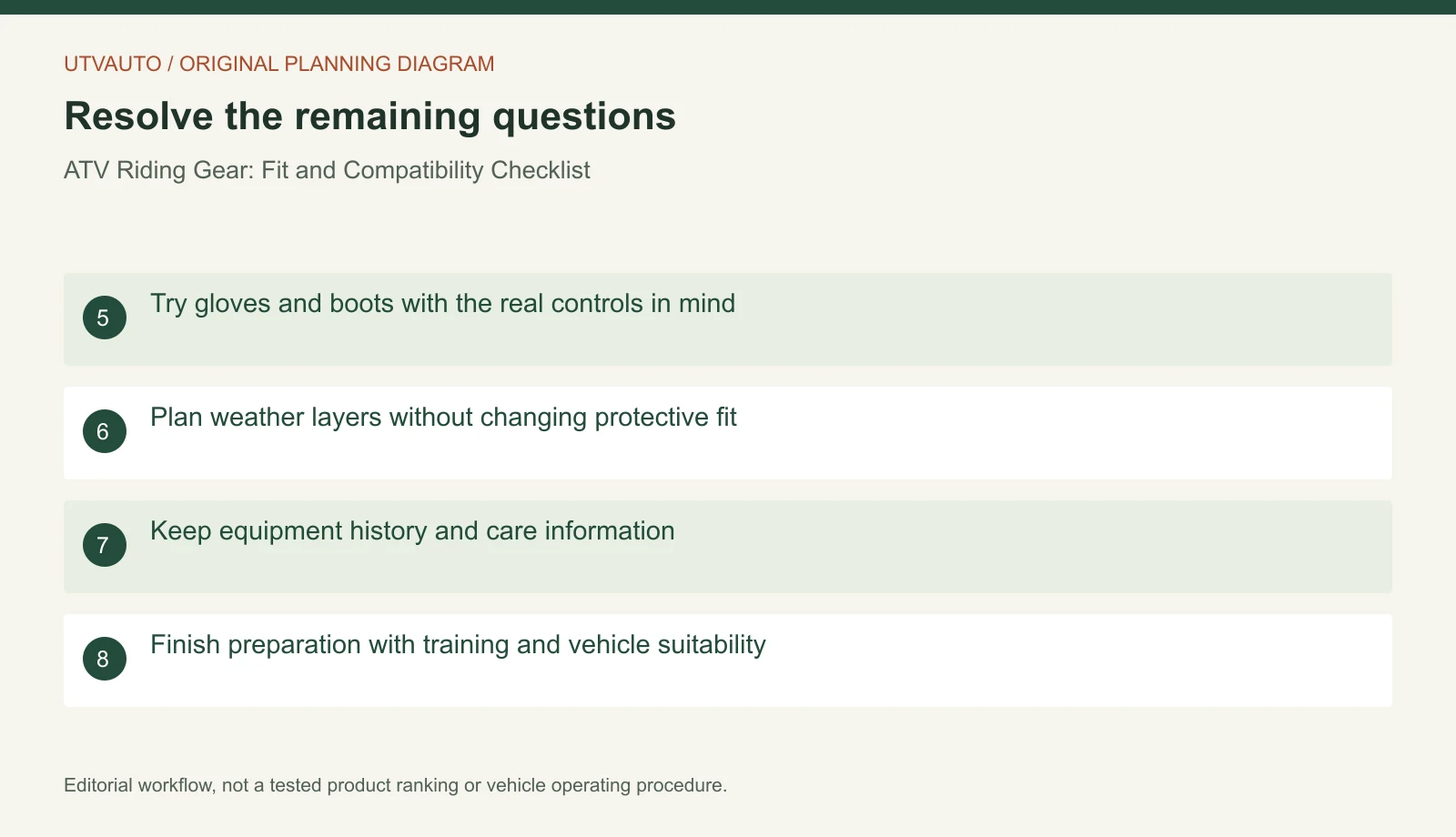
Finish preparation with training and vehicle suitability
Equipment preparation belongs alongside training and an appropriate vehicle, not in place of them. Review the course arrangements and the matching owner manual before the appointment. Passenger approval, rider qualifications and vehicle selection are separate questions from whether a helmet fits. Do not assume an accessory seat or a large machine creates an appropriate arrangement for any participant.
Before departure, confirm that each required item is available, fitted and in suitable condition under its instructions. Keep questions for the provider or supplier specific: identify the rider, actual product and the compatibility issue rather than asking whether a piece of equipment is simply good. A complete, documented preparation process gives the rider and instructor a clearer starting point without promising that clothing or protective equipment can replace the skills and decisions needed for ATV operation.
Use a fitting appointment to close specific questions
Bring the proposed equipment list and the actual items you intend to wear together. Ask the supplier or training provider to identify the relevant fitting and care instructions. Record any question about compatibility rather than choosing an accessory only because it shares a brand or color scheme. A supplier can answer a much more useful question when you identify the helmet model and eye-protection assembly instead of asking for something that fits most riders.
Consider a hypothetical rider replacing a helmet while retaining existing goggles. The old combination fitting acceptably does not establish that the goggles work with the new helmet. Check the new complete arrangement under its instructions, including how it is adjusted and cared for. If the solution requires changing another item, include that in the complete purchase rather than discovering the additional need immediately before a course or outing.
Keep the equipment checklist separate from shopping preferences. Appearance, storage convenience and replacement availability can influence a choice among suitable candidates, but they do not resolve an uncertain fit or condition. Finish with a list of confirmed items, unresolved questions and the actions needed before participation. This provides a realistic starting point for training and helps prevent a rushed purchase from being treated as a completed preparation process.
Related UTVAUTO resources
- Passenger designation is a separate check
- Plan carried equipment within rack limits
- Understand the vehicle category before buying
Sources and scope
This is a research-based planning guide, not a UTVAUTO product test, installation or professional inspection. Manufacturer and safety references were checked November 9, 2026. Use the exact vehicle and component instructions for operational requirements.
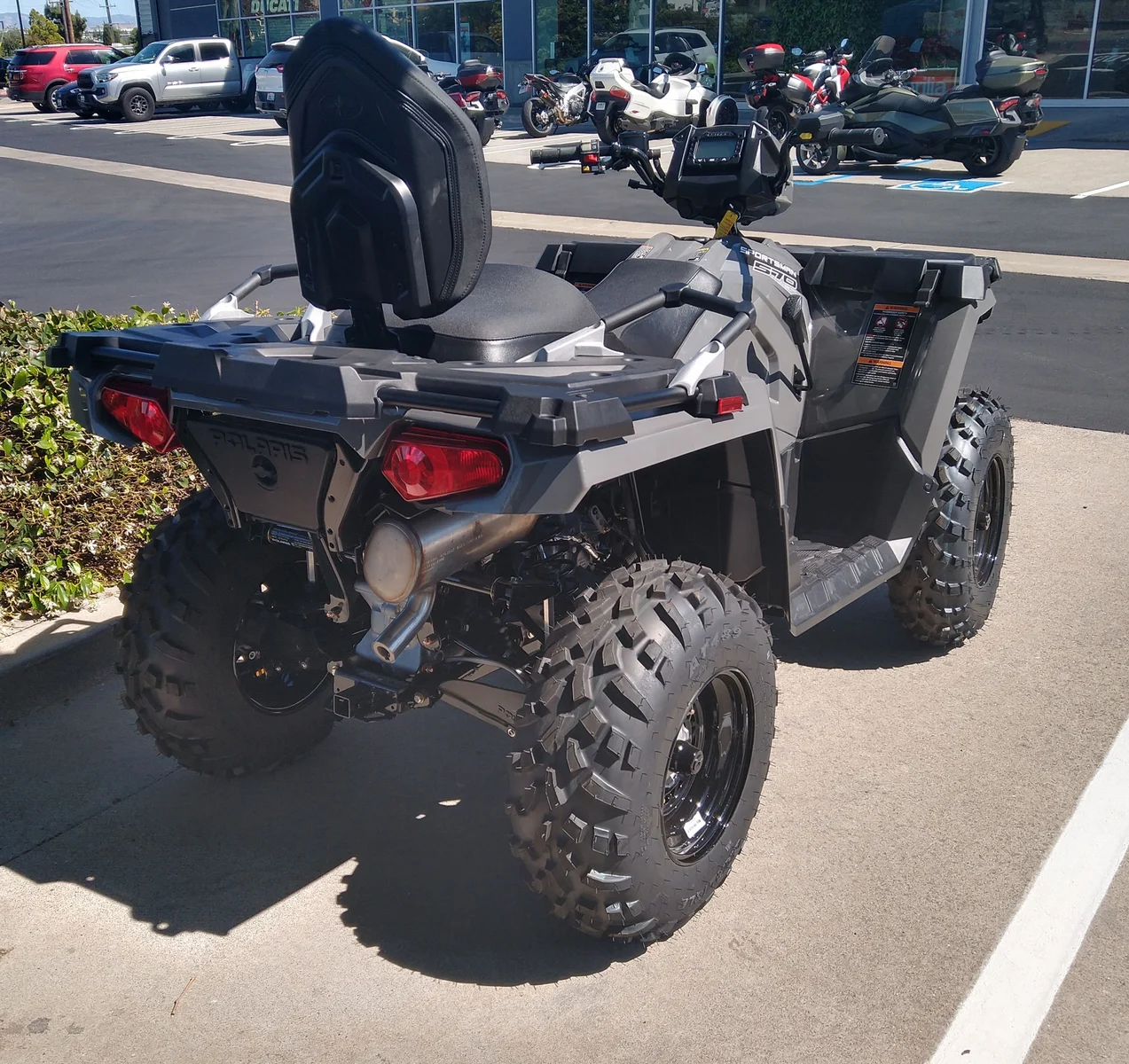
Featured archival reference photograph: 2021 Polaris Sportsman 570. It illustrates vehicle context, not a UTVAUTO test, the exact equipment discussed or an endorsement. DestinationFearFan / Wikimedia Commons / CC BY-SA 4.0. Resized and converted to WebP; photograph retains its stated license.