Editorial collection: November 2026. Collection month is an editorial label; the page retains its actual first-publication date.
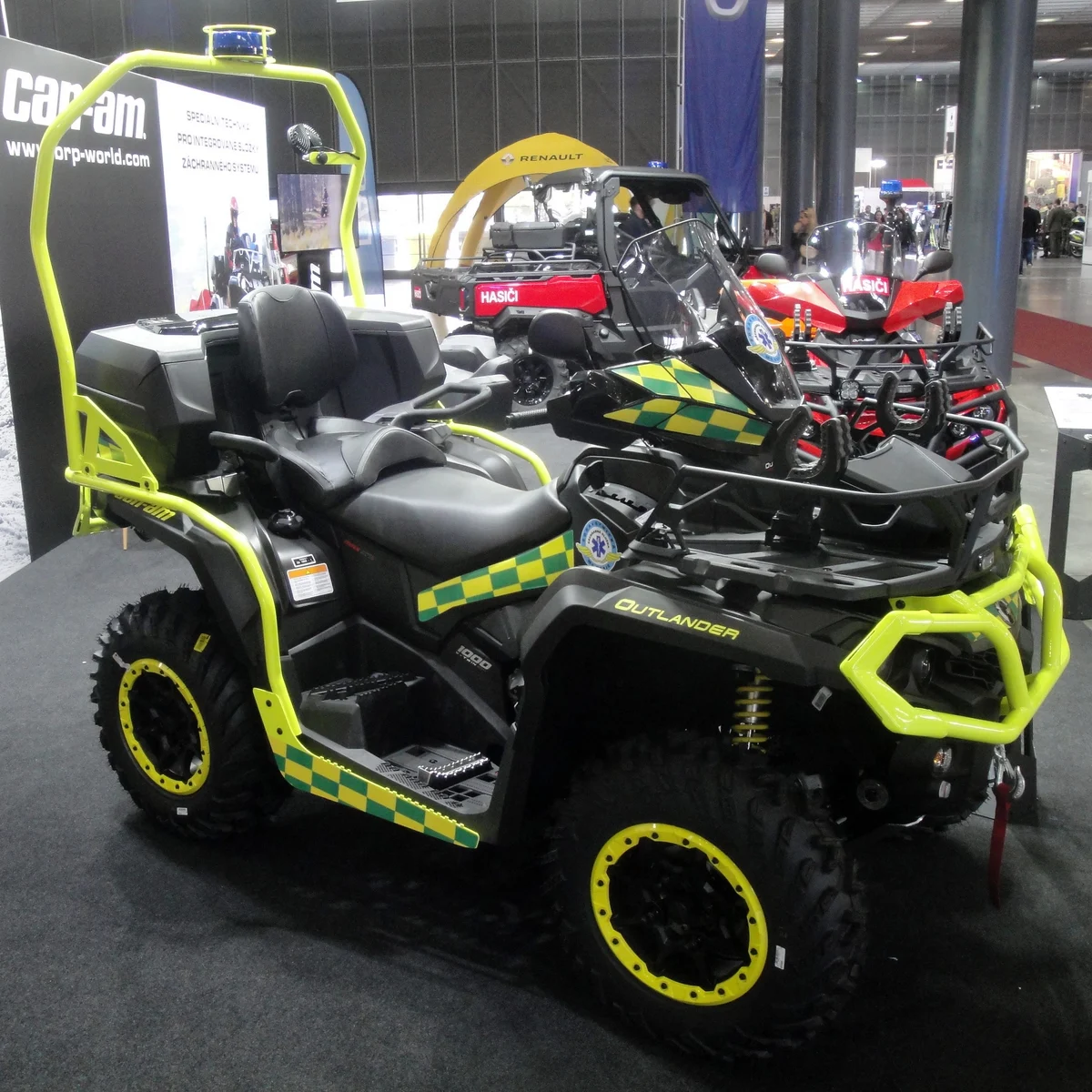
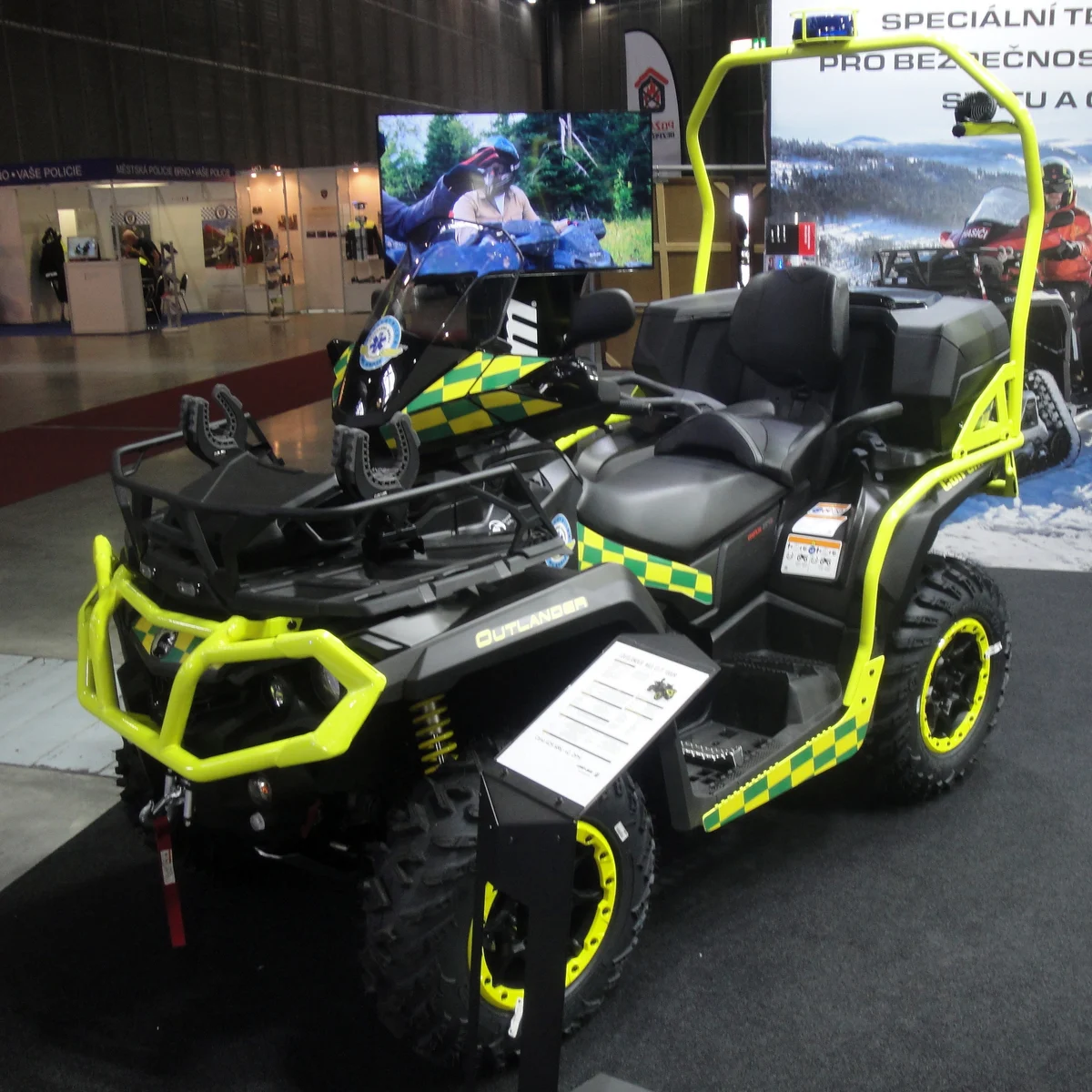
Featured photograph: Can-Am Outlander MAX XT-P 1000R at a display, showing a factory two-up layout. Check the exact model’s guide for passenger requirements. Reise Reise / Wikimedia Commons / CC BY-SA 4.0. Resized and converted to WebP; photograph retains its stated license.
An ATV can carry a passenger only when that exact vehicle is designed and approved for two people, and the operator and passenger meet its manual’s requirements. A padded rear cargo box, backrest or long seat does not convert a single-rider ATV into a factory two-up model.
The ATV Safety Institute’s Golden Rules distinguish single-rider ATVs from machines specifically designed for two and limit the latter to one passenger. Start with the manufacturer’s seating designation and warnings, then check the exact passenger requirements. Do not infer approval from an accessory seller’s photograph.
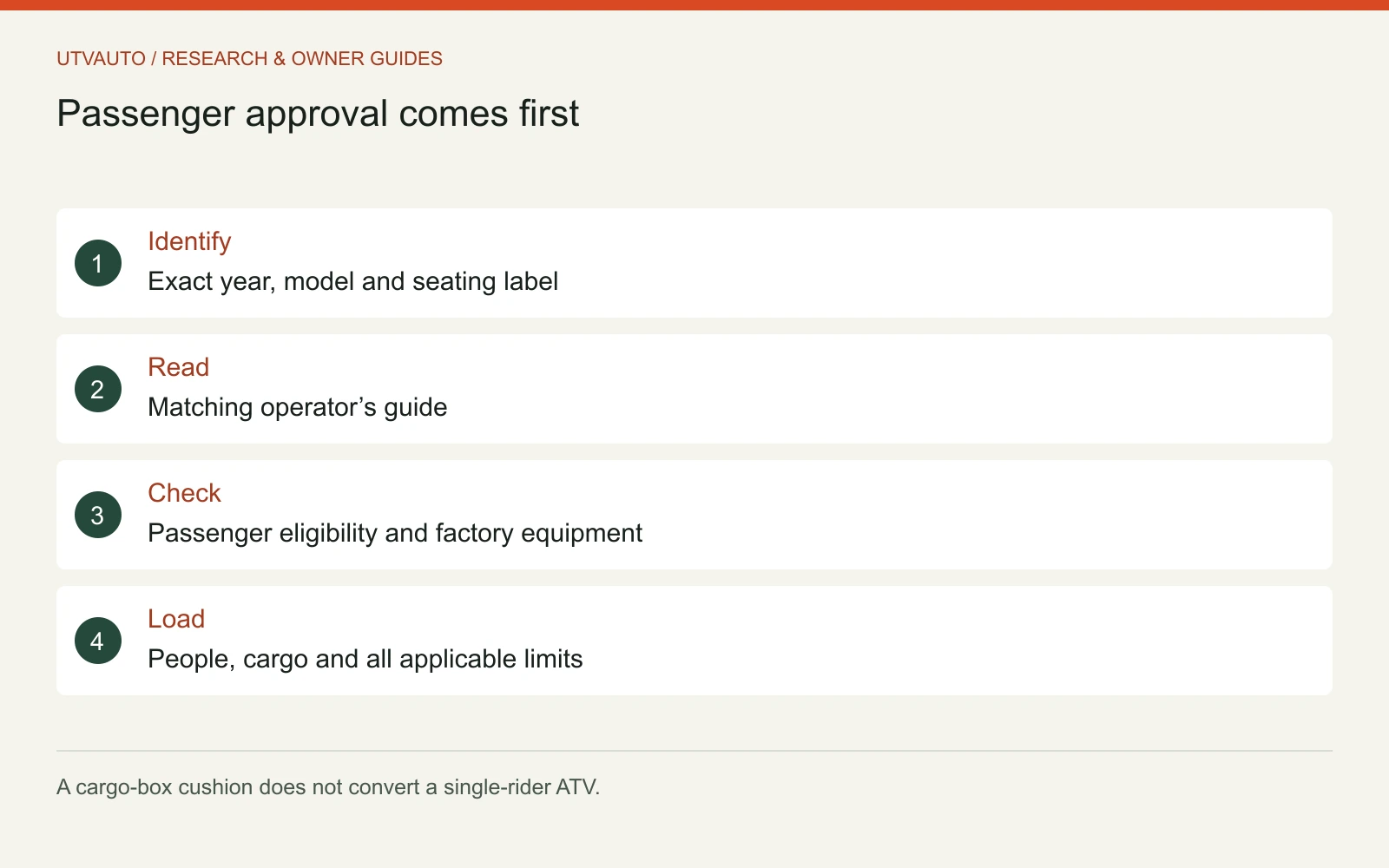
How to identify the application
| Evidence | What to check |
|---|---|
| Vehicle label and model identity | Seating designation for the exact year and model |
| Operator’s guide | Passenger eligibility, position, equipment and operating restrictions |
| Factory components | Specified passenger seat, footrests and handholds |
| Load limits | Combined rider, passenger, cargo and equipment |
| Local permitted use | Current land-manager and jurisdiction requirements |
Factory two-up names help, but the guide decides
For example, Polaris’s 2026 Sportsman catalog lists two seats for Touring 570 configurations, while the standard Sportsman 570 EPS has one. These are different applications even though both contain “570.” Can-Am’s MAX naming is also a reason to verify the full model rather than assuming every Outlander can carry a passenger.
A removable seat or convertible configuration needs its own instructions. When buying used, identify whether required factory parts remain present and correctly installed. A seller’s “two-person seat” description does not establish that the vehicle left the factory as a passenger-approved model.
Check passenger fit and eligibility without guessing an age rule
Read the actual guide for the model’s passenger age, size, ability and other restrictions. The person must meet every stated condition, not merely fit on the cushion. Required handholds and foot support must be reachable as instructed. If the passenger cannot meet the requirements, choose another suitable arrangement rather than adding improvised supports.
Do not assume a smaller passenger creates less risk or that sitting directly behind the rider is sufficient. Passenger movement affects handling and the rider’s ability to move. Training and the manufacturer’s operating restrictions remain necessary on a factory two-up vehicle.
A cargo rating is not a passenger rating
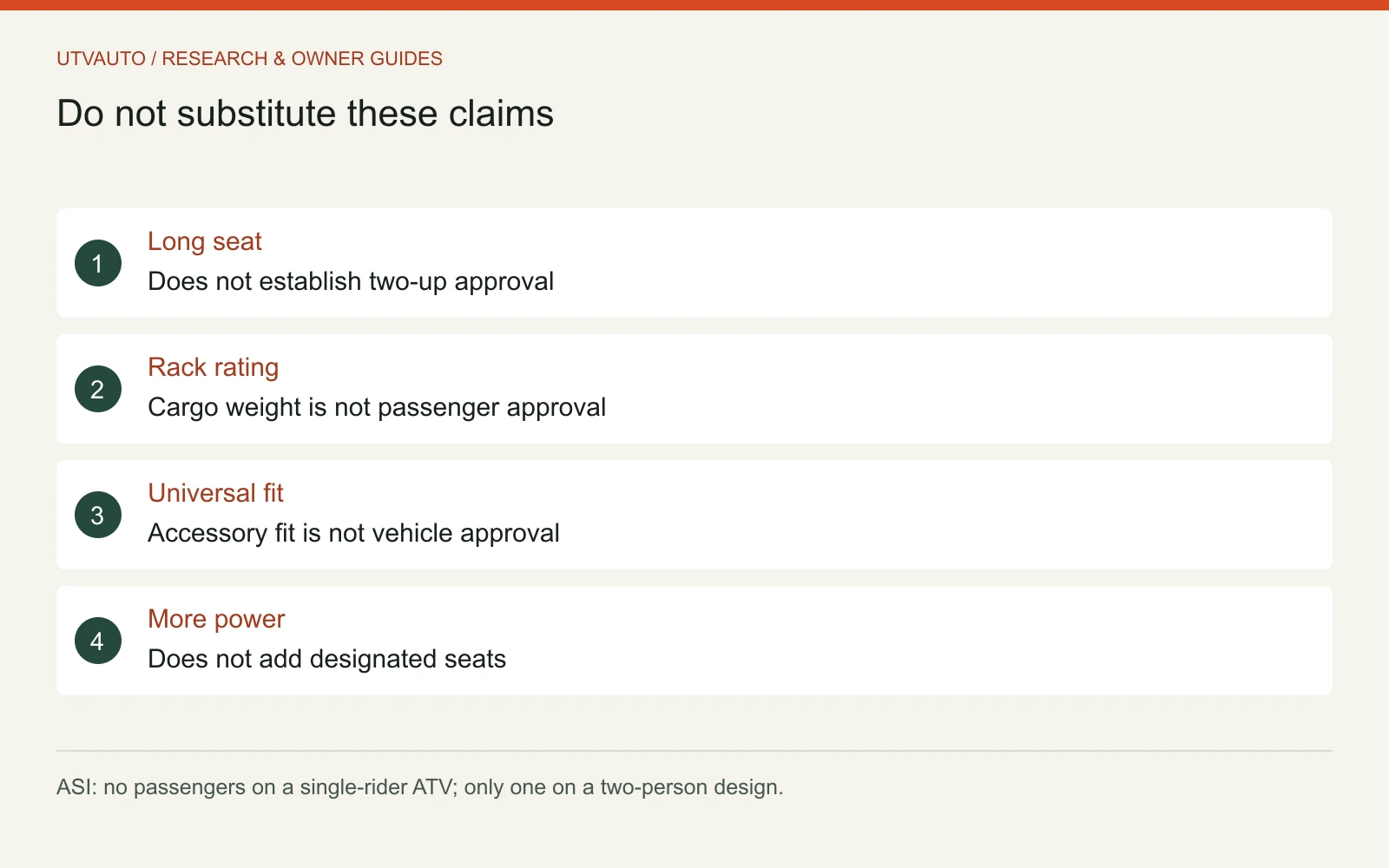
A rear rack rated for a given weight is a cargo component. A passenger also needs the vehicle design, position and equipment specified by the manufacturer. Adding a lighter person than the rack maximum does not answer those requirements. Do not transport a person in a UTV bed either; designated seating and restraints are a separate question.
For a two-up purchase, calculate the actual people and equipment load against every applicable limit. A larger engine does not increase seating approval. Rack loads, tongue weight and total vehicle load need to be checked separately when they apply. Our load-limit guide explains the distinction.
Questions for an accessory seller
- Is this product cargo storage, a comfort accessory or a manufacturer-approved passenger component for my exact model?
- Which official vehicle document confirms passenger use?
- What configurations, model years and required factory parts are excluded?
- Does installation change access to controls or required rider movement?
If the answer relies only on “universal fit” or the rack’s weight rating, it has not established passenger approval. Do not add a cargo-box seat to work around a single-rider warning. Compare a genuine two-up model or a suitably configured side-by-side instead.
The purchase decision
For regular two-person riding, make approved passenger use a hard requirement before comparing horsepower, tires or accessories. Obtain the exact guide and inspect the actual vehicle with the seller. If the identity, equipment or eligibility cannot be confirmed, do not carry a passenger until it is resolved.
For a broader platform choice, read ATV versus UTV differences. For single-rider ATV specifications, our Outlander and Sportsman comparison explicitly separates the models from their passenger-capable relatives.