
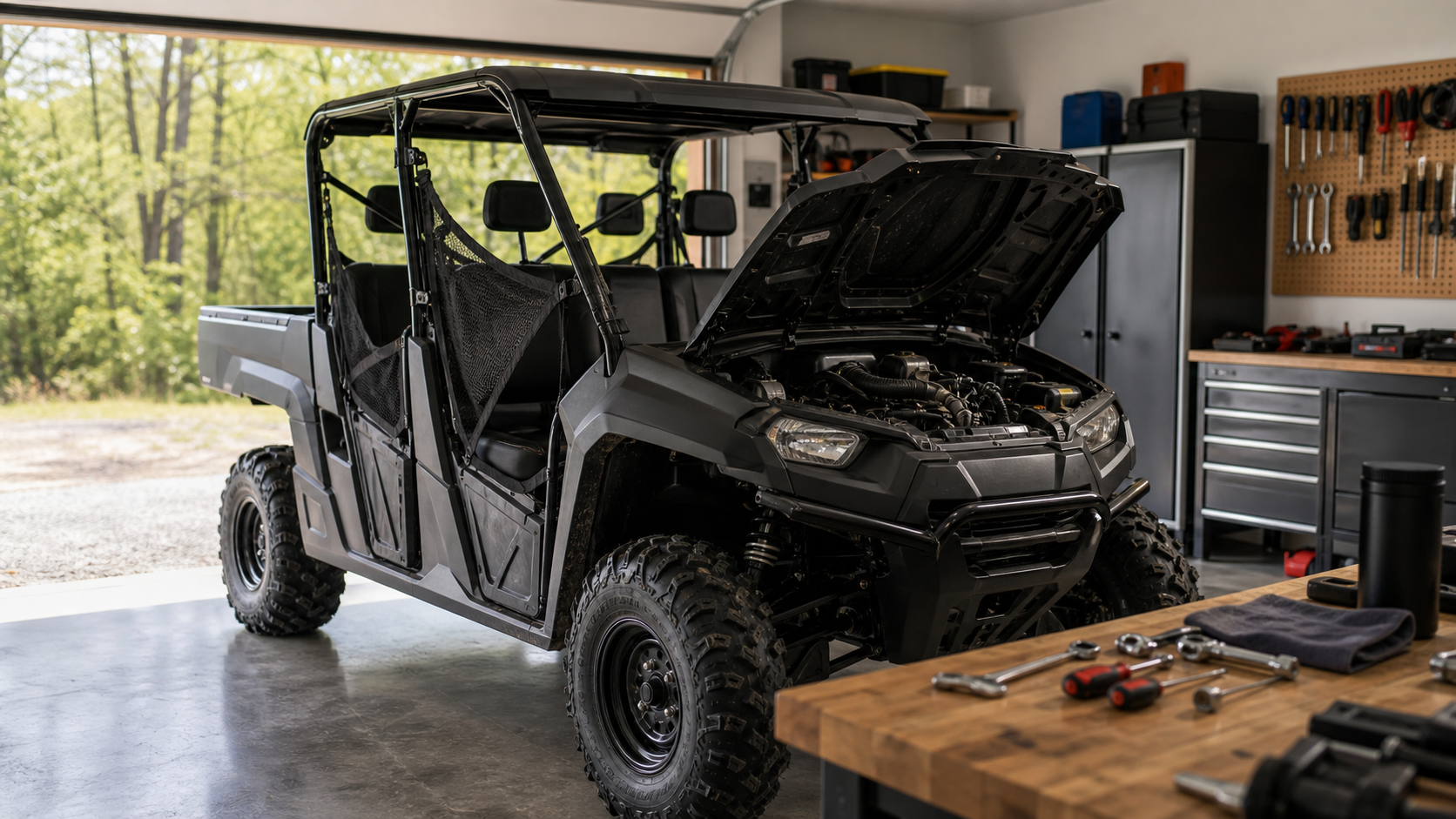
Quick answer: the most common Honda Pioneer 1000 problems owners investigate are DCT shifting complaints, heat around the cab, battery or charging trouble, brake and tire wear, suspension noise, accessory-related electrical issues, and used-machine recall history. Many symptoms are maintenance, load, terrain, accessory, or model-year dependent, so start with the owner manual, service records, VIN recall checks, and a qualified Honda dealer when a problem repeats.
The Honda Pioneer 1000 has a strong utility reputation, but no full-size side-by-side is problem-free. The mistake is treating every complaint as a design defect or, on the other side, dismissing every symptom as owner error. A Pioneer 1000 can work hard for years when it is serviced correctly and used within its ratings. It can also develop frustrating issues when it is overloaded, run hot at low speed, stored with a weak battery, modified with poor wiring, or bought used without service history.
This guide organizes Honda Pioneer 1000 problems by symptom, likely checks, and when to stop riding. It is not a substitute for the Honda service manual or dealer diagnosis. It is a practical triage guide for owners who want to understand what might be happening before they spend money or keep driving a machine that needs attention.
Honda Pioneer 1000 problem checklist
| Symptom | Common first checks | Likely owner action | Stop and call a dealer when |
|---|---|---|---|
| Hard shifting, delayed shifting, or unusual DCT behavior | Fluid level and condition, service interval, drive mode, warm-up behavior, warning lights | Record when it happens: cold, hot, loaded, uphill, or after water/mud | The machine grinds, will not shift, shows warnings, or repeats the fault |
| Heat around seats, console, or cab | Panels, airflow, debris, coolant level, fan operation, cab accessories | Inspect after slow work, hot weather, or enclosed-cab use | You smell burning, see melted parts, find leaks, or get temperature warnings |
| Weak start or dead battery | Battery age, terminals, charging voltage, accessory draw, storage habits | Charge and load-test battery; inspect added wiring | The battery repeatedly dies or the starter struggles after charging |
| Brake noise or weak braking | Pads, rotors, mud, parking brake, brake fluid, calipers | Clean and inspect after mud or heavy towing | The pedal feels soft, braking is uneven, or fluid is leaking |
| Vibration, steering pull, or tire wear | Tire pressure, lug torque, wheel damage, alignment, suspension bushings | Measure pressure cold and inspect wheels and suspension | Vibration is severe, steering changes suddenly, or parts are loose |
| Accessory failures or strange electrical behavior | Fuse taps, grounds, wire routing, battery size, charging capacity | Disconnect recent accessories and test baseline operation | Wires heat up, fuses repeatedly blow, or factory systems act erratically |
1. DCT shifting concerns
The Pioneer 1000 uses Honda’s six-speed automatic Dual-Clutch Transmission. Honda’s current Pioneer 1000-5 Deluxe specification page lists a 999cc liquid-cooled parallel-twin engine and six-speed automatic DCT, which is a major reason buyers choose the Pioneer instead of a belt-driven utility UTV. The DCT gives the machine a more mechanical driving feel, but it also means owners must understand what is normal and what is not.
Some shift feel is normal. A DCT does not behave exactly like a belt CVT, and it can feel different cold versus warm, light throttle versus heavy throttle, or automatic mode versus manual-style control. Problems become more serious when the machine bangs into gear, hesitates repeatedly, refuses to shift, shows warning lights, grinds, or behaves differently than it did before.
Before assuming a major failure, check service history, fluid condition, battery health, and whether the problem appears only under a specific condition. A weak battery or poor electrical connection can create confusing behavior in modern machines. If the symptom repeats, do not keep forcing the transmission. Record the conditions and involve a Honda dealer.
2. Cab heat and slow-speed work
Cab heat complaints are common across many utility UTVs because these machines often work slowly under load. The Pioneer 1000 may spend long periods crawling around farms, hunting properties, trails, and job sites where airflow is limited. Add a full windshield, roof, doors, rear panel, heater, or other cab accessories, and heat patterns can change.
Start with the simple checks. Confirm panels are installed correctly, airflow is not blocked by mud or debris, coolant level is correct, the fan operates, and no accessory is trapping heat where it should not. If the machine runs hotter after an accessory install, inspect that install first. Cab kits and windshields can improve weather comfort while making summer heat more noticeable.
Stop riding if you smell burning, see melted plastic, notice steam, find coolant or oil leaks, or see a temperature warning. Heat discomfort is one thing; overheating or melting is a different level of risk.
3. Battery, charging, and electrical problems
A weak battery can mimic bigger problems. It can cause slow cranking, no-start behavior, dim lights, odd accessory behavior, intermittent faults, and confusion after storage. Many Pioneer 1000 owners add winches, light bars, sound systems, cab fans, heaters, sprayers, plows, GPS units, chargers, and radios. Those accessories can be useful, but poor wiring turns a reliable machine into an electrical headache.
Check terminal tightness, corrosion, battery age, resting voltage, charging voltage, grounds, fuses, and whether the battery has been maintained during storage. If the problem began after an accessory install, temporarily isolate that accessory and test the machine again. A clean relay, fuse, and ground strategy is not optional when a UTV sees water, mud, vibration, and winter use.
For a broader maintenance routine, see our UTV battery maintenance guide. If the machine repeatedly kills a known-good battery, ask a dealer or qualified technician to test charging output and parasitic draw.
4. Brake wear, noise, and mud-related issues
Brake complaints often come from the way utility UTVs are used. Mud, sand, towing, steep hills, water crossings, heavy cargo, and frequent stop-start work all accelerate wear. Noise after mud does not always mean a major failure, but weak braking, soft pedal feel, uneven braking, or fluid leaks are serious.
Inspect pads, rotors, calipers, parking brake behavior, brake fluid, and whether debris is trapped around the brake hardware. Clean the machine carefully after mud, but avoid blasting electrical connectors and seals with aggressive pressure. If the Pioneer is used for towing or downhill work, brakes need more frequent attention than a lightly used trail machine.
Do not postpone brake service because the machine still moves. A loaded UTV on a slope needs predictable braking. If the pedal feels soft or the machine pulls under braking, stop and inspect before the next ride.
5. Tire wear, vibration, and steering complaints
Honda’s current Pioneer 1000-5 Deluxe specifications list 27-inch Maxxis Big Horn 2.0 tires, 13.0 inches of ground clearance, 64.0-inch width, and 1,920-pound curb weight for that trim. Those numbers matter because tire pressure, load, and terrain have a big effect on ride feel. A heavy utility UTV with cargo, passengers, and accessories will not tolerate neglected tires the way a light recreational machine might.
If you feel vibration, steering pull, wobble, or uneven tire wear, start with cold tire pressure, lug torque, wheel damage, bent suspension parts, worn bushings, and alignment. Oversized or heavy tires can also change steering effort, braking distance, driveline load, and suspension feel. If you changed tire size, compare your setup with the stock baseline and read our UTV tire size explainer.
A sudden steering change is not a comfort issue. It can indicate loose or damaged parts. Inspect before riding again.
6. Suspension noise and cargo-load complaints
Utility UTVs often get blamed for suspension problems that are really load problems. The Pioneer 1000-5 Deluxe specification page lists 1,000 pounds of bed capacity for 49-state models, 600 pounds for California models, and 2,500 pounds of towing capacity. Those ratings still require common sense. Payload, passenger weight, tongue weight, terrain, tire pressure, and speed all affect safety and wear.
Clunks, squeaks, and rattles can come from bushings, loose hardware, worn shocks, bed latch points, hitch accessories, skid plates, or cargo moving in the bed. Start by unloading the machine and testing again. Then check suspension pivots, shock mounts, sway bar links, wheel bearings, and cargo-bed hardware. If the noise appears only when loaded, weigh the load and check how it is secured.
7. Accessory fitment and wiring problems
Many “Honda Pioneer problems” begin after accessories are added. Roofs, windshields, rear panels, doors, mirrors, plows, winches, heaters, lights, speakers, tool boxes, gun boots, and sprayers all change the machine. A poor windshield can worsen dust swirl. A bad ground can create strange electrical symptoms. A heavy tire can stress steering and braking. A loose roof can sound like suspension noise.
Before installing parts, confirm fitment for the exact year and trim. Do not assume a Pioneer 1000-3 accessory fits a Pioneer 1000-5 or that an older accessory fits a redesigned model. Use product-specific installation instructions and keep wiring away from heat, moving parts, sharp edges, and water collection points.
8. Used Pioneer 1000 recall and history checks
Used buyers should add recall research to the inspection. The Consumer Product Safety Commission announced a 2019 recall involving certain 2016 through 2019 Honda Pioneer 1000 side-by-side vehicles, and NHTSA provides recall lookup tools for checking vehicles by VIN. That does not mean every used Pioneer has an open recall, but it does mean buyers should verify before purchase.
Ask the seller for the VIN, service records, hours, miles, accessory list, and dealer history. Check whether the machine was used for mud, plowing, towing, rentals, hunting leases, or farm work. A clean-looking machine with poor maintenance can be riskier than a scratched machine with complete records.
Prevention checklist for Pioneer 1000 owners
- Follow the Honda owner manual for fluids, service intervals, warning lights, and operating limits.
- Check tire pressure, lug torque, brakes, steering, and suspension before heavy work.
- Maintain the battery during storage and inspect accessory wiring regularly.
- Use low range when appropriate for slow work, towing, and heavy load situations.
- Clean mud and debris from brakes, radiator areas, skid plates, and suspension points.
- Record symptoms with temperature, load, speed, terrain, and warning lights before dealer visits.
- Check VIN recall status on used machines before purchase.
When to stop troubleshooting yourself
Stop and get professional help when the machine shows transmission warnings, repeated shifting faults, overheating warnings, brake fluid leaks, severe vibration, steering looseness, burning smells, electrical heat, or repeated blown fuses. DIY checks are useful for simple maintenance, but a full-size UTV can hurt people and damage property when major systems fail.
Also stop if you do not have the correct tools or service information. Guessing at DCT, brake, steering, or electrical problems can make repairs more expensive. A clear written symptom log helps the dealer diagnose faster and prevents vague “it acts weird sometimes” conversations.
FAQ
Is the Honda Pioneer 1000 unreliable?
No single reliability label fits every Pioneer 1000. Many problems depend on maintenance, use, accessories, load, storage, and model year. The Pioneer can be a strong utility UTV, but owners still need to follow service schedules and inspect the machine after hard work.
Does the Honda Pioneer 1000 have a belt?
The Pioneer 1000 is known for Honda’s six-speed automatic Dual-Clutch Transmission rather than a typical belt-driven CVT. That removes common belt-maintenance concerns, but it does not remove the need for correct fluids, filters, battery health, and drivetrain inspections.
Why does my Honda Pioneer 1000 shift hard?
Some DCT shift feel can be normal, especially depending on temperature, load, and drive mode. Repeated harsh shifting, grinding, warning lights, or refusal to shift is not something to ignore. Check service history and battery health, then contact a Honda dealer if the symptom repeats.
Why does my Pioneer 1000 get hot in the cab?
Slow-speed work, hot weather, blocked airflow, debris, cab enclosures, windshields, and accessories can all make heat more noticeable. Stop riding if there is a burning smell, visible melting, coolant leak, steam, or temperature warning.
What should I check before buying a used Honda Pioneer 1000?
Check VIN recall status, service records, hours, miles, DCT behavior, brakes, tires, suspension, battery, accessory wiring, frame, skid plates, and whether the machine was used in mud, towing, plowing, or commercial work.

