
Editorial collection: October 2026. Collection month is an editorial label; the page retains its actual first-publication date.
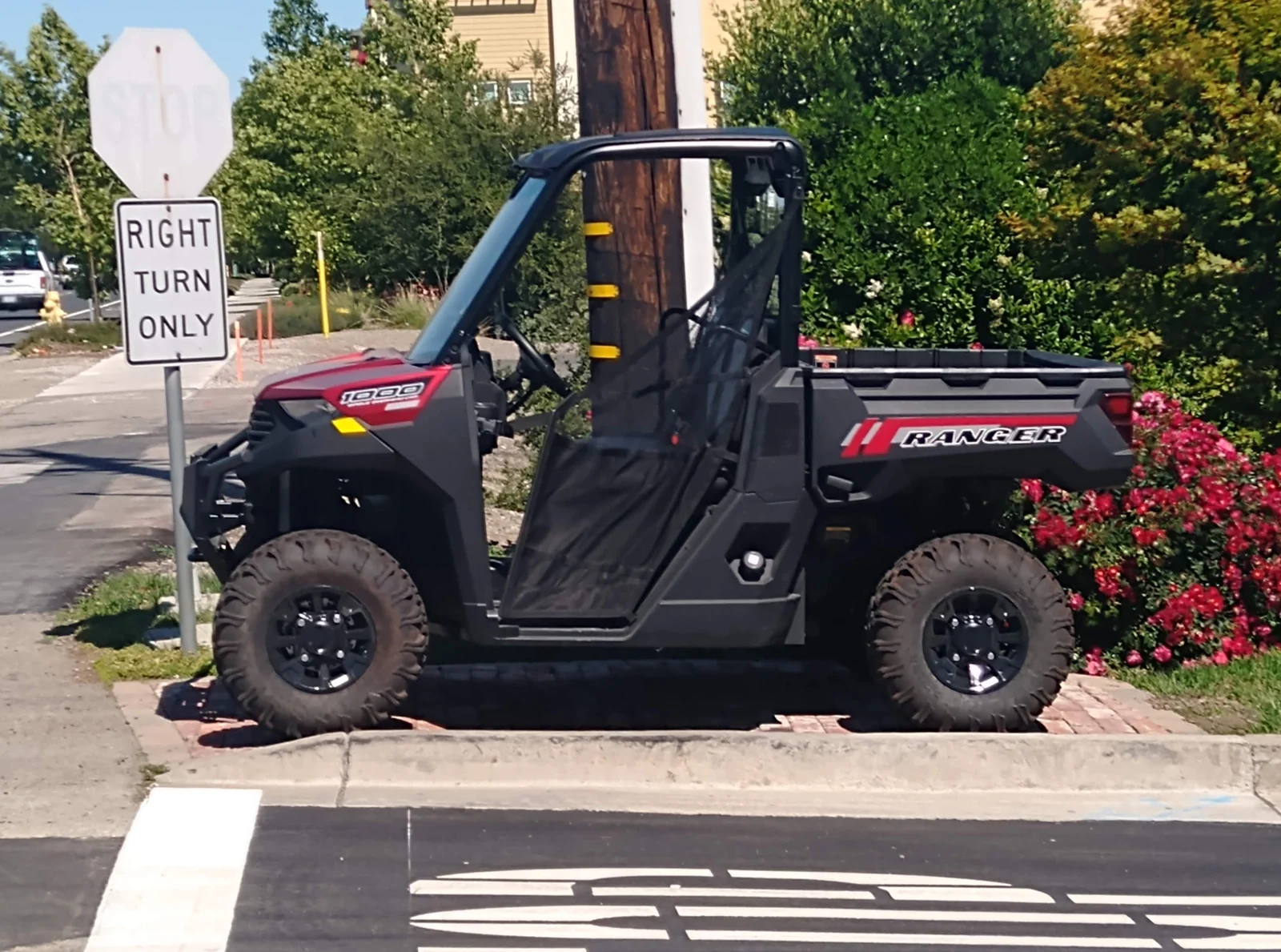
Featured photograph: Archival RANGER 1000 reference photograph; use the exact manual for the vehicle being cleaned. DestinationFearFan / Wikimedia Commons / CC BY-SA 4.0. Resized and converted to WebP; photograph retains its stated license.
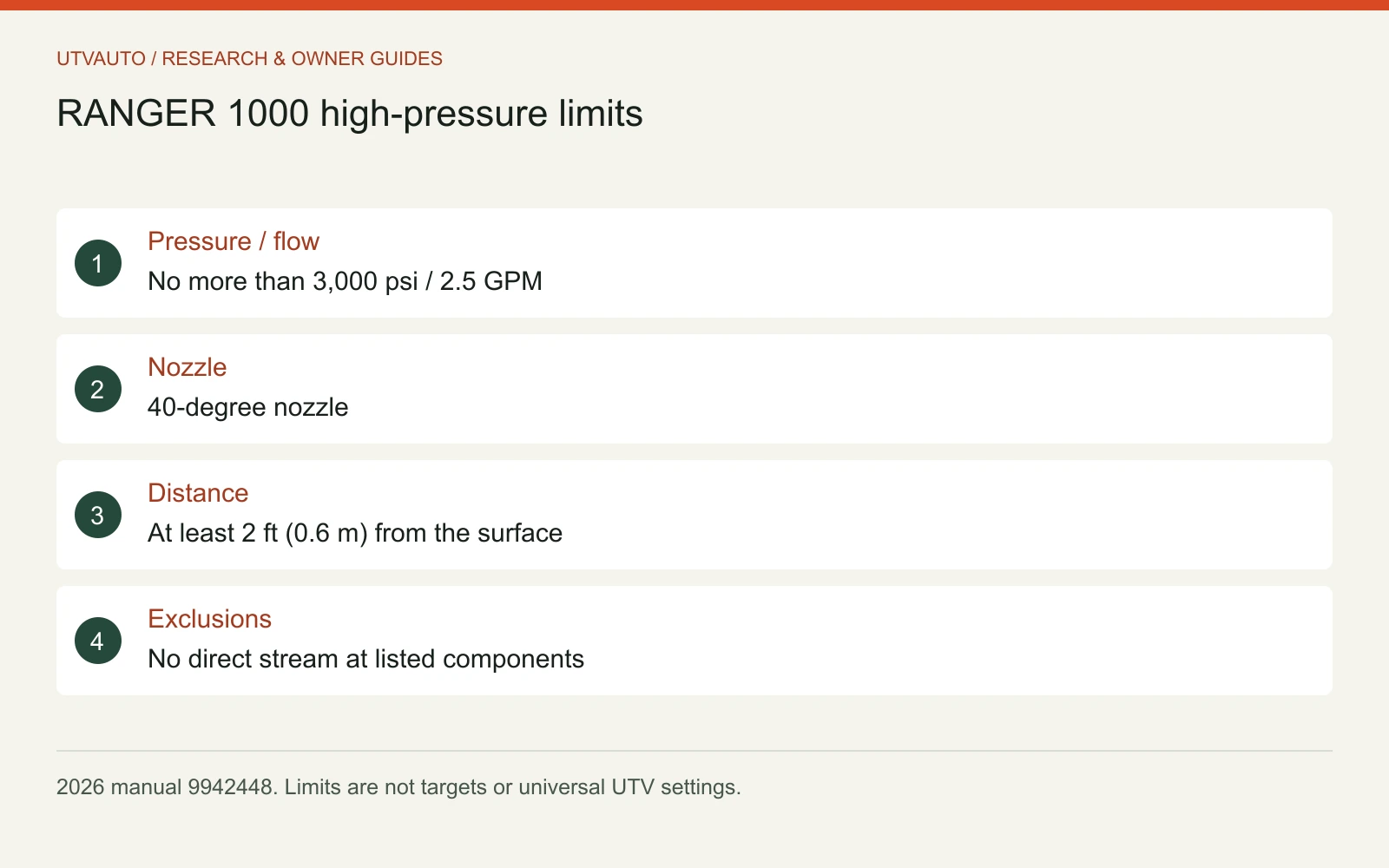
A pressure washer is not the first-choice cleaning method for every UTV. For the 2026 Polaris RANGER 1000 / CREW 1000, Polaris recommends a garden hose, mild soap and water. If a high-pressure system is used, the manual imposes limits and identifies components that must not receive the direct stream.
This guide follows manual 9942448, Washing the Vehicle. The numbers below are limits for that application, not universal settings for RZR, Honda, Can-Am, electric vehicles or aftermarket accessories. A maximum permitted value is not a recommended target.
The RANGER manual’s pressure-washer boundaries
| Condition | Specified boundary in this manual |
|---|---|
| Maximum pressure | 3,000 psi |
| Maximum flow | 2.5 gallons per minute |
| Nozzle | 40-degree pressure-washer nozzle |
| Minimum stand-off | 2 ft (0.6 m) from the surface |
| Intakes and excluded components | Do not direct the stream at them |
All conditions apply together. Pressure alone does not establish an acceptable setup, and satisfying the numbers does not remove the exclusion zones. Follow the complete matching washing instructions and the accessory manufacturers’ restrictions.
Start with the lower-risk cleaning sequence
Park securely and allow components to cool as required by the vehicle instructions. Remove loose debris using an appropriate method without pushing it into intakes or vulnerable areas. Wash with the prescribed mild soap, clean cloth and garden hose, working from upper bodywork toward the dirtier lower areas.
Rinse with clean water frequently and dry the surfaces as directed. Use clean cloths and pads; trapped grit can scratch the finish. Polaris warns against harsh cleaners and products that damage plastics. Test nothing simply because another vehicle tolerated it, and do not use a polishing compound as a substitute for removing mud.
Map the exclusion zones before opening the nozzle
The RANGER manual’s direct-stream exclusions include wheel bearings, radiator, transmission seals, brakes, electrical parts and wiring, intake components, control cables, seats, belts, body panels and labels. Read the complete list beside the vehicle before starting. High pressure can damage fins, force water into systems and remove labels.
Intake openings deserve particular attention. Water entering the PVT can wet the belt and cause slipping. Do not aim into an opening to make its screen look clean, or treat a temporary cover as proof that every nearby component is protected. If water ingestion or belt slipping is suspected, stop and follow the exact model’s service guidance.
Seat belts require their own cleaning method
Polaris specifies warm water and warns against bleach, dye, household detergents, lubricant and pressure washing for belts. Inspect condition and operation after cleaning. Do not apply a bodywork product or general-purpose lubricant to a restraint because it makes another surface easier to clean.
Damaged restraints or illegible safety labels need the manufacturer’s remedy. Do not conceal damage with a cover or return the vehicle to passenger use merely because the rest of it looks clean.
Do not pressure-blast an oil spill
The manual warns that pressurized water or air can disperse spilled oil onto engine components and create a fire hazard. Use the prescribed controlled cleanup method and address the source of a leak. If a spill, fuel odor or damaged component leaves the safe approach uncertain, obtain qualified assistance rather than spreading contamination around the compartment.
Finish with an inspection
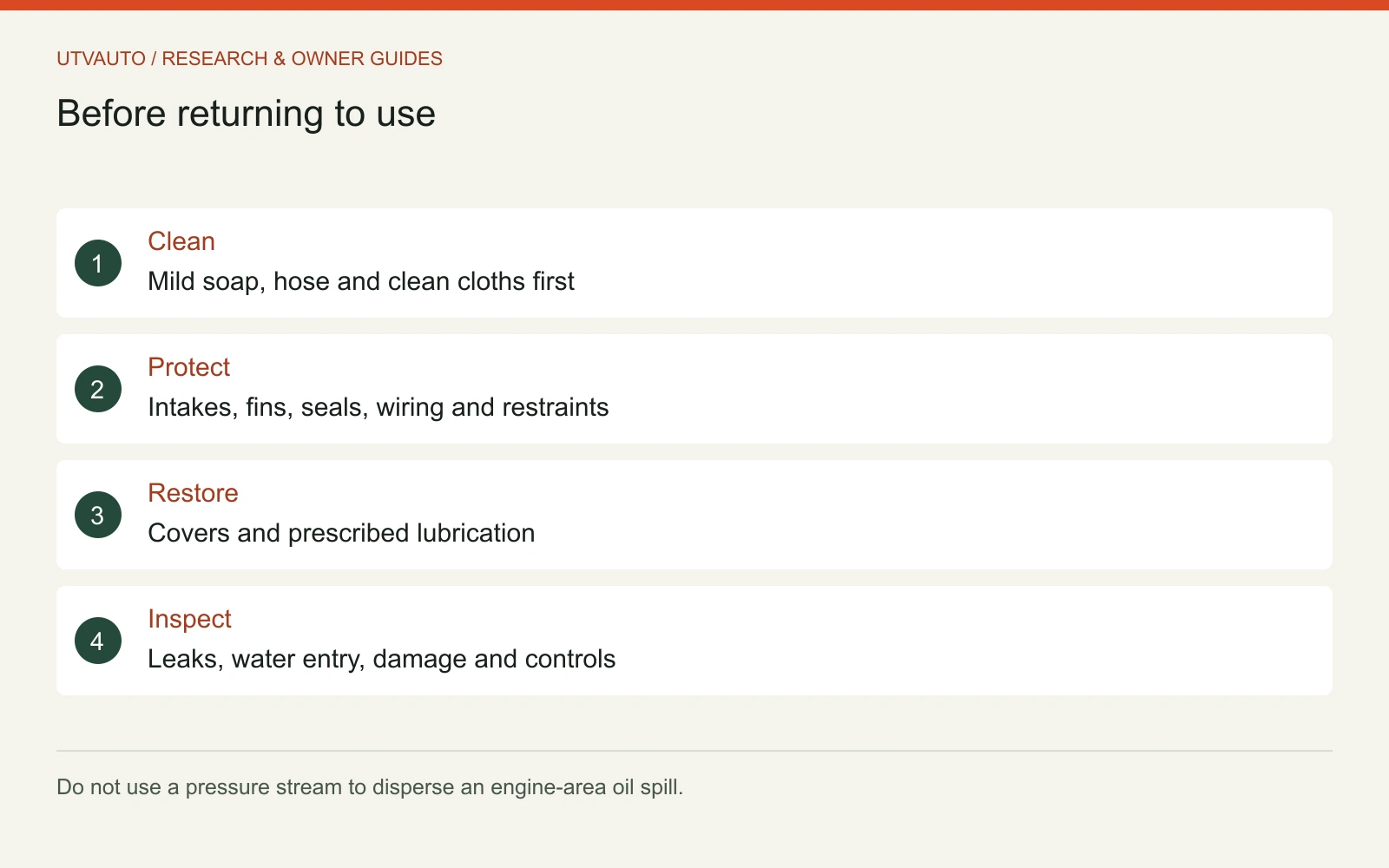
- Restore covers and access parts and check that airflow paths remain unobstructed.
- Perform the manual’s post-washing lubrication tasks where applicable.
- Check for damage, leaks, loose parts and water where it should not be.
- Conduct any required engine-running work outdoors, and complete the pre-ride checks before operation.
Cleaning and long-term storage are different tasks. If the vehicle is being put away, follow the storage plan and avoid disturbing completed preservation with unnecessary starts. For normal operation, continue the pre-ride checklist after washing.


