
Editorial collection: October 2026. Collection month is an editorial label; the page retains its actual first-publication date.
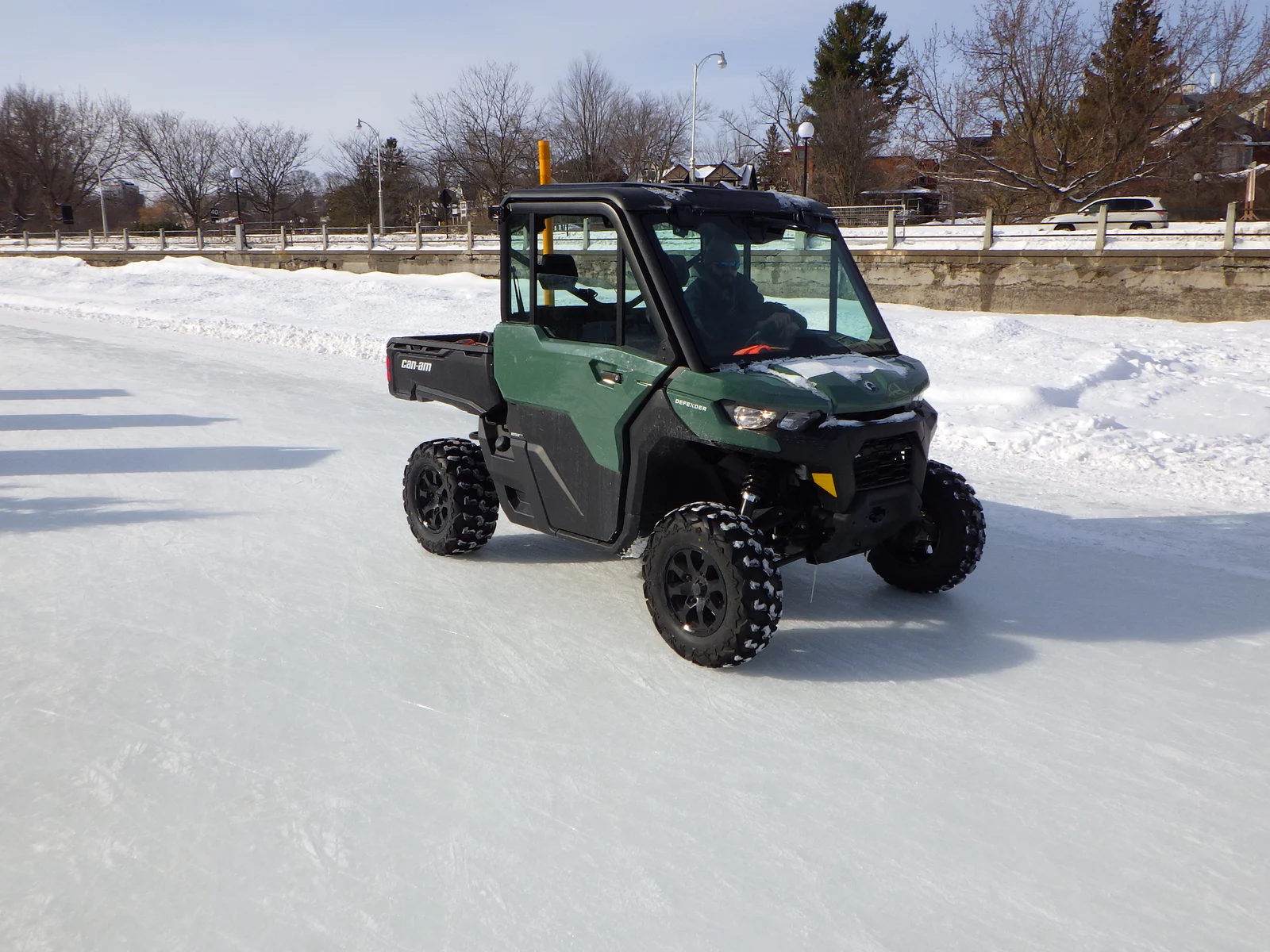
Featured photograph: Can-Am Defender working in snowy conditions; an active-use reference photo, not an illustration of the Polaris storage procedure. Ahunt / Wikimedia Commons / CC0. Resized and converted to WebP; photograph retains its stated license.
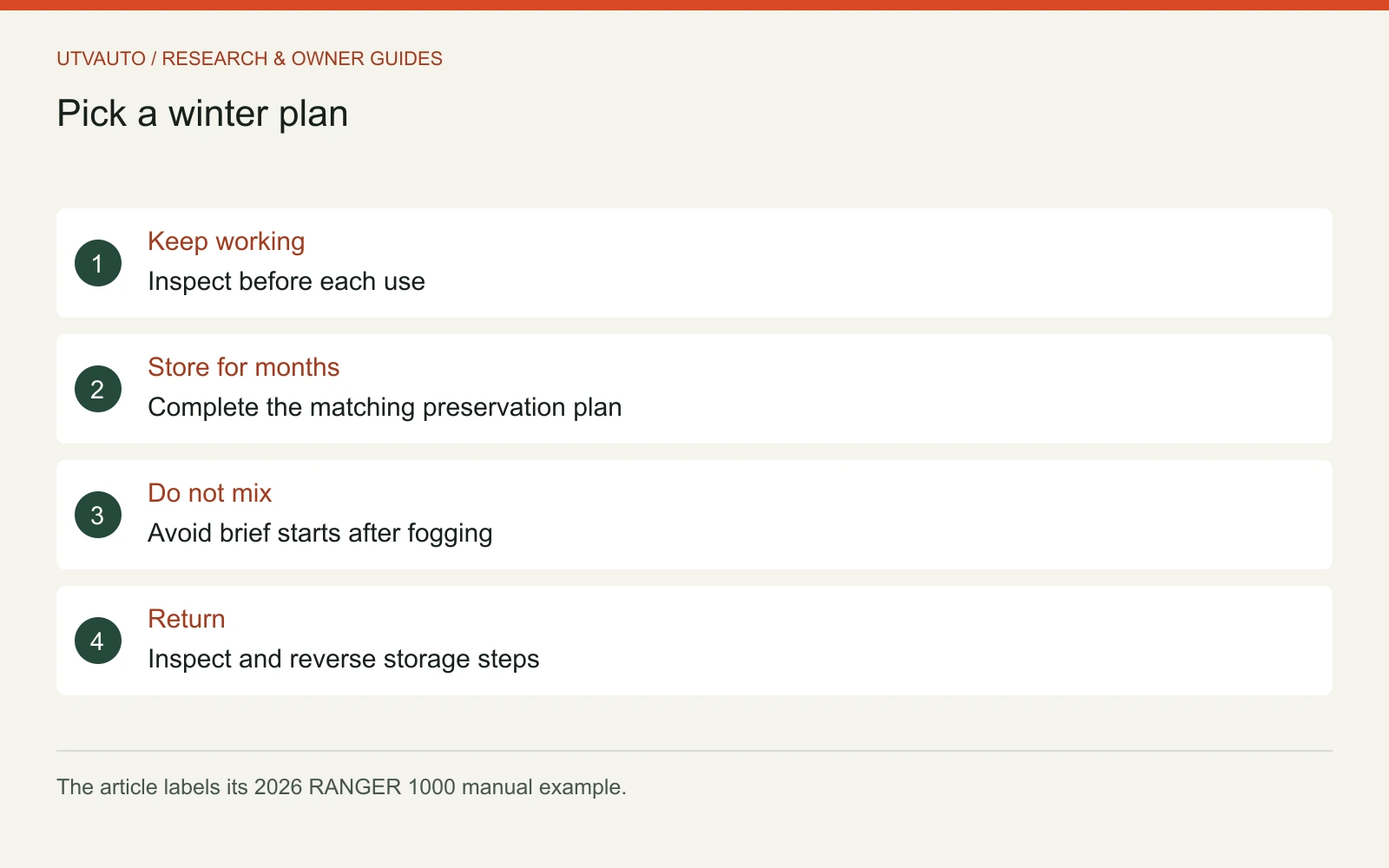
A UTV that will work through winter needs an active-use plan. A UTV parked for months needs a storage plan. Decide which applies before adding fuel treatment, disconnecting a battery or repeatedly starting the engine. The same preparation does not serve both cases.
This checklist uses the 2026 Polaris RANGER 1000 owner’s manual, Storage Tips and Removal from Storage as a labeled example. Its directions are not automatically applicable to another engine, an electric UTV, a different battery chemistry or a different model year.
Choose the right branch
| Situation | Priority | Avoid |
|---|---|---|
| Active winter work | Pre-ride checks, correct fluids, battery condition and approved equipment | Treating occasional work as months-long storage |
| Seasonal storage | Complete the matching manual’s preservation sequence | Starting briefly after the preservation process |
| Return from storage | Undo storage steps, inspect and service before use | Driving away because the engine starts |
| Uncertain mechanical condition | Repair or professional assessment first | Hiding a leak or warning under a storage cover |
Clean and repair before putting the vehicle away
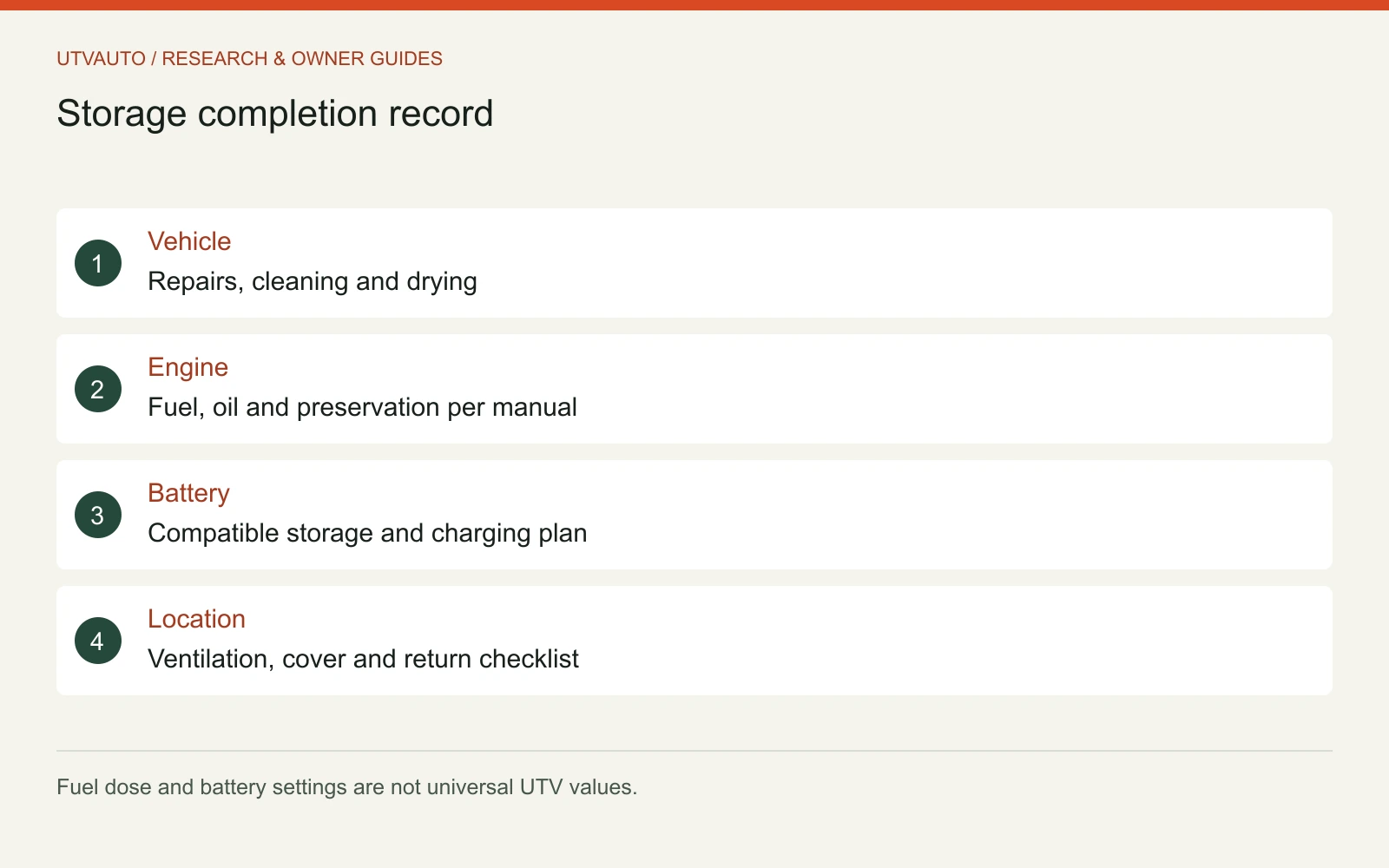
Remove mud and debris using the model’s approved washing method, then dry the vehicle. Avoid forcing water into intakes, electrical parts or vulnerable seals. A cover over a wet, dirty vehicle can preserve the conditions you wanted to remove. Record leaks, torn boots, damaged lines and other work while it is visible.
The RANGER example calls for necessary repairs, oil-and-filter service, airbox attention, fluid checks and lubrication as specified in its chart. Inspect coolant protection according to the matching instructions; color alone is not a measurement of freeze protection. Never open a hot cooling system.
Fuel treatment is model-specific
The 2026 RANGER 1000 storage instructions call for filling the tank, using the specified or equivalent stabilizing treatment at the container’s dose, and running the engine for 15–20 minutes to distribute it before completing preservation. This is a specific manual example, not a universal dose or instruction to run every stored UTV.
Do that engine-running work outdoors, never in an enclosed garage. Keep fuel away from ignition sources and follow the manual’s fueling precautions. Do not combine several additives, guess a stronger concentration or transfer gasoline instructions to diesel or electric vehicles.
Do not disturb a completed preservation process
The RANGER manual warns that starting during storage disturbs the protection created by its fogging procedure. If you choose that storage process, follow the complete matching procedure and leave the engine stored as directed. A brief weekly start is not a substitute for a coherent plan. Have a technician perform preservation steps you are not equipped to complete.
Match battery care to the actual battery
Identify the installed battery type and use the vehicle and battery manufacturer’s storage and charging instructions. Charger compatibility, ventilation, temperature and cable sequence matter. Do not apply a generic charging voltage or lithium procedure to an unidentified battery. Stop if the case is damaged, swollen or leaking; do not charge a battery in a prohibited condition.
The battery maintenance guide covers the inspection questions to bring to a battery supplier. An accessory connected after key-off can alter the storage plan; identify it rather than assuming the vehicle has no electrical draw.
Returning to service
- Remove covers and account for any intake or exhaust protection used during storage.
- Restore the battery and other items using the exact manual, then inspect for leaks, pests, damaged wiring and obstructed airflow.
- Check tires, fluids, brakes, steering and restraints using the pre-ride list. Resolve faults before operation.
- Run only outdoors and perform the prescribed post-storage checks. Arrange qualified service for uncertain fasteners or mechanical condition.
For active winter work, continue the pre-ride inspection and check whether your actual cold short-trip duty requires more frequent service. Adding a plow does not replace those checks.


