
Editorial collection: July 2026. Collection month is an editorial label; the page retains its actual first-publication date.
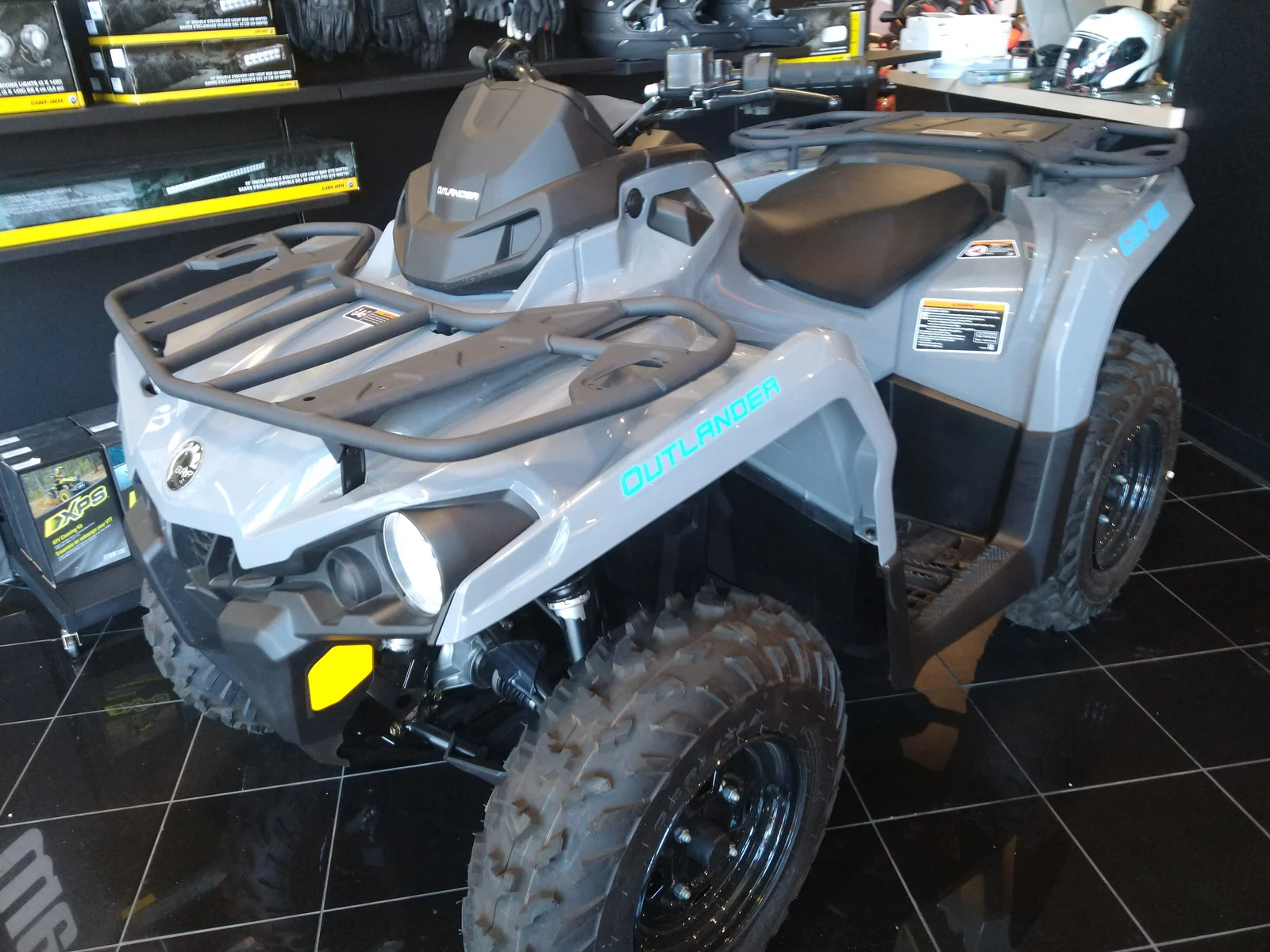
Featured photograph: 2021 Outlander 570 reference photograph; the 2026 DPS 500 and 700 specifications are identified separately in the text. DestinationFearFan / Wikimedia Commons / CC BY-SA 4.0. Resized and converted to WebP; photograph retains its stated license.
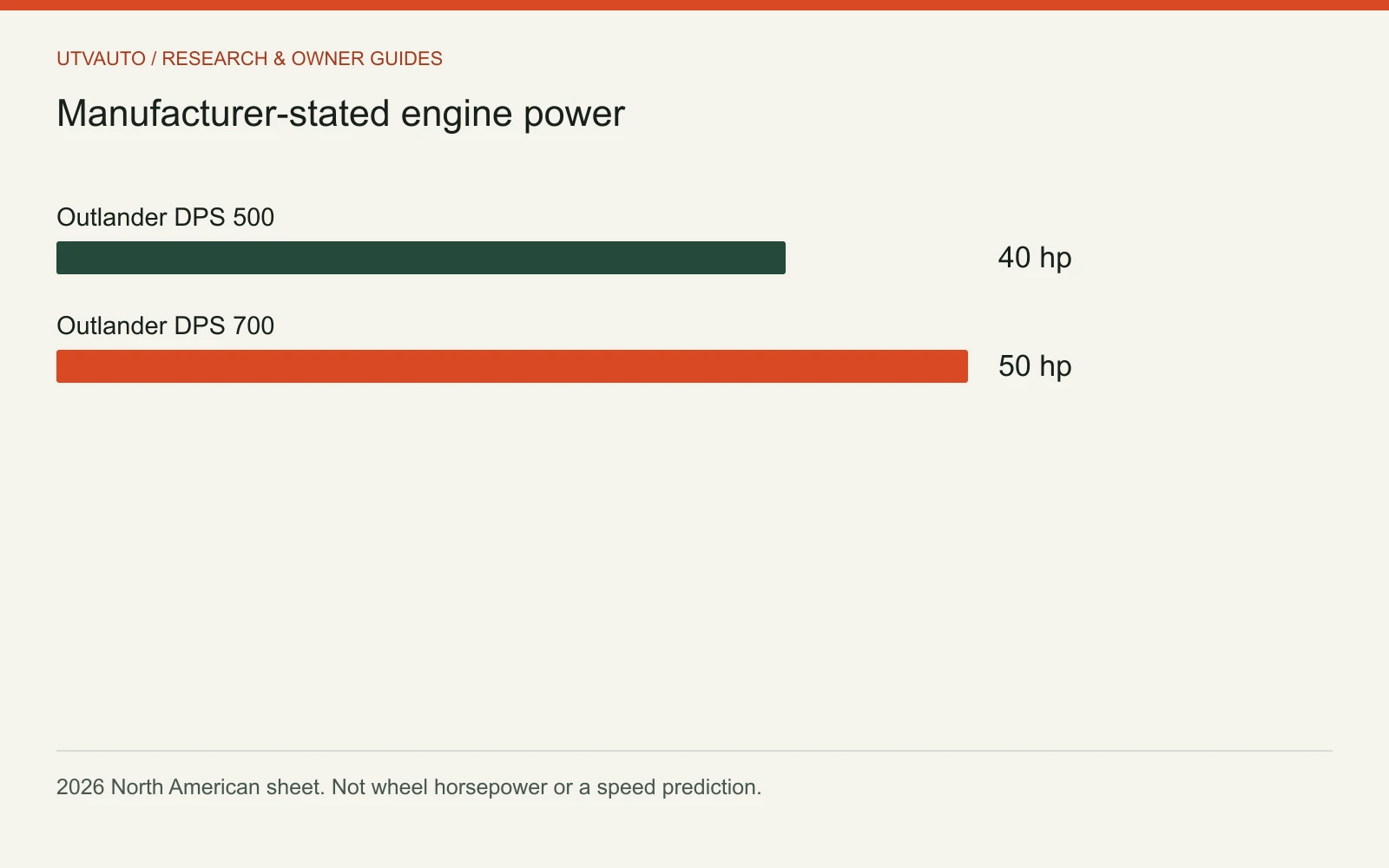
The 2026 Can-Am Outlander DPS 500 and DPS 700 share a manufacturer-listed 650cc single-cylinder engine displacement, but BRP lists different output: 40 hp for the DPS 500 and 50 hp for the DPS 700. The model names are not exact displacement labels, and a 700 badge does not automatically raise the rack or towing limits.
This comparison is for U.S./North American single-rider DPS configurations in BRP’s 2026 Outlander DPS 500/700 specification sheet. It excludes MAX, Pro, X mr, older platforms and other markets. We have not dyno-tested or driven these configurations.
Same displacement, different published output
| 2026 DPS specification | Outlander DPS 500 | Outlander DPS 700 |
|---|---|---|
| Engine displacement | 650cc single-cylinder | 650cc single-cylinder |
| Manufacturer-stated output | 40 hp / 37 lb-ft | 50 hp / 41 lb-ft |
| Overall size | 86.7 × 47.6 × 48 in. | 86.7 × 47.6 × 48 in. |
| Ground clearance | 12 in. | 12 in. |
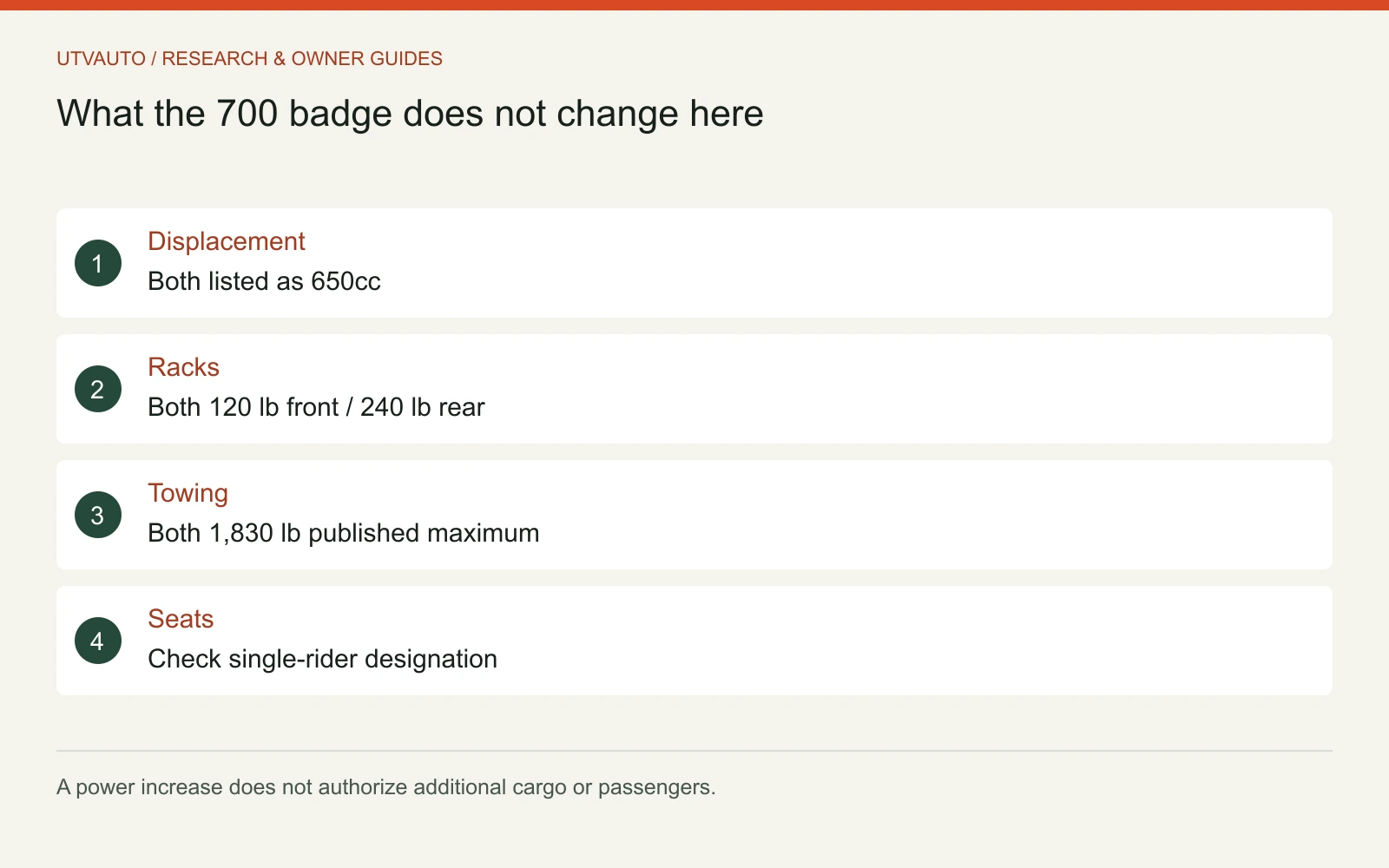
| Front / rear rack maximum | 120 / 240 lb | 120 / 240 lb |
| Towing maximum | 1,830 lb | 1,830 lb |
Figures are manufacturer ratings and dimensions. Shared work limits remain subject to the operator guide, total vehicle loading, attachments and operating conditions. Do not use the combined rack maxima as permission to place all cargo at one end.
How much more power is stated?
The difference is 10 hp. Relative to the DPS 500’s 40 hp figure, 10 divided by 40 is 25%. This compares the manufacturer’s stated engine outputs; it does not establish a 25% increase in speed, hill-climbing ability, usable load or fuel consumption.
The torque figures differ as well, but those numbers do not supply a complete driving comparison. Transmission calibration, surface, tires, elevation and the actual load matter. Arrange an appropriate demonstration if response under your intended conditions is what decides the purchase.
A heavier approved task may require another platform
If a rear-rack load exceeds 240 lb, choosing the DPS 700 does not resolve that limit in this specification sheet. Nor does extra stated power increase the 1,830 lb towing maximum. Identify whether the constraint is power response, a component rating, seating or the physical way the load is carried.
A mounted tank or equipment carrier also needs an approved application and securement. Liquid movement and attachment mass are not answered by the rack’s headline number. If regular work is outside the vehicle’s approved envelope, compare a suitable utility vehicle instead of treating the higher-output badge as a loading upgrade.
Do not infer a cheap conversion from shared engine size
The specification sheet establishes common displacement and different ratings. It does not authorize changing software, intake parts or engine components to turn one vehicle into the other. Do not assume an aftermarket claim preserves emissions compliance, calibration, operating limits or warranty coverage. Obtain the exact manufacturer-approved information for any proposed work.
Similarly, a shared chassis dimension does not prove that every year’s roofless accessory, rack or wheel combination fits. Use the complete part application and exclusion list. The same engine-size class is not a fitment certificate.
Compare the complete purchase
- Write the exact year, DPS model and market on both quotes.
- Match the included winch, protection, storage and other equipment before comparing totals.
- Check rider fit and steering-assistance behavior with normal riding gear.
- Request service requirements and local parts support rather than inventing a reliability or annual-cost advantage.
The source sheet qualifies its dry-weight entry with a base-model footnote. Do not treat that number as a scale measurement of either equipped unit. For transport, use the actual configured vehicle and equipment load.
Choose the DPS 500 if its documented capabilities, fit and completed quote cover the job. Choose the DPS 700 when the additional published output matters enough after a suitable evaluation. If a passenger is required, start with factory two-up approval; neither single-rider DPS becomes passenger-approved by adding a backrest.


