Editorial collection: July 2026. Collection month is an editorial label; the page retains its actual first-publication date.
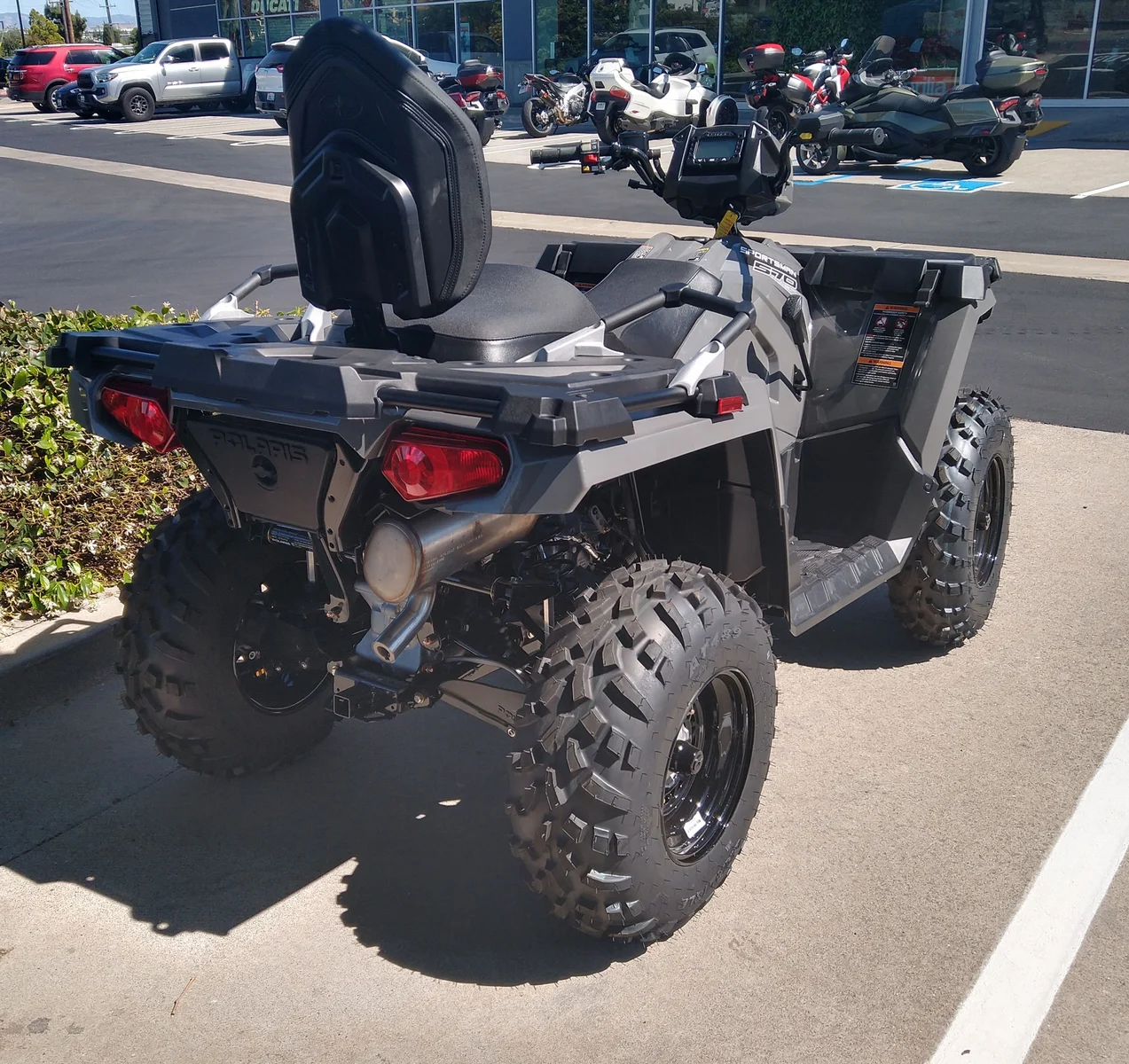
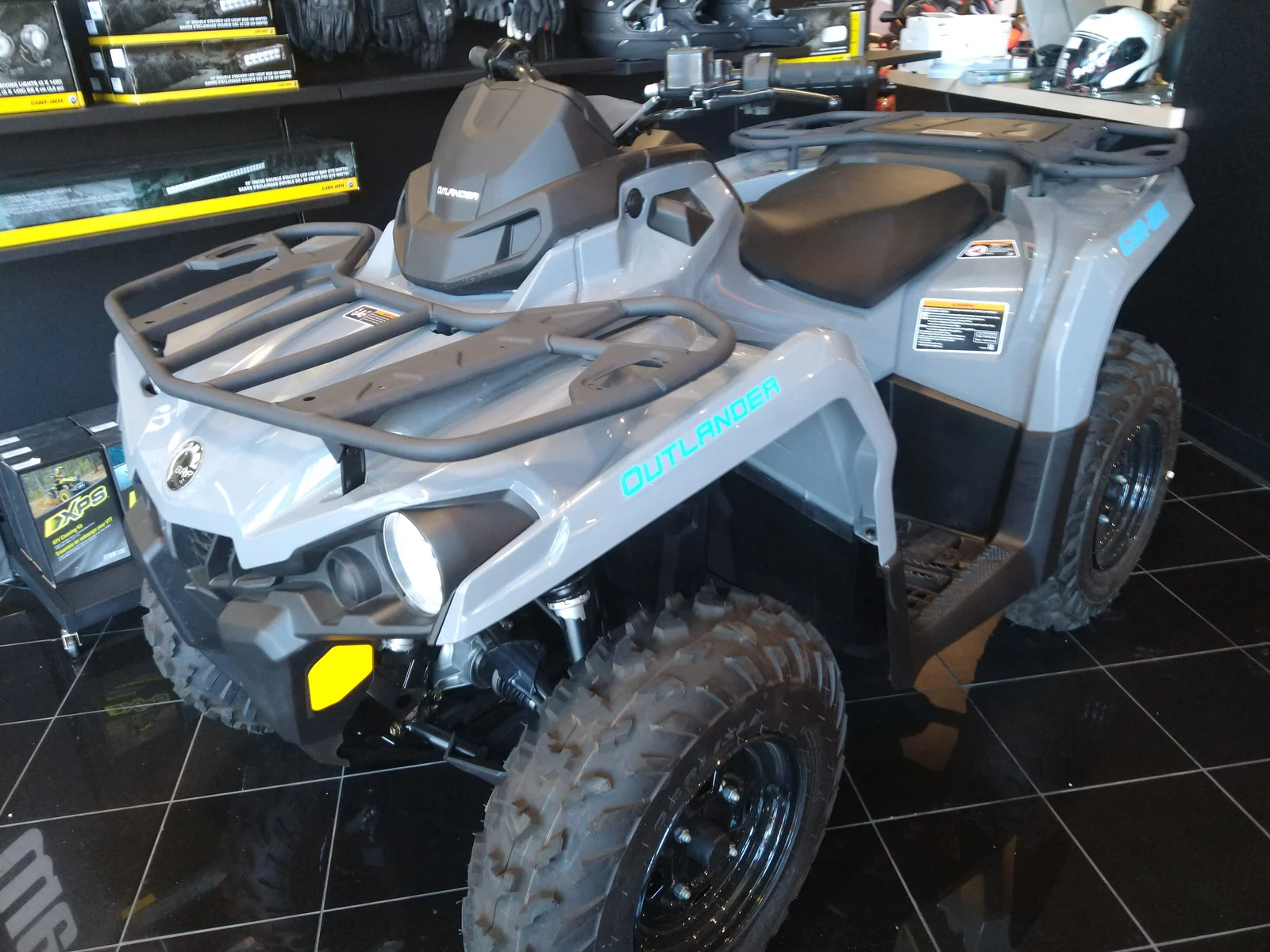
Featured photograph: 2021 Can-Am Outlander 570 reference photograph; not the 2026 DPS 700 compared in this article. DestinationFearFan / Wikimedia Commons / CC BY-SA 4.0. Resized and converted to WebP; photograph retains its stated license.
For the specific 2026 Can-Am Outlander DPS 700 and 2026 Polaris Sportsman 570 EPS, the Outlander has higher manufacturer-stated power, rack capacities and towing capacity. The Sportsman is the shorter of these two published configurations. Those facts help shortlist a machine, but they do not establish which will be more comfortable or reliable for you.
This is a U.S. single-rider ATV comparison. The “700” in the Can-Am model name is not a statement of 700cc displacement: BRP lists a 650cc engine for the DPS 700. MAX Outlanders and Touring Sportsmans are separate passenger-capable configurations; neither single-rider ATV here becomes a two-up model by adding a backrest.
Compare exact models, not the largest number on the bodywork
| 2026 published specification | Outlander DPS 700 | Sportsman 570 EPS |
|---|---|---|
| Engine | 650cc single-cylinder | 567cc single-cylinder |
| Manufacturer-stated power | 50 hp | 44 hp |
| Overall L × W × H | 86.7 × 47.6 × 48 in. | 83 × 48 × 47 in. |
| Ground clearance | 12 in. | 11.5 in. |
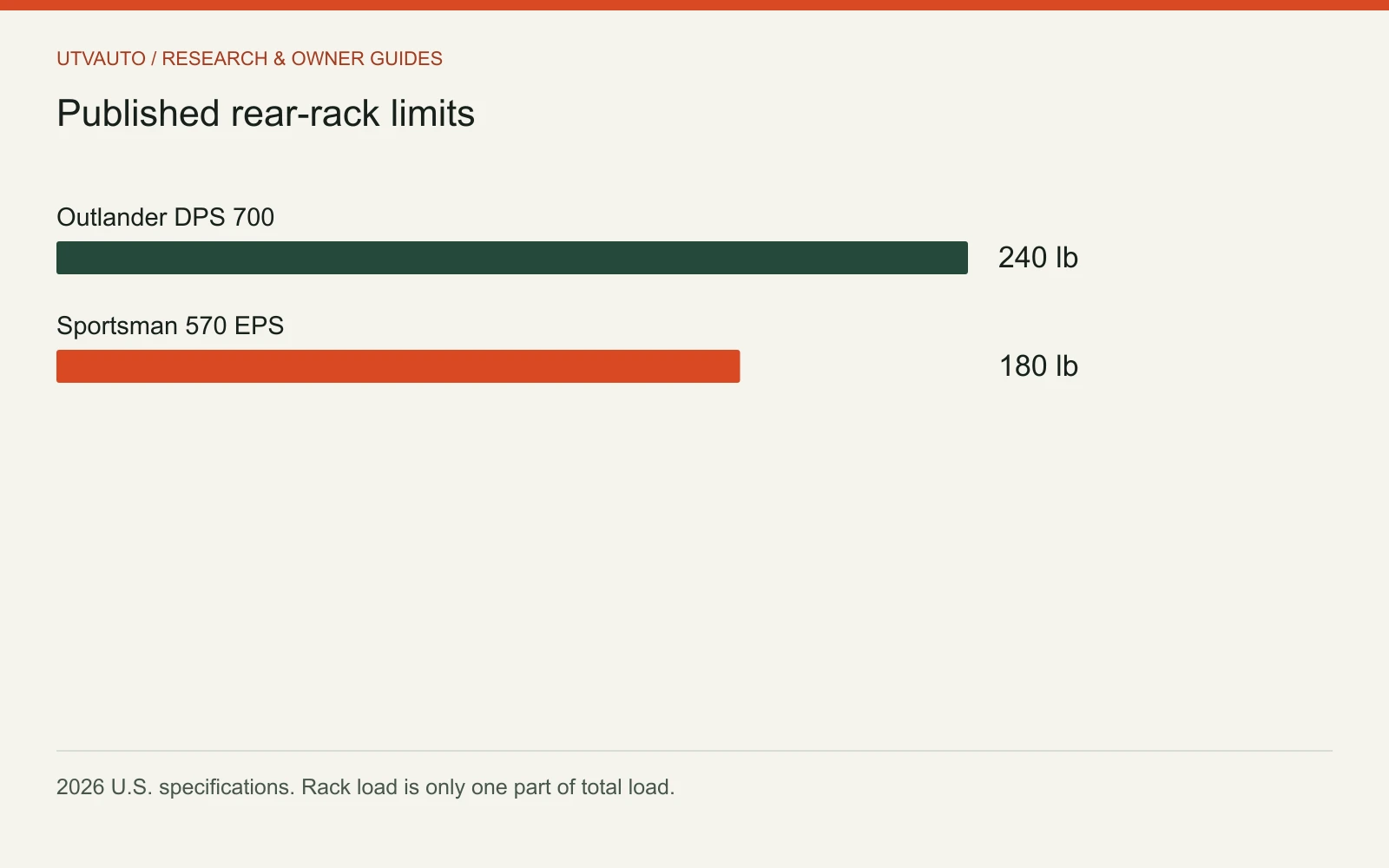
| Front / rear rack maximum | 120 / 240 lb | 90 / 180 lb |
| Towing maximum | 1,830 lb | 1,350 lb |
| Designated seating | 1 | 1 |
Sources: BRP’s North American 2026 Outlander DPS 500/700 sheet and Polaris’s 2026 Sportsman catalog, utility-model specifications. Treat load ratings as manufacturer maxima subject to the operator guide, attachment and operating conditions, not as permission to use every maximum simultaneously.
What the rack ratings tell a working owner
The published front and rear limits differ by 30 and 60 lb respectively. That can matter for a properly mounted tool box or approved equipment, but a large rear rack does not mean you can place the combined front-and-rear maximum entirely behind the seat. Each location has its own limit, and the overall vehicle load limit still applies.
For an illustrative 200 lb rear load, the Outlander’s 240 lb rear rack maximum clears that individual screen, while the Sportsman’s 180 lb rear rack maximum does not. That example does not approve a tank, liquid load or mounting bracket. Equipment mass, securement, load movement and manufacturer restrictions remain part of the decision.
If regular cargo work leaves little margin for the rider and equipment, reconsider whether an ATV is the best platform. A side-by-side may provide the seating and bed arrangement your job needs. Start with the practical differences between ATVs and UTVs rather than selecting by engine size alone.
Keep weight definitions consistent
BRP’s specification sheet identifies its estimated dry-weight basis and a base-model qualification. That is not a measured ready-to-ride weight for every DPS 700 with accessories. We therefore do not calculate a power-to-weight winner from a qualified dry-weight figure and a differently defined competitor weight.
For a trailer, obtain the exact delivered configuration’s weight, add fuel and carried equipment as appropriate, and check the loaded trailer on a scale. The sum of brochure dry weights can understate what the tow vehicle actually carries. The same principle applies when lifting or using a truck-bed loading system.
Which physical differences deserve a fit check?
The Sportsman’s published length is 3.7 inches shorter; the Outlander is 0.4 inch narrower. Those are screening differences, not guarantees of maneuverability or storage fit. Turning space, handlebar position, rack accessories and your ability to move around on the ATV are not described by overall width alone.
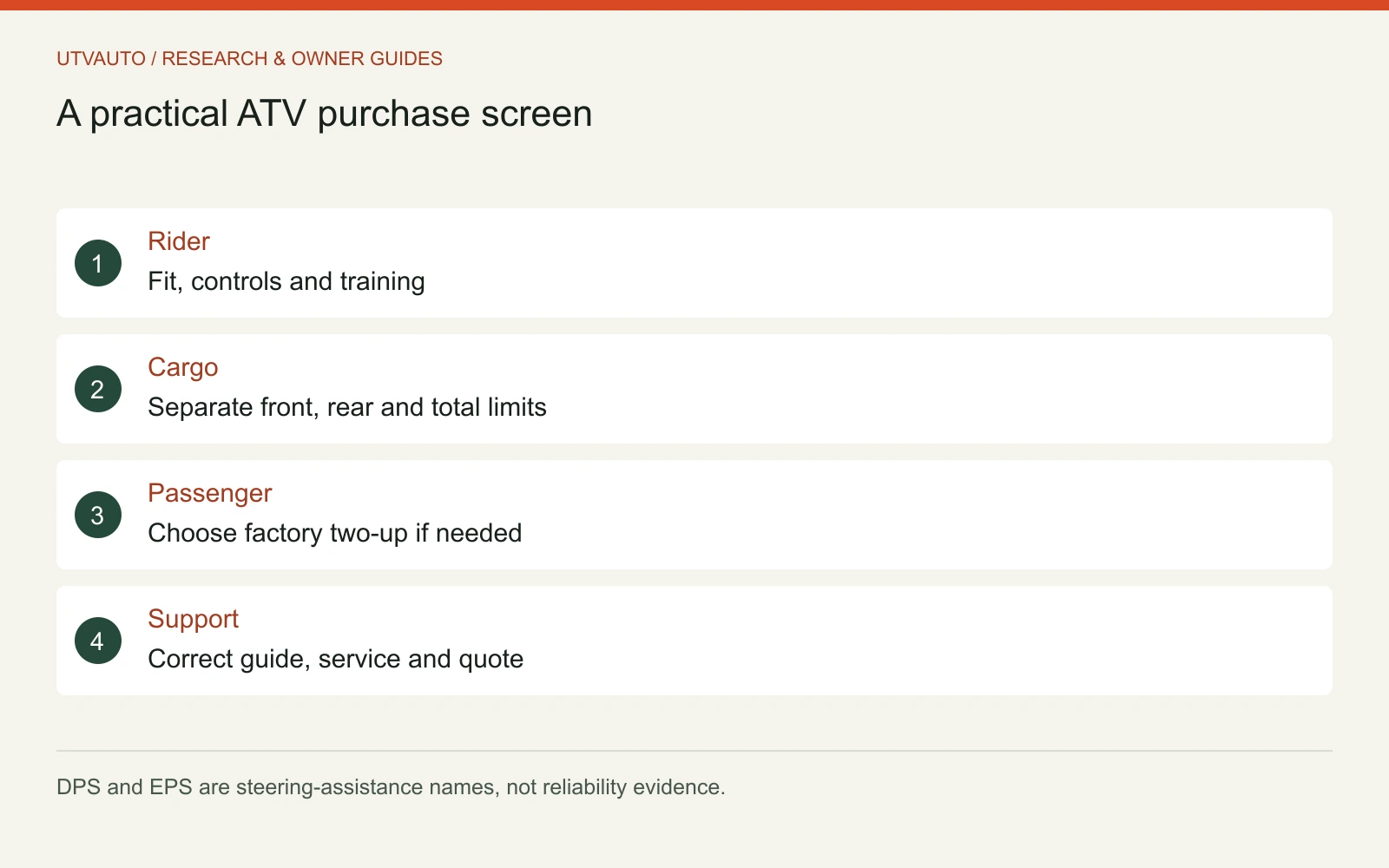
Sit on each machine wearing boots and riding gear. Check whether you can operate all controls without an awkward reach, stand as instructed and shift your body appropriately. Confirm that added rack storage does not interfere with operation. Evaluate steering assistance during a permitted demonstration instead of assuming the letters DPS and EPS promise an identical feel.
Do not mistake cargo seating for passenger approval
A padded storage box or aftermarket backrest does not change either model’s single-rider designation. Passenger load changes movement and handling as well as total weight. If you need to carry someone, compare a factory two-up model with the required seat, footrests, handholds and operator-guide restrictions. The factory two-up versus cargo-seat guide explains the checks.
Choose by the requirement that is hardest to change
- Choose the Outlander DPS 700 if its higher verified rack and tow maxima solve a real approved task, and the fit and completed quote work for you.
- Choose the Sportsman 570 EPS if its dimensions, controls, local support and actual equipment package suit your riding and its lower published work limits are enough.
- Choose a different configuration if you need a passenger seat or your approved load does not fit either vehicle’s limits. More horsepower does not fix the wrong platform.
Before signing, obtain the full model code, regional specification, operator guide, service requirements and written out-the-door quote. This comparison does not infer a failure rate, ownership-cost advantage or ride-quality result from specifications alone.