
Editorial collection: July 2026. Collection month is an editorial label; the page retains its actual first-publication date.
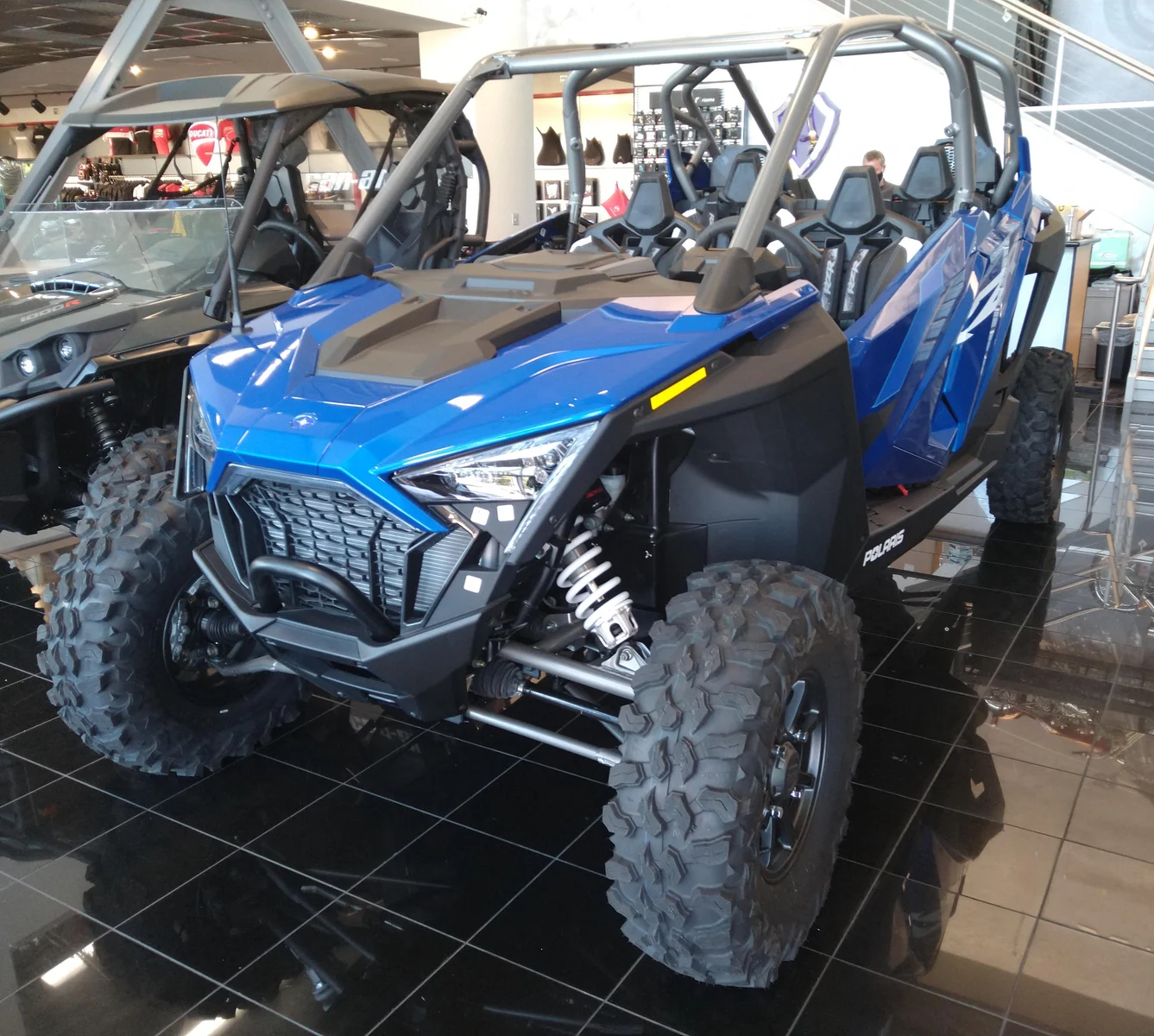
Featured photograph: 2021 Polaris RZR Pro XP reference photograph; this is a different RZR platform from the 2026 RZR XP Sport discussed here. DestinationFearFan / Wikimedia Commons / CC BY-SA 4.0. Resized and converted to WebP; photograph retains its stated license.
The 2026 Polaris GENERAL XP 1000 Sport is the more practical starting point for a buyer who needs a recreational machine with a working cargo box and a published towing rating. The 2026 RZR XP Sport is the more focused sport alternative. That distinction is more useful than treating GENERAL vs RZR as a contest between two engine names.
The scope here is U.S. two-seat models: GENERAL XP 1000 Sport and the 64-inch RZR XP Sport. The RZR XP S, Turbo R, Pro XP and Pro R are different vehicles. Four-seat models also change the dimensions and load calculations.
Start with usable work capacity and chassis size
| Published 2026 specification | GENERAL XP 1000 Sport | RZR XP Sport |
|---|---|---|
| Designated seats | 2 | 2 |
| Overall width | 64 in. | 64 in. |
| Cargo-box maximum | 600 lb | 300 lb |
| Towing | 1,500 lb manufacturer rating | Do not infer a towing rating from a recovery point |
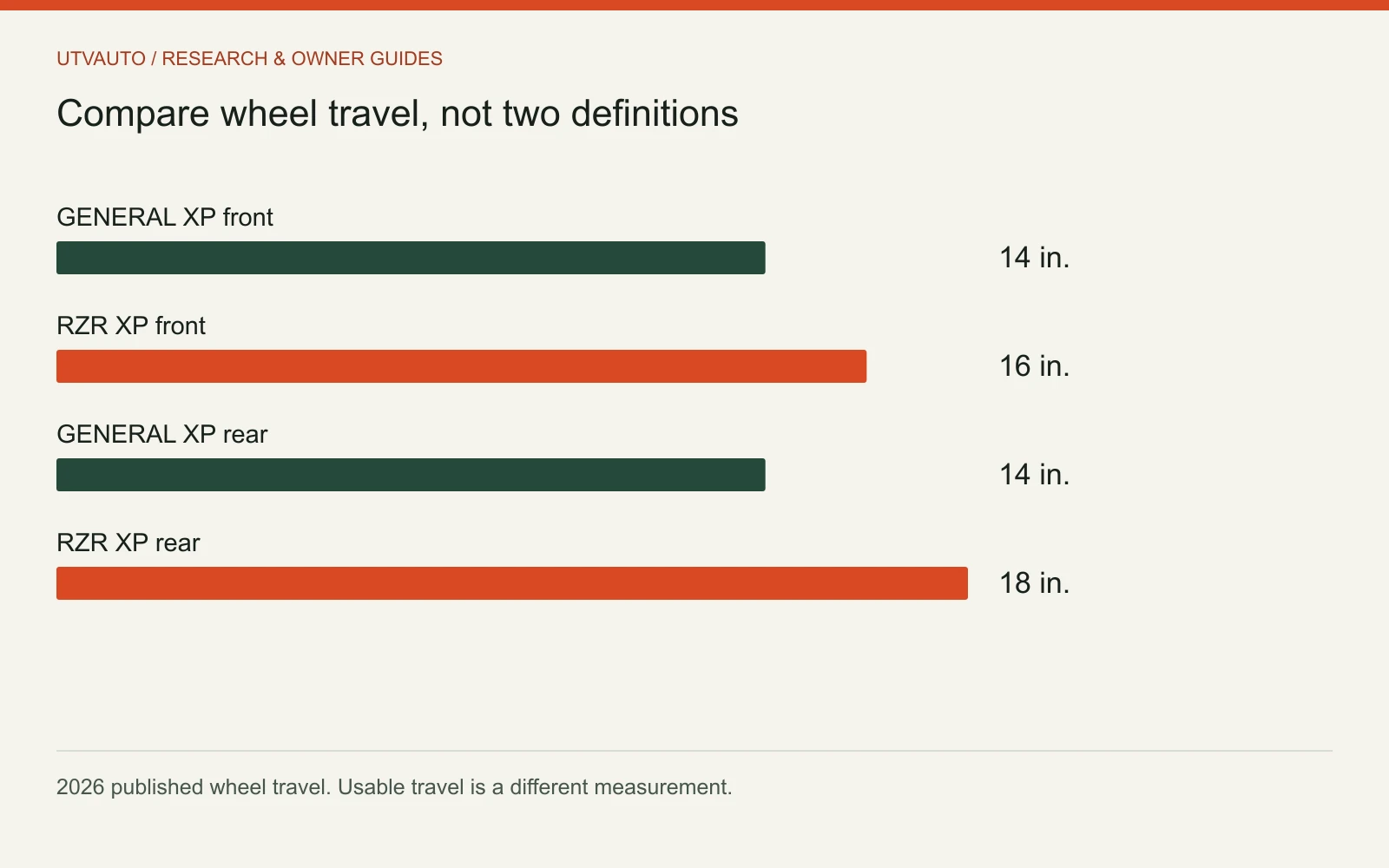
| Front wheel travel | 14 in. | 16 in. |
| Rear wheel travel | 14 in. | 18 in. |
| Factory tire sizing | 30 × 10-15 front and rear | 29 × 9-14 front; 29 × 11-14 rear |
The GENERAL data comes from Polaris’s 2026 GENERAL specification chart. RZR wheel travel, tires and box capacity come from the 2026 RZR XP owner’s manual, Specifications section. The RZR manual also lists “usable travel,” measured differently from wheel travel. This table compares wheel travel only; mixing those two definitions exaggerates the difference.
A cargo box is a real decision point
A 400 lb secured cargo load is above the RZR’s published 300 lb rear-box limit, even if there is empty physical space. It is below the GENERAL’s 600 lb box maximum, but people and accessories must still fit within the vehicle’s total load allowance. The box rating is a component limit, not an invitation to fill it with any material that fits.
Write down your heaviest recurring load rather than your average trip. A cooler and overnight bags create a different requirement from tools, firewood or a small sprayer. Securement, hot components and access to service covers matter as well as weight. For load accounting, use the separate checks for cargo, payload and towing.
Do not add a hitch to a sport vehicle and assume it gains the GENERAL’s tow capacity. A mounting hole, recovery loop or aftermarket receiver does not by itself establish a manufacturer-approved trailer rating. If towing is a nonnegotiable job, get written model-specific approval before selecting the vehicle.
Why suspension numbers need interpretation
The RZR XP Sport’s 16-inch front and 18-inch rear wheel travel exceed the GENERAL XP’s 14 inches at each end. Those numbers describe available wheel movement. They do not establish a safe speed over a particular obstacle, a shorter stopping distance or more stability on every surface.
Polaris also publishes a usable-travel figure for the RZR that incorporates a tire-to-skid measurement with the vehicle at full droop. It is not the same quantity. When comparing brochures, label the measurement before drawing a conclusion. Tire size and unloaded ground clearance are separate fields again.
A useful test-drive brief is specific: note steering effort at low speed, visibility at a crest, pedal reach and how the vehicle responds at an appropriate pace on permitted terrain. We have not conducted that test for these configurations, so this guide does not assign a ride-quality winner.
Equal width does not make every accessory interchangeable
Both are nominally 64 inches wide, but a windshield, door, roof, belt or wheel must match the exact platform and model year. Cage geometry, mounting points and drivetrain parts do not become common just because the width and brand match. Ask a seller for the full application range and exclusions, especially when a listing loosely says “fits Polaris 1000.”
The tire layouts also differ: the GENERAL configuration uses the same nominal tire size front and rear, while this RZR Sport has different front and rear widths. A square spare-tire plan still requires wheel offset, bolt pattern, brake clearance and manufacturer approval. Read the complete tire-fitment checks before treating a larger set as a free performance improvement.
Build a two-column ownership plan
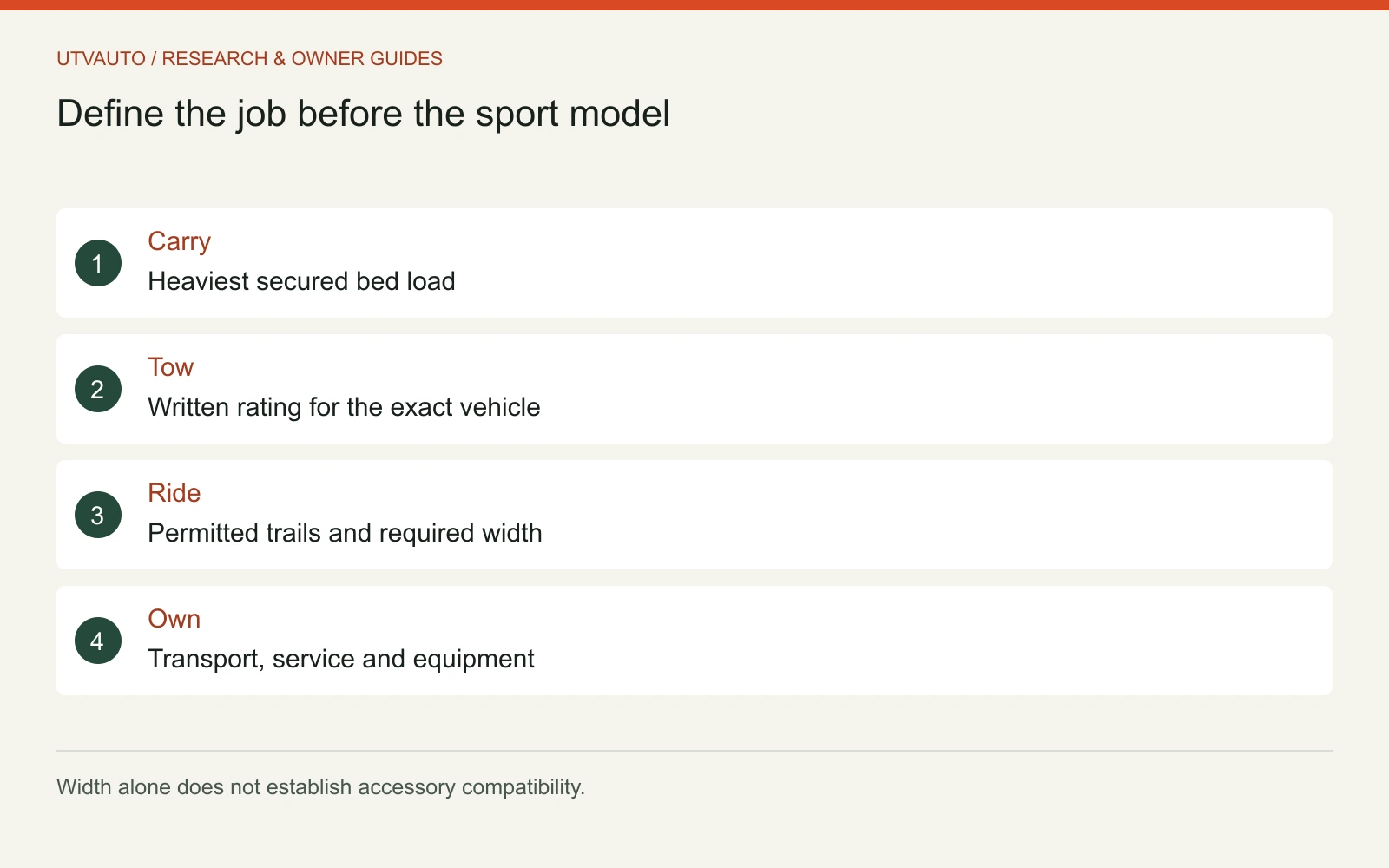
- List every actual task, then mark whether the selected model is approved for it. Keep “would be convenient” separate from “must do.”
- Price the exact protection, storage and weather equipment you need on each vehicle. Include installation and effects on load allowance.
- Check transport dimensions and scale weight with accessories. Published dry weight is not loaded trailer weight.
- Request the correct owner’s manual and service plan before purchase. Identify how belt access, filters and routine inspections fit your abilities and local service options.
The decision is straightforward when one hard requirement dominates: the GENERAL’s cargo and towing role favors mixed work, while the RZR XP Sport makes sense for a buyer whose recreation does not require those utility capabilities. If the real choice is against a Pro R or Turbo R, use that exact model’s specifications rather than extending this XP comparison across the RZR family.


