
Editorial collection: September 2026. Collection month is an editorial label; the page retains its actual first-publication date.
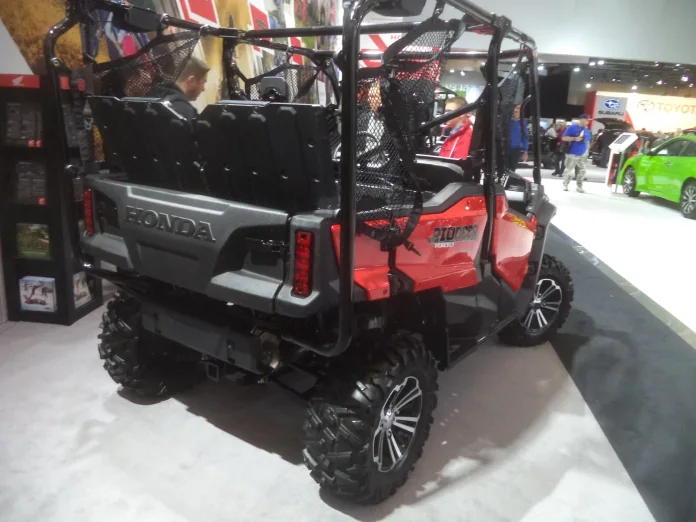
Featured photograph: Archival multi-seat Honda Pioneer reference photograph; verify the exact model and year before applying the 2026 Deluxe specifications. Zytonits / Wikimedia Commons / CC BY-SA 2.0. Resized and converted to WebP; photograph retains its stated license.
The 2026 Honda Pioneer 700-4 Deluxe adds convertible rear passenger positions rather than simply becoming a much longer version of the two-seat Pioneer 700 Deluxe. In Honda’s 2026 specifications, both Deluxe models are 114.8 inches long and 59.9 inches wide. The important tradeoff is how the rear area serves people or cargo.
This U.S. comparison covers SXS700M2DT and SXS700M4DT. Forest and base models have their own specification columns. Sources: Honda’s 2026 specification release and 2026 features and benefits. Earlier-year dimensions should not be carried forward without checking.
Compare the Deluxe columns
| 2026 U.S. specification | Pioneer 700 Deluxe | Pioneer 700-4 Deluxe |
|---|---|---|
| Seating layout | 2 designated seats | QuickFlip: 2, 3 or 4 positions |
| Overall L × W | 114.8 × 59.9 in. | 114.8 × 59.9 in. |
| Overall height | 77.6 in. | 77.9 in. |
| Wheelbase | 76.8 in. | 76.8 in. |
| Engine | 675cc single-cylinder | 675cc single-cylinder |
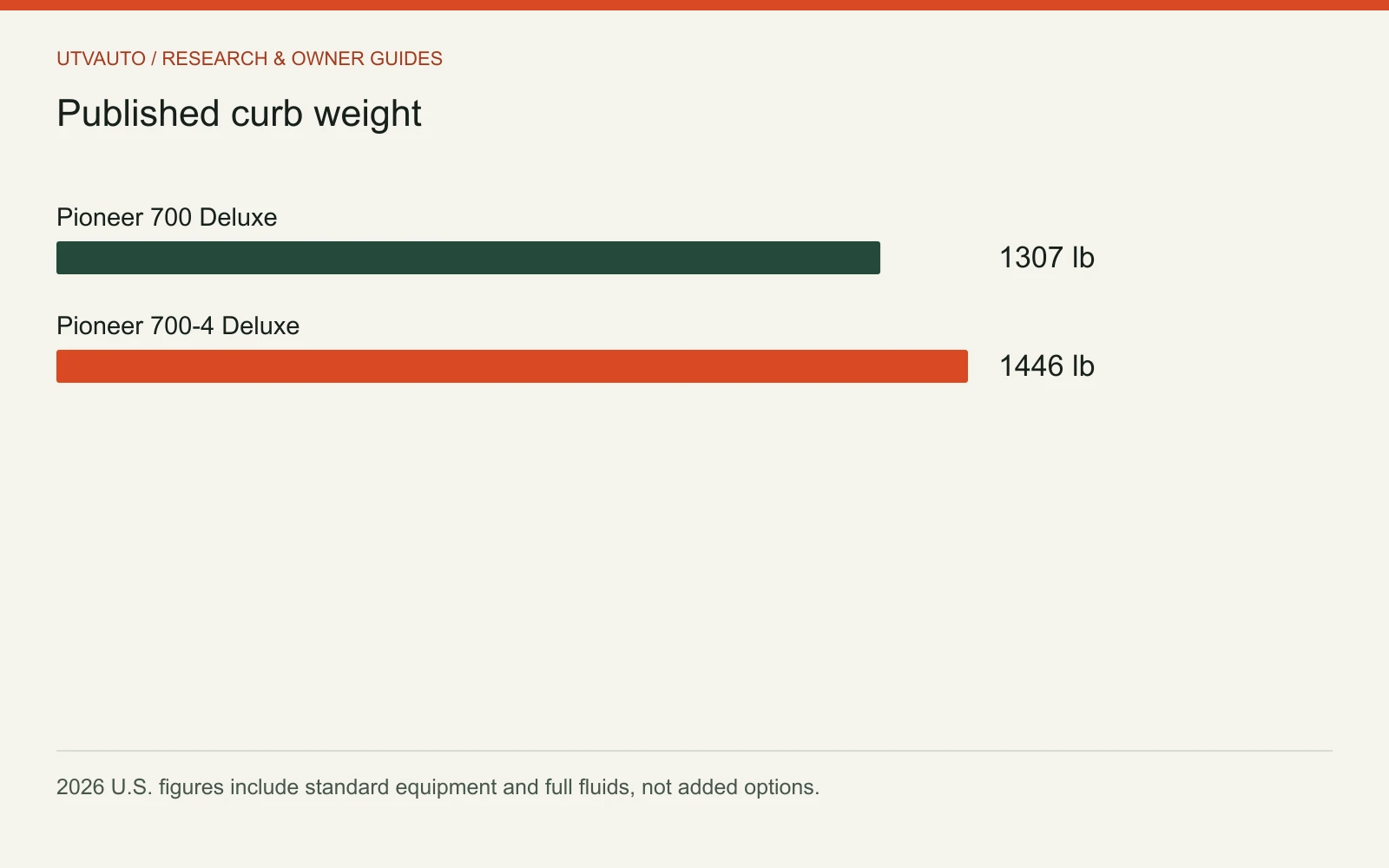
| Curb weight | 1,307 lb | 1,446 lb |
Honda defines curb weight as standard equipment, required fluids and a full fuel tank. These figures exclude any later equipment you add. They are not maximum payload or loaded trailer weight.
QuickFlip changes the use of the rear area
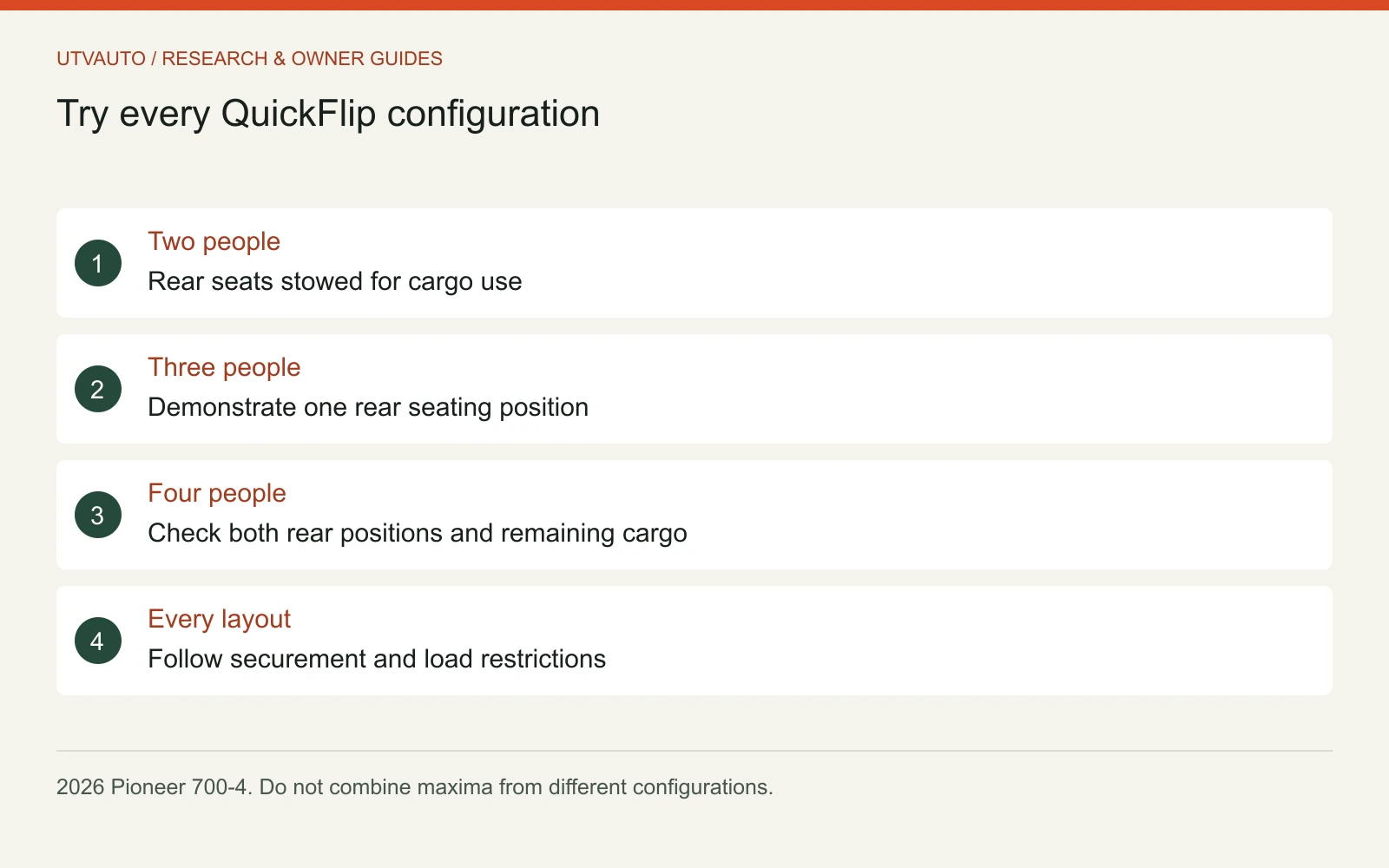
Honda describes the four-seat system as converting between two-, three- and four-person arrangements. With the rear seats stowed for the two-person setup, the cargo bed is available for its full use. Raising seats creates designated passenger positions and changes the available cargo arrangement.
Do not assume you can carry the full two-person cargo configuration while simultaneously using both rear seats. Check the operator guide’s instructions and configuration-specific loading restrictions. The published 1,000 lb bed figure and 1,500 lb towing maximum are not authorization to combine every maximum with four occupants.
A useful demonstration uses your actual cargo cases or their measurements. Ask the dealer to configure the vehicle for two, three and four people, then show what can be secured in each arrangement. Count tools and luggage with all intended people aboard. Cargo physically fitting around a seat is not proof that the arrangement is approved.
Why choose the two-seat model if the footprint matches?
A buyer who always carries two people may prefer a dedicated cargo arrangement, a different equipment quote or the lighter factory curb-weight reference. The 700-4 Deluxe is 139 lb heavier in the specification table. That difference does not establish a payload penalty by itself; check the actual load label and complete configuration.
Compare the vehicle as you will own it, including roof, windshield, winch and protection. A lower headline price is not a better value if the quoted builds include different equipment. Likewise, a convertible seat system adds useful flexibility only if it fits your real passenger and cargo pattern.
Storage compartments also differ in 2026
Honda’s features release lists 50.5 liters of total storage for two-seat models and 20.5 liters for four-seat models. The two-seat versions add paired under-bed compartments totaling 29.4 liters; both layouts have the specified under-dash storage. These compartment volumes are separate from the cargo bed and its weight rating.
If tools normally ride in closed compartments, demonstrate their actual fit before treating the four-seat layout as a simple seating upgrade. A volume figure does not guarantee that a long tool or a particular case fits the opening, and a lockable compartment is not a promise that every carried item is protected from water.
Try the rear positions before buying flexibility on paper
Check the manual’s occupant requirements, then evaluate entry, restraints, handholds and foot support while wearing normal riding equipment. Make sure the intended occupants meet every condition. A compact footprint does not tell you whether a particular person can use the rear position correctly.
Have the dealer demonstrate all latches and the prescribed conversion sequence. Do not operate with partially secured seating or loose cargo. If a used vehicle has missing hardware, damaged restraints or an uncertain conversion mechanism, have it inspected before carrying anyone.
Transport and storage still need measurement
The shared published length and width make the initial floor-space screen similar, but actual roof equipment and accessories can change the answer. Measure the completed vehicle, opening, ramp transition and trailer tie-down access. Use curb weight only as a starting reference before accounting for equipment and verifying the loaded transport combination.
Choose by the trip that creates the hardest requirement
- Choose the two-seat Deluxe when two seats are enough and its dedicated working arrangement and completed quote fit your needs.
- Choose the 700-4 Deluxe when occasional extra designated seats are valuable and the remaining approved cargo arrangement works on those trips.
- Choose another platform if you need four people and a cargo setup that the convertible rear area cannot safely provide.
For a different compact utility alternative, compare Pioneer 700 Deluxe and RANGER SP 570 Premium. For combined-load accounting, use the payload worksheet rather than reading the cargo rating in isolation.


