
Editorial collection: July 2026. Collection month is an editorial label; the page retains its actual first-publication date.
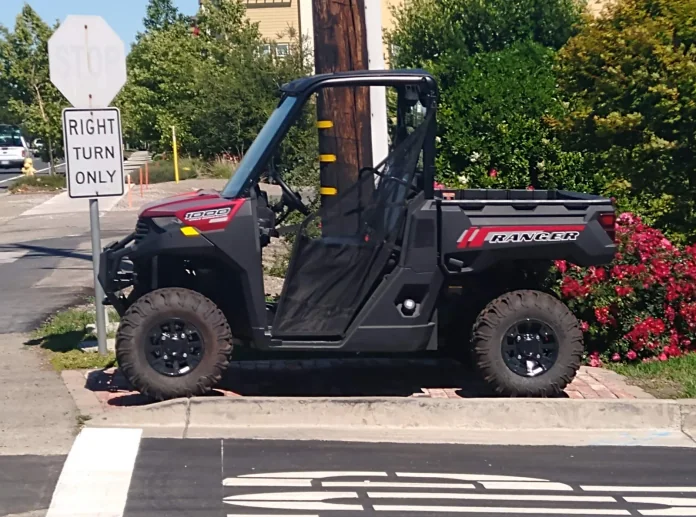
Featured photograph: Archival three-seat RANGER 1000 reference vehicle; not the six-seat CREW or proof of a 2026 equipment package. DestinationFearFan / Wikimedia Commons / CC BY-SA 4.0. Resized and converted to WebP; photograph retains its stated license.
Choose the 2026 RANGER CREW 1000 Premium if you regularly need six designated seats and can accommodate its longer footprint. Choose the three-seat RANGER 1000 Premium when a shorter machine carries your people and equipment. The CREW adds seats, but it does not double every load rating.
The comparison uses U.S. Premium gasoline RANGER 1000 models, not XP, NorthStar or XD. The exact regional load label matters, particularly for California configurations. Sources are the 2026 RANGER 1000/CREW owner’s manual, Specifications and 2026 RANGER catalog.
What changes when you add the second row?
| 2026 Premium specification | RANGER 1000 | RANGER CREW 1000 |
|---|---|---|
| Designated seats | 3 | 6 |
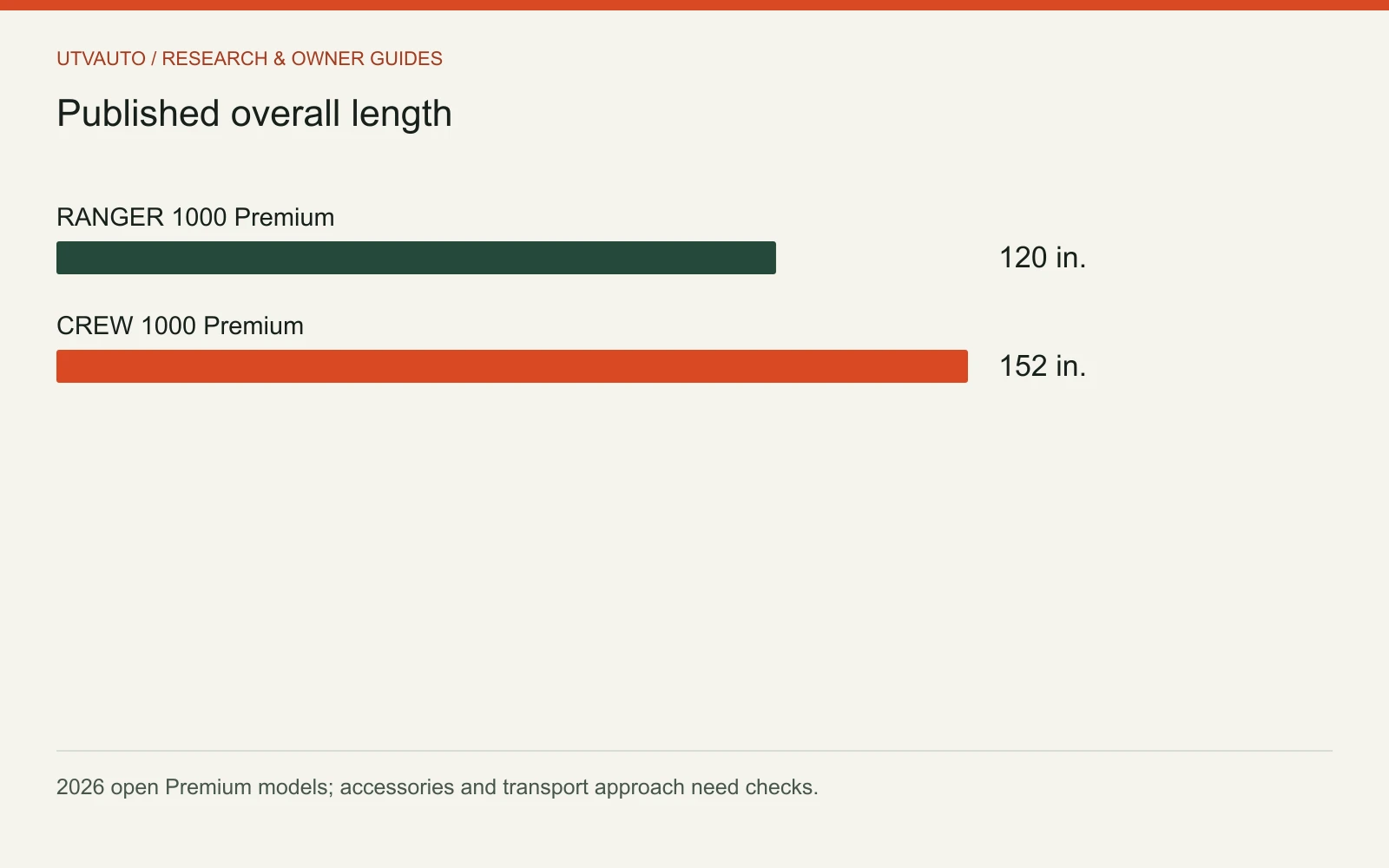
| Overall length | 120 in. | 152 in. |
| Width / height | 62.5 / 78 in. | 62.5 / 78 in. |
| Published maximum weight capacity | 1,500 lb | 1,700 lb |
| Cargo box maximum | 1,000 lb; check region | 1,000 lb; check region |
| Towing maximum | 2,500 lb | 2,500 lb |
Maximum weight capacity includes people, cargo and accessories. California-specific limits can differ; check the complete specifications and the actual label before applying these reference figures. The box and towing maxima do not replace that combined-load check.
Six seats are not six seats plus an unchanged load allowance
The reference total-capacity increase is 200 lb, while the seating increase is three people. That difference makes a load worksheet necessary. A longer body creates passenger positions; it does not create unlimited capacity for six adults, a full bed and equipment.
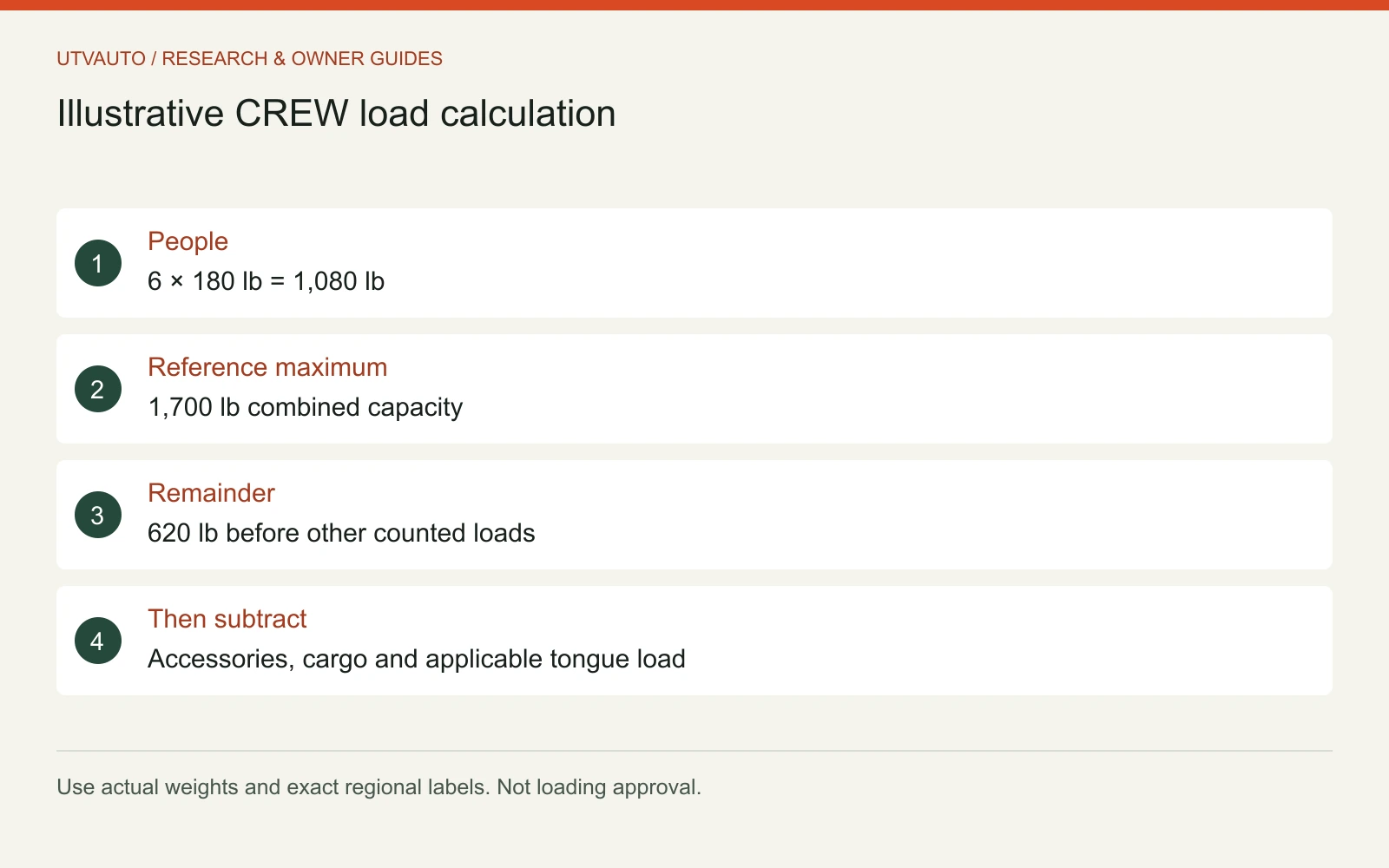
Illustrative CREW load: six occupants at 180 lb each total 1,080 lb. Against a 1,700 lb maximum, that leaves 620 lb for other counted loads before accounting for accessories and any applicable tongue weight. A 600 lb bed load would leave only 20 lb in that simplified calculation. This example is arithmetic, not approval; use actual weights and every applicable limit.
In contrast, three occupants at the same illustrative weight total 540 lb. The three-seat reference allowance would then leave 960 lb before accessories and other counted loads. This does not mean the shorter vehicle always carries more useful cargo; it shows why passenger count changes the actual job. Use our load-accounting worksheet to keep the separate limits visible.
The length difference follows the vehicle everywhere
The CREW is 32 inches longer in the published dimensions. Measure storage depth, trailer deck length and the approach and turn into each space. A machine can clear a door width yet fail to negotiate a corner or fit behind a trailer bulkhead. Extra length also affects where your tie-downs can reach approved attachment points.
Do not use an open-model height to approve a later cab conversion. Measure the completed roof, mirrors and accessories. A trailer’s deck length is only one transport check; ramp rating, trailer payload and actual scale weight still apply. The trailer-fit guide separates those checks.
Walk through a real working day
If six designated seats are needed for most trips, trying to replace them with a cargo-bed ride is not an acceptable shortcut. If extra people ride only rarely, compare the cost and practicality of a suitable alternative transport arrangement before buying a longer vehicle for every ordinary job.
Sit in both rows with normal riding equipment. Verify the manual’s occupant requirements, restraint operation, handholds, entry and legroom. A seat count on paper does not establish that every intended occupant meets the requirements or that the vehicle is comfortable for your use.
Quote and service questions
- Are both written quotes the same Premium model year and regional specification?
- Which roof, winch, protection and other equipment is included, and what mass does it add?
- Can the delivered vehicle fit the complete storage and transport route?
- Does the planned passenger-and-cargo combination pass every relevant loading restriction?
Both vehicles need the matching maintenance plan, including the first-service tasks. Choose the CREW for a proven seating requirement, rather than assuming that its extra size produces a proportionate increase in every work capability.


