
Inspect a used UTV in this order: identity and records, recall status, cold condition, static safety checks, an authorized test ride and a written cost decision. Do not let a clean exterior or low odometer reading replace those checks. A machine with unresolved steering, brake, restraint, structural or fire concerns should not be test-driven until the concern has been properly addressed.
This checklist is for U.S. used side-by-side buyers. It is a screening tool for arranging an independent inspection, not a certification of mechanical condition. It focuses on a purchase decision; our pre-ride checklist covers checks before normal use.
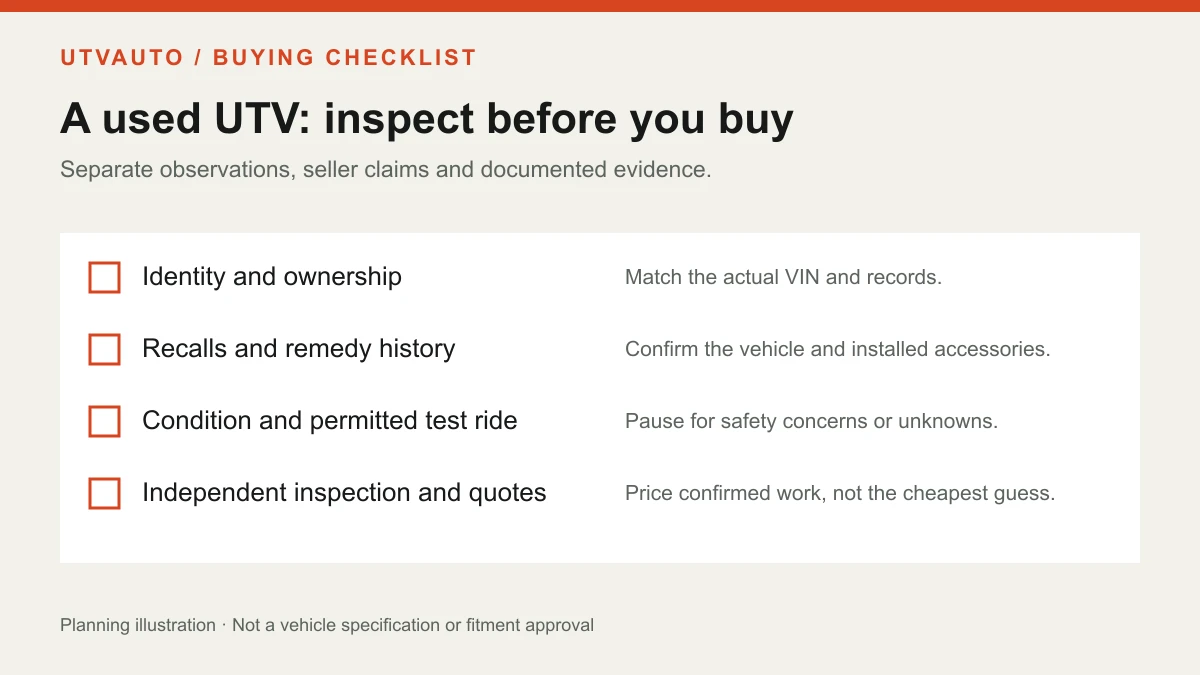
Before you travel: ask for five things
- Exact identity: year, full model and trim, seating configuration, VIN and clear photographs of the identification label.
- Ownership documentation: the seller’s evidence of ownership and the documents required for your location and intended registration. Resolve discrepancies with the relevant agency before paying.
- Service evidence: dated invoices showing hours or mileage, work performed and parts used. Ask specifically about the transmission, cooling system, brakes and any previous water intrusion.
- Modification list: tire and wheel sizes, suspension changes, clutch work, ECU changes, electrical accessories, tracks and cab components. Ask for installation instructions and original parts if available.
- Inspection arrangements: permission for an independent technician to inspect it, and agreement that the engine will be cold when you arrive.
A seller who has no records has not automatically proved neglect. It does mean the condition and maintenance history remain unverified. Price the uncertainty using an inspection and actual service quotes rather than accepting “always maintained” as evidence.
Check recalls by the actual vehicle, not just the badge
Use the manufacturer’s current resources: Polaris off-road safety announcements, Can-Am safety recalls or Honda Powersports recalls. Ask an authorized dealer to confirm applicability and completed remedies for the VIN and installed accessories. An old advertisement describing a recall does not show that the repair was performed.
Recall applicability can depend on model year, engine, serial range and equipment. Can-Am’s official index explicitly warns that not every vehicle in a listed model/year group is necessarily affected. If a notice directs owners to stop using the vehicle, follow that instruction; do not proceed with a demonstration ride to “see whether it feels fine.”
Use a four-column inspection sheet
For every check, separate what you observed from what the seller told you. Photograph findings with permission. Avoid turning one symptom into a diagnosis.
Swipe sideways to view every column.
| Area | Observation to record | Evidence to request | Reason to stop the viewing ride |
|---|---|---|---|
| Identity and hours | VIN, model label, odometer and hour display | Matching ownership and service records; explanation for replaced instruments | Identity or ownership discrepancy remains unresolved |
| Structure and restraints | Visible bends, cracks, repairs, missing doors/nets, damaged belts | Repair history and technician’s assessment | Damaged rollover structure, restraint or attachment |
| Tires and wheels | All four sizes, condition, wheel damage and obvious rubbing | Approved fitment and pressure information | Damaged tire, loose wheel or unverified unsafe modification |
| Engine and cooling | Cold start behavior, warning lights, leaks and radiator condition | Service records and explanation for previous overheating or water entry | Fuel leak, persistent temperature warning, smoke or serious fluid leak |
| Steering and brakes | Abnormal looseness, binding, warning lamps or pedal feel | Inspection findings and repair invoices | Uncertain braking, sticking throttle or steering fault |
| Drivetrain | Displayed gear, engagement behavior, abnormal noise | Model-specific maintenance and repair history | Loss of drive, unexpected movement or repeated severe engagement problem |
| Electrical accessories | Visible added wiring, mounting and battery condition | Installation details, circuit protection and battery specification | Hot, damaged or exposed high-current wiring; damaged battery |
These are purchase-screening prompts, not disassembly instructions. Use the exact owner’s manual for operational checks and a qualified technician for inaccessible or safety-critical components. The ROHVA Tips Guide explains the separate importance of pre-ride checks and routine maintenance.
What a cold start can and cannot tell you
Observe whether the vehicle starts using its specified procedure, whether warning lamps clear as described in the manual and whether there are abnormal sounds or leaks. Note ambient conditions and whether the battery needed assistance. A successful start does not establish good compression, a healthy charging system or a sound transmission.
If the seller has already warmed it up, record that the cold-start check was not completed. Arrange another viewing or let the independent inspector address the gap. Avoid touching exhaust or cooling components to establish temperature.
Plan a permitted test ride around behavior, not maximum speed
Only ride with the seller’s authorization, on suitable permitted terrain, after the safety checks and recall requirements are satisfied. Follow the manual’s protective-equipment, occupant and operating instructions. A buyer who is unfamiliar with the model should have a competent inspector perform the operational checks.
Ask the inspector to assess starting, steering, stopping, gear selection and drive-mode operation using the prescribed procedure. Record when a symptom appears: cold or warm, loaded or unloaded, in which range, and with which warning display. Do not force a shift, hold full throttle to prove a top-speed claim or disable a restraint-related speed limit.
Turn findings into an offer, an inspection condition or a walk-away decision
Swipe sideways to view every column.
| Finding | Purchase response |
|---|---|
| Service is due and the condition is otherwise verified | Obtain a written quote and include it in the purchase budget |
| Fitment or accessory installation is undocumented | Require a model-specific assessment before accepting it as an upgrade |
| Symptoms exist but the cause is unknown | Make the decision conditional on independent diagnosis; do not budget only the cheapest possible fix |
| Ownership, structural safety or a stop-use recall remains unresolved | Pause the purchase until documentation and remedy are verified |
Your budget should distinguish purchase price, immediate verified work, transport/setup and optional changes. Enter actual quotes rather than a universal “used UTV repair allowance.” Compare that total with alternatives in the UTV buying guide.
Finally, verify that the machine suits your job. Passenger and accessory weight can consume the available capacity, and a used machine with larger tires may not fit your existing trailer. Use the load-budget worksheet and trailer measurement checklist before committing.
Method: UTVAUTO’s purchase-screening framework with manufacturer recall resources and ROHVA guidance. No inspected vehicle, owner survey or reliability ranking is represented. Reviewed November 2, 2026.

